Hispanic Month and the legacy of colonialism
By Yenny Delgado
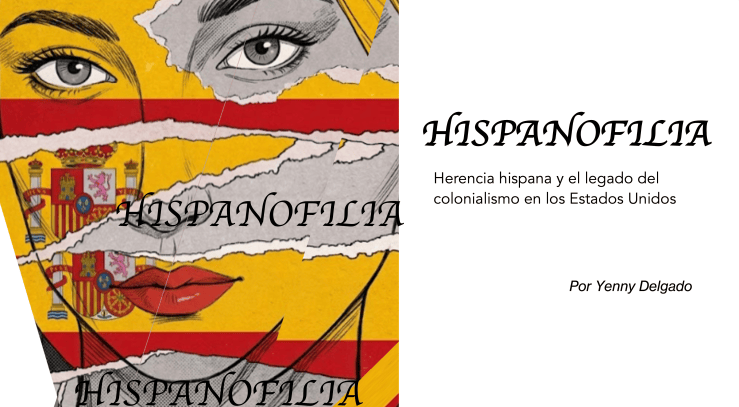
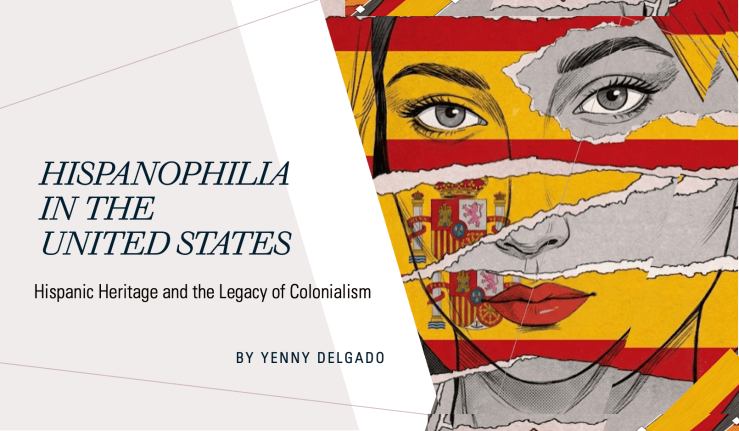
As the United States enters the month devoted to Hispanic Heritage, various celebrations, cultural events, and public observances are being organized around Hispanidad, which refers to the shared cultural, historical, and linguistic heritage connected to Spanish influence and legacy, particularly among Spanish-speakers and their descendants. Although the term might seem familiar and even harmless, it has significant historical and political implications that should be examined more thorough.
As an immigrant in the United States, I have often wondered how deeply rooted heritage has become institutionalized in this country. The manner in which individuals from diverse ethnic and cultural backgrounds are grouped together under the banner of Hispanic Heritage is perplexing and should prompt critical reflection on what is being celebrated, affirmed, and remembered, as well as which identities and histories are excluded. For this reason, I return to the historical context. During the Civil Rights Movement of the 1960s, a period characterized by increasing efforts to recognize the significant contributions of minority populations who struggle for rights, justice and opportunities. In 1968 under President Lyndon Johnson proclaim the National Hispanic Heritage Week, twenty years later, in 1988 President Ronald Reagan expanded into a 30-day observance. This expansion marked a shift from a focus on civil rights struggles to an emphasis on Spanish heritage, patriotism, and traditional values, which was a deliberate political and strategic decision. Many activists at the time viewed this shift as an attempt to “whiten” or Europeanize the community’s identity.
During his presidency Ronald Reagan and the Republican Party recognized the significant electoral influence of the expanding Latino population. Reagan famously stated, “Latinos are Republicans, they just don’t know it yet.” In this context, the U.S. government transformed an event rooted in civil resistance and community protest into a celebration that emphasized cultural assimilation, often at the expense of recognizing the community as multiethnic.
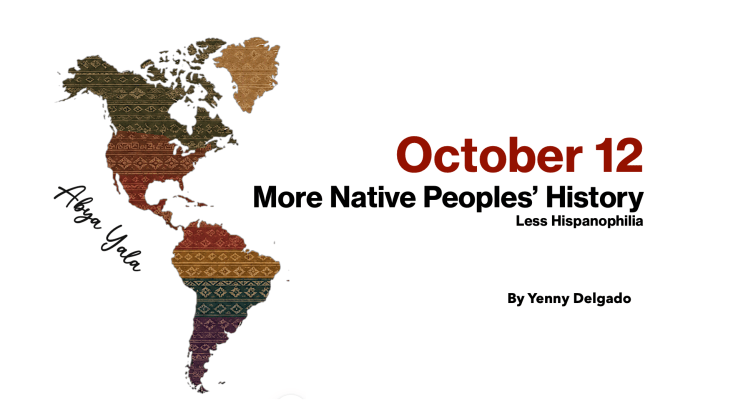
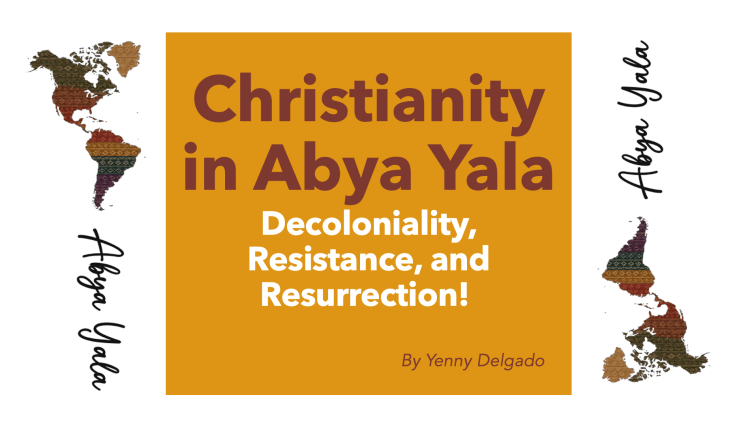
The presence of the Spanish colonialism spread all over Abya Yala* since they arrival in 1492. Spanish colonizers forced Native peoples to erase their identity in order to survive. Indeed Hispanidad in the former Spanish colonies was born to reproduce colonial structure, traditions, language and religiosity, that are still strongly present in today’s societies. However, there is a risk of reinforcing the same colonial views that decolonial thought aims to challenge if that heritage is celebrated without a critical examination of Spanish colonialism.
The contradiction is particularly clear when people who identify as Hispanic or Latino strongly criticize white supremacy, racism, and discrimination in Anglo-American society while at the same time honoring the Spanish colonial heritage; without subjecting that aspect to the same level of critical examination. The issue at stake is not whether we should reject the Spanish language, culture, or tradition; it is whether we can celebrate them without romanticizing the colonial systems that gave rise to them.
From Hispanic Identity to Hispanophilia
For many Spanish-speaking individuals who migrate to the United States or are born in the United States into Spanish-speaking families, the term “Hispanic” may become a broader identity that goes beyond being Cuban, Mexican, Puerto Rican, or any other specific country. In the United States, describing oneself as Hispanic can foster a sense of belonging and increase political visibility. At the same time, the category can generate significant ambiguity. In the broader cultural imagination, “Hispanic” or “Latino” people are often racialized as brown, associated with Native ancestry, low-wage labor, or, increasingly, with the experiences of migrants affected by intensified border enforcement. Yet many of the most visible political leaders who identify as Hispanic or Latino, including figures such as Marco Rubio and Ted Cruz, have predominantly Spanish ancestry.
The category “Hispanic,” therefore, can suggest the existence of a single, unified community when, in reality, it encompasses people with profoundly different histories, racial identities, ancestral backgrounds, social positions, and relationships to colonialism and migration.
Here, the concept of Hispanophilia proves useful. If it is broadly understood as meaning admiration or affection for Spain, including its culture, language, traditions, and historical legacy. Hispanophilia enables us to look at a phenomenon which is frequently left unnamed—that is, the emotional and cultural attachment to Spain which at the same time involves covering up the Spanish genocide, oppression, and colonialism that perpetuate white supremacy in their former colonies.
When I was growing up in Peru, October 12th was remembered as the day Columbus arrived and the legacy of Spaniards as triumphalist, and it was until Native peoples rose up to criticize that celebration as painful and colonial that the government in 2009, as part of a decolonial move, changed it to the “Day of the Indigenous Peoples and Intercultural Dialogue.” Because of that, living in the United States now, I often ask myself where this deep appreciation for Spanish speakers and others does who don’t even speak Spanish but glorify their Spanish ancestors comes from.
Why is the Spanish colonial heritage remembered in terms of pride, celebration, language, religion, and cultural achievements while the violence of colonization is buried in the background?
The Colonial Category We Have Inherited
The word “Hispanic” has long been connected with Hispania and Spain and is now used to refer to people associated with the Spanish language and Spanish-speaking cultures. Over more than five centuries, Abya Yala has been subjected to Hispanicization to “civilize the native” and to keep proud Spanish and other European descendants from assimilating into the Spanish culture because of privilege and benefits.
This colonial past has also shaped how people are named. Millions of Native people and their descendants—among them many brown-skinned individuals with Spanish surnames living in the country—have been obliged to specify their identity using categories such as “Hispanic” or “Latino” on censuses, official records, birth certificates, and demographic surveys.
It is important to mention that even those with Native ancestry cannot fully claim Native identity in the United States, especially in territories such as Texas, New Mexico, or California. Recognition as a Native person in these areas often requires formal tribal acknowledgment, which is not based on ancestry alone but on official documentation. This bureaucratic process complicates and sometimes obscures the lived realities and complex identities of many individuals. We still have the imprint of the colonial era in our identities, even if we do not recognize it. Just because a colonial identity has become commonplace, useful, or even significant does not mean that the history which created it is gone.
The Contradictions
The contradiction is especially noticeable in academic circles that see themselves as decolonial yet also celebrate Hispanidad and admire Spain and Spanish heritage.
Can we claim to be decolonial when we pay tribute to the cultural heritage of a colonial power without critically examining the colonial systems that created that heritage?
This is no objection to the Spanish language or to the cultural traditions that have developed over centuries through complex interactions, resistance, migration, and cultural exchange. The real issue is this: what does it mean to adopt decoloniality while also taking Hispanidad as a source of pride and, in some cases, showing a strong affection for Spain— Hispanophilia—if that identity’s colonial history is not addressed?
Is it possible to see the same in Anglo culture as in Spanish culture, as both were colonizers in Abya Yala? Racism, white supremacy, and colonial systems continue, stronger than ever.
This contradiction merits theological consideration because coloniality doesn’t vanish merely because we critically examine colonialism; it can persist through the identities we adopt, the histories we honor, the institutions we stay in, and the kinds of knowledge we regard as legitimate.
Certain theological communities celebrate their Hispanic identity, refer to Spain, and are proud of their Spanish heritage without looking at the way racial and social privilege still functions within these organizations. Although people may strongly oppose discrimination in Anglo-American society and say that they are disadvantaged because of their accents or because they are not always seen as white in the United States, they neglect the racial privileges they might possess in their countries of origin.
The fact is that being a migrant doesn’t automatically remove racial privilege, any more than identifying as Hispanic automatically makes someone a member of a racial minority in all situations.
The contradiction becomes even more evident when people refer to a parent or grandparent who came from Cuba, Mexico, or somewhere else as proof of their own disadvantaged position, without looking at the various ethnic, economic, and colonial situations existing within the communities of origin.
A decolonial approach demands that we not only consider who is marginalized in the United States but also examine how privilege and hierarchy function within the communities people come from.
Who Gets to Speak?
Some academic and theological discourses articulate the realities of marginalized communities while remaining structurally disconnected from them. In these contexts, marginalized individuals are often reduced to objects of reflection; their experiences and images are used to enrich academic debate, yet they remain excluded from shaping the discourse.
A genuinely decolonial methodology must go further. It should interrogate not only those who speak for marginalized groups, but also who is recognized as a subject, who holds authority, and whose knowledge is considered legitimate within theological discourse.
Addressing these questions entails significant personal and professional risk. Critiquing coloniality in spaces that celebrate Hispanidad directly challenges narratives that glorify Spanish imperial heritage rather than critically examine it. Openly identifying as a decolonial theologian can result in exclusion from Hispanic programs, scholarships, organizational networks, and publications. It involves honoring ancestral memory in contexts that pressure individuals to erase it or where such identity is perceived as a threat to institutional whiteness.
For scholars developing theology grounded in Indigenous and ancestral traditions, the journey is seldom straightforward. Furthermore, the work of decolonization is often appropriated by individuals who, lacking lived memory or embodied history, replicate this scholarship or reduce it to a transient academic trend.
This underscores the necessity for decolonial theology to embrace discomfort and challenge established norms. Decoloniality demands the dismantling of colonial logic within us, our communities, and the theological institutions we occupy. Without such commitment, decolonial language risks devolving into empty academic jargon superimposed on unchanged colonial structures.
Ultimately, the central question is not simply whether Hispanic Heritage Month should exist, but rather what histories we are willing to share and confront through its observance.
* Abya Yala comes from the Guna language and means “land in full maturity and land of vital blood.” The Guna people geographically inhabit the meeting points of the north and south of the continent, representing the motherland’s connectivity. In the 1970s, the term Abya Yala was adopted by many native activists, historians, politicians, and theologians as a unified name instead of using “North America” (among English speakers) and “Latin America” (among Spanish and Portuguese speakers), names which perpetuate colonial divisions. Yenny Delgado and Claudio Ramirez, 2022.