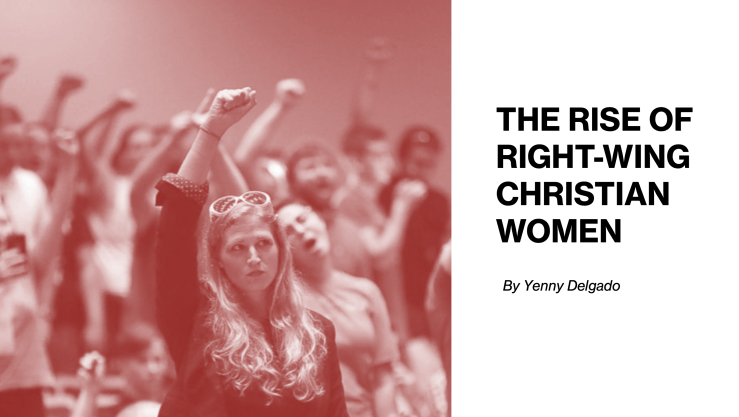
More than a hundred years ago, the women’s movement achieved something we now take for granted: women’s entry into public and political life. It was a path of marches, hunger strikes, and mobilization that advanced country by country until women’s suffrage was won across the continent. But this achievement should not be idealized; in the United States, Eurodescendant white, upper-class women voted first, in 1920, and only after decades of further mobilization did the turn come for Indigenous women, Afro-descendant women, and women without property or education. In Peru, my grandmothers were able to vote for the first time in 1956. That was the moment when women began to take on rights in public life, slowly and with steady steps: choosing political leaders, presidents, and members of Congress; owning property; being educated; deciding whether to marry; controlling pregnancies; and deciding over their own bodies.
It is worth asking: how did women come to question whether the women’s rights won over a century ago are worth preserving? Did the women’s movement that won women’s rights abandon women who chose to marry and build families, have children, and who at the same time had to carry the responsibilities of household and domestic economies—all in the name of gender equality?
After decades of resistance, women carry a double burden: social expectations and actual responsibility. Women are expected to run the household, care for children, contribute economically, remain silent in the face of violence at home, and navigate both public and private life without questioning it. Many women had neither the time nor the space to learn what was happening in the realm of rights because we were already carrying the full weight of family responsibilities on our shoulders.
Meanwhile, a more liberal discourse about women’s bodies was developing in public life: the right to choose not to have children, to live out one’s sexuality freely, access to safe abortion, freedom from violence and harassment in the streets, and other demands often articulated by young, economically independent, single women without children. It was in this contrast that a gap began to emerge. And within that gap, a different message took hold—one tinged with resentment and dissatisfaction.
It was evident that women did not experience equality in the same manner; the obligation of becoming a mother started to involve a dual burden, since in the discussion equality was presented as justice without acknowledging that the term could ignore the women who had to bear family and work responsibilities which oppressed them doubly.
On the contrary, equity recognised that even though women have all the abilities and intellectual capabilities needed to be equal to men, there do exist biological, social and historical differences—and aimed at correcting the existing inequalities on that basis.
Women were therefore split into one category or another; those who decided to build families, have partners, marry and have children lacked spaces in which to engage in dialogue and to understand one another, while those who did not choose to do so created room for a different conception of what it means to be a woman.
In religious circles, churches kept on stressing that women should, first and foremost, look after their children; they talked about the consequences of women being away and described taking charge of children as a way of safeguarding the family. Yet at the same time men took on less and less responsibility at home and stayed on the periphery, exhibiting absent and/or violent fatherhood.
Studies show that a woman who has a partner ends up working 30% more than a man who has a partner since the daily household duties still remain her responsibility. There is one other worrying result: a woman who is educated in an mixed-gender environment does not reach the same educational achievements as a woman who is educated only among women, whereas this is not the case with men; men do not develop the same level of competitiveness when they attend all-male schools.
It seems that, in some way, women lose time, ground, resources, and opportunities whenever they share space with men. Aren’t men still being educated to compete with us?
What is the origin of the right?
In order to understand why support among women for the political right is increasing, we must start with the origins of the term. The designations “left” and “right” came about in the French National Assembly; the people who supported the old system and the monarchy sat to the right of the president and saw poverty as a natural thing, while those who sat on the left believed that poverty resulted from social inequality and that the state should take action to remedy it.
To this day we have continued to base ourselves on that original political imagination. The most radical defenders of the traditional hierarchy are the originators of what we now refer to as the far right: ultranationalism, rejection of democracy, and the cult of strong leadership.
It should be pointed out that new right-wing populism directs public resentment at socialist governments, which its critics say do not promote economic growth; this causes left-wing voters to move to the right, since the right provides jobs, free markets, and wealth as solutions to social problems. The right-wing movement has strengthened its position through its alliances with conservative groups, particularly with evangelical groups, even though the political right still maintains the existing hierarchies.
In this situation on the continent a similar pattern is seen: conservative messages which limit women’s rights still enjoy the support of women. The conservative party bases its arguments on public safety and takes a strict stance on crime. For many women who have suffered domestic violence, this leads them to the view that stricter security measures in the streets will protect them in the home.
The “Tradwife” and the Idealization of Motherhood
The stereotype of the ‘tradwife’, that is to say the traditional wife, is also an example of economic privilege which increases the disparities between women. The idea of a woman who looks after the home, looks after the children, cooks and maintains an impeccable image of well-being is one that is linked with upper-class women.
At the same time, women from working-class and low-income communities work full-time and look after the home. Many of them are, in fact, the caregivers, nannies, and cleaners that affluent women employ to look after their children, while the affluent women look immaculate on social media.
The same thing occurs in politics: women who attain power are generally portrayed as “mothers of the nation”. Instead of talking about their technical training, they refer to bringing up their children, handling the family budget, and dealing with everyday life. They associate public safety with peace in the home. This is part of a wider trend in which voting is structured around the family, the man being its head.
For many years many churches have supported this view in order that women may remain in a subordinate position, and consequently women end up voting in accordance with their economic interests, their religion, and their privileges rather than supporting those people who would promote greater social well-being.
Women feel that these messages are speaking directly to them since feminist views on free choice and the right to abortion do not provide a sense of security. They wish to protect their families, and that is one of the main reasons why so many vote for conservative far-right candidates. Motherhood is seen as the key point in society, and looking after the home and the family is regarded as honorable.
However, this perspective is still something only a few women can enjoy since the majority of women also have to work in order to support their families. Meanwhile, the conservative discourse holds that liberal ideas ignore the role of mothers and wives—and this seems to be the case.
From a Theological and Political Perspective
A great deal of the content I have given above is based on theology; specifically it stems from a view known as complementarianism, which holds that men and women were created to have different roles and to complement each other. Under this approach, men are expected to take on leadership positions at home, in the church, and also in government, while women are expected to provide support, show care, and take a following role.
The teaching is based upon a group of biblical passages which many conservative churches interpret as direct commands rather than as texts which belong to their own historical backgrounds. Wives are told to submit to their husbands ‘just as the church submits to Christ’ (Ephesians 5:22–24). The husband is referred to as the ‘head’ of the wife, just as Christ is the head of the church (1 Corinthians 11:3).
Women are told to act as ‘keepers of the home’ and to be devoted to their husbands, children, and their household (Titus 2:5); motherhood is regarded as their main purpose, this being supported by the instruction to ‘be fruitful and multiply’ (Genesis 1:28) and by the belief that children are a reward and a blessing (Psalm 127:3–5).
Some churches go even that far by teaching that Christian couples should reject the use of contraception and have as many children as God gives them, a stance which is known as the “Quiverfull” movement.
This is not a set of private beliefs limited to the decisions of couples and families; rather, it is taught from pulpits, spread on social media and in parenting books, and presented to children as the normal and divinely ordained way of life.
As time goes on, women’s own understanding of authority is influenced in this way: a man in a position of leadership is seen as ordinary, safe, and biblical; a woman who is in a position of leadership is only accepted, first and foremost, if she displays the same firm and decisive manner that is linked with male leadership.
This makes it possible to understand a situation which at first sight appears contradictory in that women who adhere to these values end up supporting male leaders; and when a woman does attain a position of power she expects herself—and expects others to expect her—to lead in a ‘masculine’, patriarchal way, that is to say, in a decisive, tough-minded approach to crime, an unemotional one, and a calculating one.
In the view of a conservative church, it is not just men who are preferred in positions of authority; a style of leadership seen as masculine is also preferred, and women who manage to stand out in that system usually adjust themselves to that style rather than oppose it.
This provides an explanation for the rise of the far right since it is not just men who are involved in these movements, but a whole system of values—which are taught by religious organisations, reinforced in the family, and reiterated in politics—and as a result many women come to support a male leader or a woman who leads in a masculine way.
Women’s participation, even though it is restricted within this system, remains hard to change, particularly since the political right has also sought to discredit and mock the women’s movement, feminist ideas, and their achievements. From the point of view of political theology, women’s role in the rise of the far right is thus essential to understanding how women’s position in society is once again being redefined.
To be continue (part 2 coming soon)
Yenny Delgado Peruvian theologian and psychologist. For over fifteen years, she has worked with faith communities, social movements, and local governments in order to promote decolonial education. She is a member of the Steering Committee responsible for the Status of Women and Gender in the American Academy of Religion. Yenny serves as director of PUBLICA, founded the Political Theology and Spiritualities Network, and is the convener of Women Doing Theology in Abya Yala.


Published by