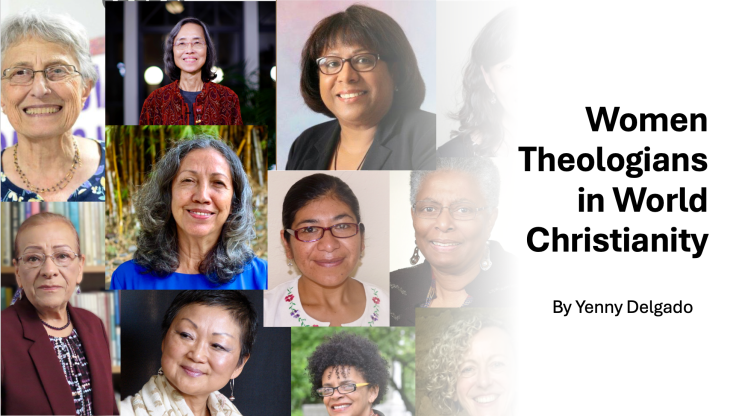
Women Theologians in World Christianity

As a female theologian who has studied in several countries and continents, I have always been interested in learning about and sharing the work of women doing theology. Over time, I have discovered a wide range of voices that are often overlooked but have a big impact on theological thinking around the world. Women theologians are interpreting faith in their own settings, questioning old structures, trying new approaches, and finding new ways for theology to address social, cultural, and spiritual issues.

This set of articles shares some of that work, showing how women are practicing theology in different parts of the world. Each place has its own history, challenges, and hopes, but all are united by a commitment to faith, justice, and community.

In Africa, women theologians focus on community, tradition, identity after colonialism, and real-life faith. They often use stories, oral traditions, and local experiences to talk about gender justice, poverty, and women’s roles in church leadership. African women’s theology is lively, rooted in context, and connected to daily life.

In Asia, women theologians look at theology through interreligious dialogue, cultural diversity, and social change. They often talk about issues like exclusion, migration, and how faith connects with politics and the economy. Asian women’s theology often highlights harmony, strength, and the search for meaning in diverse societies.

In Europe, women theologians question old theological traditions and offer new ideas. They address current issues like secularization, gender equality, and the future of the church. Their work often connects academic theology with public discussions about identity, ethics, and belief today.

In Abya Yala, women theologians share views shaped by liberation theology, indigenous beliefs, and feminist and womanist ideas. They challenge oppression and support dignity, community, and the value of life. Here, theology is closely tied to the fight for justice, decolonization, memory, and resistance.

In the United States, women theologians have helped shape feminist theology, womanist theology, and other approaches based on context. Their work shows how ethnicity, gender, sex, education, and religion connect, offering strong critiques and new ideas for a more inclusive and fair Christianity.

All these voices show that theology is not limited to one view or place. It is a lively, worldwide conversation shaped by women’s experiences and ideas from many backgrounds. Their work keeps changing World Christianity and invites us to listen, learn, and get more involved.

These articles invite you to discover, appreciate, and celebrate the important work of women theologians in shaping Christianity today and in the future.

Feel free to explore and share them!

📍 Women Doing Theology in Africa

📍 Women Doing Theology in Asia

📍 Women Doing Theology in Abya Yala

📍 Women Doing Theology in Europe

📍 Women Doing Theology in the United States

Yenny Delgado is a Peruvian theologian and psychologist. For more than a decade, she has engaged with faith communities, social movements, and local governments to advocate for decolonial education. She is a member of the Advisory Committee on Social Witness Policy within the Presbyterian Church. Yenny serves on the Steering Committee of AAR’s Status of Women and Gender in the Professions Committee. She is the director of Publica Theology and the convener of Women Doing Theology in Abya Yala, an ecumenical, womanist, and intergenerational theological community. She is recognized as a leading and foundational voice of Abya Yala Theology.

Political Theology and Spiritualities Network

Decolonial. Comunal. Prophetic.

The Political Theology and Spiritualities Network was established at the beginning of 2025 with a commitment to fostering dialogue, critical reflection, and collective efforts. Its aim is to strengthen theological, political, and decolonial thought grounded in the territories, ancestral knowledge, and the resistance of Native peoples of Abya Yala.

Our network serves as a meeting space for theologians, wisdom people for communities, faith leaders, committed to critical reflection on the relationships among spirituality, politics, and community life. We seek to promote a theology that is not constructed from colonial logics or from perspectives imposed by Western centers of power, but rather one that grows from the memories, spiritualities, and resistances of Indigenous peoples and communities across the continent.

Political theology, understood in this context, explores the connections between religious ideas and political practices, recognizing that spirituality has historically been a source of inspiration, resistance, and organization for communities. From our perspective, this reflection develops in dialogue with diverse disciplines, including native philosophy, decolonial approach, ethics, cultural studies, and critical theories, while remaining firmly grounded in the lived realities of the peoples of Abya Yala.

The network aims to serve as a space that integrates thought, formation, and action, connecting academics, community leaders, activists, popular educators, and others interested in advancing social transformation rooted in liberating spirituality. We maintain that theology should not remain confined to academia; it must engage with the struggles, aspirations, and practices of communities.

Guided by this conviction, we promote a political theology that is decolonial, communal, and prophetic. This approach seeks to amplify voices silenced by colonial history and to recognize the spiritual wisdom embedded in ancestral worldviews, communal practices, and ongoing struggles for justice and dignity.

As part of this process, in 2025, we organized the First Gathering of Political Theology and Spiritualities from Abya Yala, a space for exchange and collective construction that brought together more than 400 participants, including farmer leaders, human rights activists, defenders of the land, theologians, political scientists, and diverse voices committed to a community-based political theology.

We are currently launching the First Popular Education Course in Political Theology and Spirituality, which begins on May 8 and runs over eight consecutive Fridays until June 26, 2026 ( Time, 6:00 pm Puerto Rico). This educational process aims to strengthen critical reflection and communal discernment through the following themes:

  1. Abya Yala: Territory, Memory, and Spirituality
  2. Popular Spiritualities: Political and Liberating Pedagogies
  3. Theology of Politics or Politics of Theology? A Continental Perspective
  4. Decolonial Methodologies of Feeling, Caring, and Repairing
  5. Spirituality and Political Struggle from Abya Yala
  6. Digital Networks, Communication, and Political Spirituality
  7. Ancestral Spiritualities and Cosmologies
  8. Communal Discernment and Political Action

We invite all those interested in learning, reflecting, and building knowledge in the community to register and participate in this formative process. Follow the registration link HERE.

Please note that the course will be offered entirely in Spanish.

It is important to emphasize that although the course is offered free of charge, this does not diminish its value. The course represents the collective effort of the Network as organizers, the facilitators responsible for the eight sessions, and all participants who will contribute to making this formation process a space for communal growth.

The program will be led by the Peruvian theologian Yenny DelgadoArgentine theologian Claudio Ramírez, and political scientist Diego Ramos, who, together with other collaborators and members of the Network, are promoting this continental space for dialogue, formation, and collective action.

We Are the Guardians of the Planet: A Spiritual and Moral Call to Care for Creation

COP30, the United Nations climate conference taking place in Belém, Brazil, has a promising agenda. On paper, such declarations lend the conference an air of promise. Yet in practice, global climate gatherings have long been shaped not by the communities most affected, but by nation-states and multinational corporations whose interests often overshadow the voices of those living at the frontlines of ecological collapse.

In response, sixty Native/Indigenous organizations from both the southern and northern of Abya Yala* embarked on an extraordinary journey known as the “Yaku Mama Flotilla.” Activist leaders from Ecuador, Peru, Brazil, Colombia, Panama, Guatemala, and Mexico set out from Ecuador, traveling over 1,800 miles down the Amazon River to Belém, Brazil. The name “Yaku Mama,” derived from Quechua language, translates to “Mother of the Waters.” This name reflects a worldview in which every river, forest, and creature is nurtured by a maternal presence. It embodies a vision of creation as not merely an object, but as an integral part of a shared existence with the cosmos.

Their voyage is at once a protest and a plea: an unequivocal call to end fossil-fuel extraction; a demand to safeguard uncontacted peoples; a push for direct, community-led climate financing; and a reaffirmation that any durable climate solution must be rooted in ancestral knowledge. It is not simply a political act—it is a spiritual procession, a living litany on behalf of the wounded Earth.

The disconnect between these frontline communities and international climate forums often reveals itself most acutely in language. For many Indigenous peoples, humanity exists within nature, not beyond it. Their urgency is not an abstract concern but the anguish of losing a loved one, the Amazon, the rivers, the mountains, the trees, the motherland, home.

Remembering the words of Pope Francis, in Laudato Si’ (2015), reminds the world that the Earth “is our common home,” a mother who “cries out because of the harm we have inflicted on her.” His words resonate profoundly with the spirit of the Yaku Mama Flotilla. Both speak of creation not as a commodity to be exploited, but as a sacred gift entrusted to our care. Francis warns that when humans, from an Eurocentric and anthropocentric point of view, imagine themselves as masters and owners, detached from the web of life, the result is the devastation of ecosystems, vulnerable peoples, and the moral fabric that binds us together.

In Laudate Deum (2023), he becomes even more urgent, insisting that the climate crisis is not merely political or scientific but deeply spiritual. In the face of this reality, Pope Francis speaks with prophetic clarity, denouncing both political inaction and the systematic obstruction of negotiations driven by economic interests that place profit above the common good. He calls for the creation of global structures capable of protecting our common home, and he lifts up the vital role of popular movements and local communities, who already bear the weight of environmental destruction. Francis urges a profound cultural revolution, one that frees us from selfishness and leads us to responsibility and care. He insists that science is an essential ally, not an enemy of faith. He invites us to embrace an active hope, a hope that is not naïve, but committed, courageous, and transformative.

The flotilla’s journey thus becomes a living homily. It proclaims what Pope Francis emphasizes repeatedly: that ecological conversion requires listening to those who live closest to the land, who understand creation as a communion of relationships. It is an invitation to repentance for the harms done, a call to defend the sacredness of all life, and a commitment to walk, like the “Yaku Mama Flotilla,” ourageous hope toward a future where humanity and creation may be healed together.

*Abya Yala in the Guna language means “land in full maturity and land of vital blood .” In the 1970s, Native activists, historians, politicians, and theologians with a strong sense of ancestral identity adopted the term Abya Yala as a unified name for the continent, instead of referring to it as Latin America, Hispanoamerica among other names that perpetuate colonial divisions (Delgado & Ramírez, 2022).

Abya Yala Theology: Prophetic, Communal, and Political

From November 7 to 9, 2025, the inaugural continental gathering was held in Mazatenango, Guatemala. Over the course of three days, delegations from ten countries and 375 participants—including leaders from diverse backgrounds such as farmers, educators, theologians, historians, anthropologists, sociologists, political scientists, elders, and spiritual guides from across the continent—came together to affirm the foundations of a communal, political, and prophetic theology that denounces colonial oppression and dictatorial political agendas.

This gathering marked a historical event in the emergence of Abya Yala theology. It served as a continental platform to defend life, harmony, Native spiritualities, ancestral knowledge, and the right to exist of the Native/Original Peoples of Abya Yala.

As Christendom has promoted since colonization, as a linear and singular understanding of history, it has increasingly marginalized alternative narratives, diverse spiritualities, and various paths to connect with the divine, wisdom for the native population. This perspective, influenced by government-imposed control, unilateral education programs, and structured religious practices, has perpetuated policies and systems that dictate behavior, belief, and imitation, aiming to mold individuals in its own image. However, this approach is no longer acceptable. Christianity and the teachings of Jesus illuminate a range of practices, as seen in Abya Yala theology, which moves beyond the image of the crucified man to embrace faith in the Resurrection.

In response to this, an embodied spirituality has emerged; the body of the resurrected manifests that another life is possible. A theology that is next to the everyday struggles, in maintaining the memories of those who dedicated their lives to achieving dignity, freedom, and the pursuit of a good living. For prophets of our time who believe in a cycle of times and preach against colonialism and superiority, that the time for native people

‘s Resurrection is now. In this context, we assert that Abya Yala Theology emerges from the heart of God, the resurrected messenger, rooted in faith, hope, and the proclamation of the Resurrection in the lives of those who suffer most since colonization: Indigenous, Natives, and Original peoples of Abya Yala.

Abya Yala’s theological perspective amplifies Quijano’s decolonial perspective on knowledge and power, emphasizing the need to deconstruct power and knowledge systems imposed by European paradigms, which often present themselves as superior and universal. Abya Yala theology is a decolonial theology with holistic ways of theological decoloniality, encompassing three vital dimensions for thinking and feeling God in Abya Yala: feeling, caring, and repairing.

To feel means to be touched, profoundly affected by the struggles of Native/original peoples who inhabit this “land of vital blood,” united through a shared ancestry. Caring embodies love and a commitment to the community, where feelings are genuine and mutual responsibilities foster a sense of cosmoexistence that brings us together. Finally, restoration signifies the movement towards actions that repair broken relationships, restore dignity, provide well-being, and create new conditions for life for all, within the framework of a cyclical and ancestral worldview.

For this reason, Abya Yala theology is inherently political, emphasizing the importance of engaging with spiritualities and ancestral knowledge that enable us to live in community amid the pluridiverse and pluricultural of Natives/Originals peoples. This approach is not the work of isolated theorists; rather, it underscores the urgent need for a theology arising from the peoples themselves as an affirmation of the living God in Abya Yala.

Abya Yala in the Guna language means “land in full maturity and land of vital blood .” In the 1970s, activists, historians, politicians, and theologians with a strong sense of ancestral identity adopted the term Abya Yala as a unified name for the continent, instead of referring to it as Latin America, among other names that perpetuate colonial divisions (Delgado & Ramírez, 2022).

Spiritualities and Political Theology from Abya Yala

Statement at the Conclusion of the First Continental Gathering on “Spiritualities and Political Theology from Abya Yala.” (Over 400 participants, including women, men, and children.)

Mazatenango, Suchitepéquez, Guatemala November 10, 2025

​Gathered in Mazatenango, Guatemala, from November 7–9, 2025, representatives of faith communities, social movements, grassroots organizations, farmers, educators, academics, and theologians from across Abya Yala convened to share experiences and deepen our common search for meaning. This First Encounter of Spiritualities and Political Theology From Abya Yala* arose as a space of attentive listening and collective discernment, inviting us to reimagine faith, justice, and hope in light of our continental realities and the ancestral wisdom of the original peoples of Abya Yala.

​Over the course of three days of dialogue, a shared conviction emerged: our spiritualities, born in Abya Yala, cannot be separated from history, from our bodies, or from our motherland. They are embodied spiritualities, expressed in the daily struggles of our peoples, in the memory of those who gave their lives for justice, and in the care for life in all its forms. Confronted with the open wounds of colonialism, patriarchy, racism, and the new manifestations of global capitalism, we affirm the urgent need for a theology conceived and lived within communities—one that is political, liberating, and decolonial.

We understand that our spiritualities as christians and followers of Jesus of Nazareth is characterized by a commitment to the life and dignity of the oppressed, distinguishing it from the power dynamics that, throughout history, have shaped Christianity as a system of domination. In this sense, we affirm that Christian Native spiritualities cannot be separated from transformative action or from the horizon of the Kingdom of God, understood as justice, equity, and universal solidarity.

During this first encounter, the conviction emerged strongly that Abya Yala theology is ancestral, comunal and political theology and must begin with feeling, caring, and repairing. These three dimensions express a profoundly human and spiritual methodology. Feeling involves allowing oneself to be affected by the suffering and hope of people; caring implies assuming mutual responsibility among human beings and with creation; repairing, finally, refers to transformative action that seeks to restore dignity and build new conditions for life.

Furthermore, the importance of critically engaging with digital spaces was emphasized, recognizing that networks can be both sites of domination and territories of encounter and resistance. From the perspective of political theology, there is an urgent need to construct narratives that promote discernment, solidarity, and communion in a world fragmented by disinformation and indifference.

​These shared reflections also led us to recognize the value of ancestral memories as a source of wisdom for political action. Our ancestral identity is a symbol of spirituality and cultural heritage for the peoples of Abya Yala: a memory that resists oblivion, teaches us to walk with humility, and inspires us to build community in the face of adversity.

In this context, we express our appreciation for the support of CODECA, PUBLICA, ÑAWI, and the delegations from various countries who, through their commitment to human rights, land and territories, and the dignity of peoples, embody the Gospel as a life-giving force in the face of fascism, racism, impoverishment, supremacies, and the many forms of exclusion and genocide committed in Abya Yala. Their decolonial actions stand as a living testament to a spirituality that takes shape and becomes resistance.

These days together leaves us with the conviction that reflecting on spiritualities is not an isolated theoretical exercise but an urgent necessity for sustaining and guiding the political struggles of our peoples. A political theology without spirituality risks becoming meaningless, and a spirituality without political commitment becomes sterile in the face of the world’s suffering. Both dimensions must be intertwined so that faith becomes transformative praxis.

From Abya Yala, we invite faith communities, ecclesial and academic institutions, and social movements to continue forging common paths. We call for a spirituality rooted in decolonial history, one that looks with compassion and acts courageously in the face of injustice.

​We firmly believe that without spiritual practices there can be no lasting political transformation, and that without justice there can be no true spirituality. With this conviction, we reaffirm our commitment to life and to building a future of peace, equity, and dignity for all in our motherland.

With hope and determination,
We, the participants of the First Gathering on Spiritualities and Political Theology in Abya Yala.

​*Abya Yala in the Guna language means “land in full maturity and land of vital blood.” In the 1970s, activists, historians, politicians, and theologians with a strong sense of ancestral identity adopted the term Abya Yala as a unified name for the continent, instead of referring to it as Latin America, The Americas among other names that perpetuate colonial divisions (Delgado & Ramírez, 2022).

The Uneasy Expansion of Reformed Theological Education in Latin America: Proliferation, Tensions, and Possibilities

By Dr. Gonzalo David

In recent years, we have witnessed a proliferation of Protestant and Evangelical seminaries across Latin America. This phenomenon might appear to be a positive sign, suggesting a growing interest in theological formation. Yet it also raises several issues that deserve careful attention.

When I refer to this increase in theological seminaries, I am thinking particularly of the Protestant and Evangelical churches I know best: the Reformed world in all its diverse expressions—even if, within the confessional Presbyterian sector, there are disagreements about what truly counts as “Reformed” in historical and theological terms [I]. It is essential to delimit this field of analysis in relation to its features, since the institutions in question differ markedly—by nature, development, and academic status—from the Catholic universities that dominate theological education in much of the region.

What follows, then, is not a comprehensive analysis of the Reformed milieu, but rather a general sketch of one of its internal phenomena, an interpretive proposal, and a few concluding reflections.

Institutional Fragility 

The main problem I identify—and from which most others stem—is that many of these seminaries have been created under the logic of our free-market model: supply follows perceived demand. In this case, the “demand” comes from a growing interest in biblical and theological education, often among Pentecostal believers who have recently discovered the Reformed tradition.

The issue, in my view, is not the motivation behind these initiatives but the fact that most of them fail to meet even minimal academic standards. These seminaries are rarely subject to any external quality control or accreditation. By relying on the information, they themselves provide, we can observe that many of their instructors lack the proper academic preparation to teach—let alone expertise in the specific areas of the courses they offer.

In some cases, these teachers do hold degrees or even graduate credentials, but those degrees often come from institutions of equally questionable quality [II]. Moreover, there are typically no formal partnerships, faculty or student exchanges, research programs or publications—criteria commonly used in evaluating higher education institutions.

These shortcomings reveal not only institutional fragility but also a deeper intellectual problem: these seminaries tend to be spaces of information transfer rather than critical reflection or knowledge production. They operate within a very limited theological culture—largely confined to conservative Anglo-Saxon Reformed theology, a small and academically marginal current within global theological production.

Entire traditions are simply ignored, such as the Franco-German theological world, which has shaped Western theological thought for the past two centuries, or the increasingly vibrant Latin American, Asian, and African theologies [III]. This is troubling because a proper undergraduate program in theology should provide a set of core contents ensuring that students acquire essential knowledge and skills. In these seminaries, that standard is not being met.

As a result, many graduates find themselves poorly equipped for advanced study, lacking the necessary intellectual and academic tools to pursue postgraduate education effectively.

A concrete example of the lack of academic understanding behind some of these projects can be seen in seminaries that simultaneously offer both a Bachelor’s degree in Theology and a Master of Divinity (M.Div.), as if the latter were a natural continuation of the former. Anyone even moderately familiar with theological education in the Western world knows that the Master of Divinity is a professional degree, originally designed in the Anglo-American context for individuals with a prior Bachelor of Arts to prepare for ordination or ministry. Over time, it replaced the older Bachelor of Divinity (B.Div.). In other words, the M.Div. is the first degree in theology for those entering ministry from another academic background—it is not a specialized postgraduate degree. In continental Europe and Latin America, its rough equivalent would be the Licenciatura en Teología.

The Latin American Particularity of Protestant and Evangelical Theological Education

Given this situation, what possible solutions might we envision? First, we must recognize that our ecclesial, theological, and historical context differs fundamentally from that of Europe, Asia, or North America. In Latin America, only a handful of Protestant or Evangelical theological faculties are officially recognized by the state [IV] or accredited within the national higher education systems—and among those, few belong to Reformed or Reformed-leaning traditions.

There are examples in countries like Costa Rica, Argentina, Paraguay, and Nicaragua, but they are exceptions rather than the rule. Any realistic diagnosis must take this into account.

Furthermore, the creation of theological seminaries in our region rests on the principle of academic freedom, grounded in the universal right to education recognized by international human rights conventions. It would therefore be mistaken to argue that the state should necessarily regulate the founding of such institutions. The solutions should not follow totalitarian impulses, even if the abuse of this freedom gives rise to legitimate concerns.

On the one hand, these initiatives arise from the exercise of a right; on the other, they demand ethical and academic responsibility from those who lead them. The evidence suggests that this dual dimension—freedom and responsibility—is not equally understood or respected by all actors involved.

Denominational, Interdenominational, and Para-ecclesial Seminaries

Within this landscape, we can distinguish between denominational [V], interdenominational [VI], and para-ecclesial seminaries [VII]. The first are sustained by a single denomination; the second, by multiple denominations; and the third emerge from personal or collective initiatives—whether through associations or foundations—that do not answer to any specific church body.

In my view, denominational and interdenominational seminaries have a better chance of developing sustainable academic projects capable of maintaining higher quality standards. Since they are accountable to one or more church bodies, they are more likely to receive long-term investment—both human and financial—and to address internal weaknesses.

Para-ecclesial seminaries, by contrast, depend on the efforts of a small group of individuals. Such efforts require at least a few essential elements from the outset: financial resources, perseverance, administrative competence, and a basic understanding of theological education. Without these, it is difficult for any project to survive more than a few years.

A frequent objection regarding denominational and interdenominational seminaries is that, while they may enjoy more stability and resources, they tend to limit academic freedom because of their confessional commitments. This tension—between institutional support and intellectual autonomy—is real. Yet it is also important to remember that every educational institution operates from a guiding vision or worldview. Catholic theological faculties, for instance, which are often integrated into state-recognized universities, must meet both academic and magisterial standards. They are no less confessional for being academically rigorous.

Conclusion

Given all that was discussed, there is an urgent need for systematic, quantitative research on the phenomena recently described —data on the number of Protestant and Evangelical seminaries established in recent years, the academic qualifications of their faculty, their publication output, student graduation rates, and the long-term trajectories of their graduates.

Such research would provide a clearer picture of these seminaries and their evolution in Latin America, especially regarding institutional development and sustainability. At present, this remains an almost unexplored field, and this lack of data poses serious methodological challenges for anyone seeking to analyze it properly.

Still, while the current situation is concerning, this concern should be tempered with perspective. The historical Protestant denominations possess a significant opportunity: to build strong, durable educational projects that could meaningfully contribute to theological reflection and production in the Global Christianity. 

It has been several decades since liberation theologies first emerged in Latin America—movements that, regardless of one’s theological stance toward them, demonstrated that our continent can produce intellectually vigorous and contextually relevant theology. Coupled with the fact that Spanish is the world’s second most spoken language, this should remind us that Latin America remains a fertile ground for the flourishing of theological ideas that speak meaningfully to our troubled times.


Notes

[I] Presbyterians of various branches, Reformed Baptists, Reformed Pentecostals, Anglicans, and others.

[II] In the North American context, one way to determine whether a seminary meets minimum academic standards is to check whether it is accredited by the Association of Theological Schools in the United States and Canada (ATS). Some may question the rigor of certain ATS-accredited institutions, but it remains the official benchmark.

[III] A separate but related issue concerns the generally weak training offered in biblical studies—especially in exegesis and ancient languages—throughout Latin American theological education.

[IV] Examples include the Universidad Evangélica de las Américas and the Universidad Bíblica Latinoamericana in Costa Rica; the Martin Luther King Jr. University in Nicaragua; and the Corporación Universitaria Reformada in Colombia, among others.

[V] Regional examples include denominational seminaries such as the Seminario Teológico Bautista (Chile), the Centro de Estudios Pastorales (CEP), and the Seminario Teológico Presbiteriano IPCH.

[VI] For instance, the Comunidad Teológica Evangélica (Chile) and similar collaborative networks across the continent.

[VII] Examples include the Instituto Bíblico Nacional (Chile), the Seminario Teológico Reformado (Chile), and the Seminario Martin Bucer.


Dr. Rev. Gonzalo David: Doctor in Philosophy, Université de Montpellier Paul-Valéry, France. Doctor in Theology, Faculté de théologie protestante de Montpellier, France. Research Fellow – Neo-Calvinism Research Institute. Theological University Utrecht.

Women and Theology: From a Womanist Perspective

Women have been involved in theological work since the beginning of Christianity. However, their contributions have been undervalued or rendered invisible in theological and academic spaces due to the stigma, suspicion, and jealousy of a patriarchal system that has arranged hierarchies in which women are not seen as equals. Despite the imposed invisibility, women have guided their theological work from their own contexts, responding to the needs of their communities and embodying a theology that is real, experiential, accessible, and deeply womanist. Their commitment to developing a theology of incarnation and their deep belief in the resurrection of Jesus’ message of hope has been essential in shaping a theology that interprets tradition and responds to everyday life.

Women theologians draw, color and reflect on their daily experiences as grandmothers, mothers, aunts, sisters, and daughters. Their theology transcends academic boundaries, rooted in a deep spirituality in community. Grassroots faith communities, informed by the reflections of these women, have integrated theological perspectives into conversations around the kitchen table, into the challenges of motherhood and parenting, into resistance against poverty and violence within the family and in society, into the struggles of forced migration in search of a better future, into ancestral spiritual practices of hope and into the wisdom that emerges from generational resistance to living well, living beautifully.

Women have established networks of hope and resilience while expanding their understanding of the Gospel to include the intersectionality that happens to women because of their sex, their educational and economic access, their skin color, and their ancestral heritage that is the basis of their identity and engenders a deep feeling-thinking of the relationship with God.

For the coming generation of women, we find ourselves in a time when we have forged a significant path in theological reflections rooted in our everyday experiences and in which communities of faith are those that promote and strengthen these experiences.

It is essential to recognize that the contributions of women as theologians have enriched our understanding of faith and have transformed the Church and believing communities into more inclusive and diverse environments, dedicated to uplifting those who have been historically marginalized, and so we must continue to blaze a trail from within to radiate the message outward. In this way, women’s theological work is both nourishing and generative, embodying liberation theology principles closely intertwined with community life, commitment, resistance, and hope.

In the cover photo features Ana Maria Jara, Yenny Delgado, Luzmila Quezada, and Irma Espinoza, peruvian theologians.

This text was originally published on AETH https://aeth.info/wp-content/uploads/2025/03/MUJER-TEOLOGIA-Eng-March-9.pdf (March 8, 2025)

Yenny Delgado is a psychologist and theologian. Doctoral candidate in Psychology of Religion at the University of Lausanne. Convener of Women Doing Theology in Abya Yala. Yenny is the founder and director of PUBLICA, an organization that facilitates dialogues, gatherings, and a space that amplifies women’s voices from decolonial and liberation perspectives.

Spiritualities and Political Theologies from Abya Yala: Challenges and Decolonial Perspectives

CONTINENTAL CONFERENCEGuatemala , November 7-9, 2025

Introduction

Communities organized in resistance, International Land Coalition articulated in CODECA Guatemala, the forum of political theology PUBLICA and the community of intercultural dialogue, ÑAWI, invite theologians, academics, community leaders in sociopolitical resistance, wise men and women members of indigenous communities, and actors committed to socio-political transformation, to participate in a space for dialogue and learning that explores the experiences of resistance of social and ecclesial movements through Abya Yala.

This gathering seeks to reflect on the transcendental hopes of communities in sociopolitical resistance, ecclesial and communities of faith, Originals Peoples/ Natives leaders who promote processes of profound structural changes in and from different territories of the Continent of Abya Yala. Our Mission is to contribute from political theologies to restoration/construction of Good Living practices with a decolonial and plurinational perspective.

CALL FOR PAPERS

We invite theologians, academics, community representatives engaged in sociopolitical resistance, and knowledgeable elders from Native communities with indigenous practices and spiritualities, as well as activists committed to socio-political transformation. We encourage participation in a dialogue and learning space that examines the experiences of resistance within social and ecclesial movements.

We invite submissions that explore, from a political and theological standpoint, the challenges and opportunities faced by communities in resistance as advocates of “Good Living.” We welcome contributions addressing the following thematic areas:

1. Ecclesiastical Action in Public Policy: Strategies for influencing social and public policies to defend human rights.

2. Educating for Liberation and Transformative Resistance: Popular education, ancestral practices, and methodologies designed for training in political theology.

3. Health and Restoration of Balance: Community organization efforts to ensure equitable access to health justice.

4. Eco-Theology from Abya Yala: Theological and indigenous perspectives on the care of Motherland.

5. Political Theology and Migration: Analysis of migration processes in Abya Yala, highlighting border policies, exclusion, and discrimination against migrants.

6. Native and Afro-Descendant Identities: Insights from Native and descendants, Indigenous, African, and Black theology and spiritualities regarding the challenges faced by Native and Afro-descendant communities in Abya Yala.

7. Women Rights: Highlighting women’s struggles across various social and political contexts. Womanist approach to rights and liberation.

PROPOSAL
Proposal of a maximum of 300 words. Brief biography of the author(s)
Indicate the language of presentation. Country of Nationality.Ancestral Identity. Institution or/in membership of community.

Evaluation Criteria

– Thematic relevance.
– Practical and participatory approach.

SUPPORT FOR PARTICIPATION

Those selected to present their papers or workshops will be offered lodging, food, and ground transportation from the airport to the event’s location.

Languages of the conference

To ensure the inclusion of many diverse voices in Abya Yala, we will provide translations during presentations in the following languages:

· Native languages (to be coordinated) · Spanish . Portuguese . English

DEADLINE FOR SUBMITTING PROPOSALS
Proposals must be sent from February 15 to May 30 to the email teologiaabyayala@publicatheology.org

This meeting is an invitation to collectively build a theological-political thought from Abya Yala, capable of responding in an inclusive, fair, and sustainable way to decolonial challenges.

We look forward to your participation!

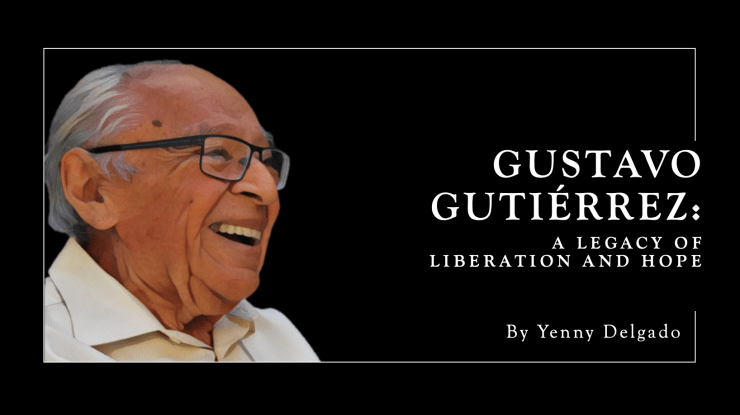
“Gustavo Gutierrez: A Lasting Legacy of Liberation and Hope”

The Peruvian, Quechua-descendant theologian, psychologist, philosopher, and priest Gustavo Gutierrez is widely recognized as the founder of Liberation Theology and the Bartolomé de las Casas Institute. Gutiérrez, born in Lima on June 8, 1928, was a profound thinker and passionate advocate for the rights and dignity of the impoverished. His work, which continues to inspire generations of Christians, is a powerful catalyst for social justice and Liberation, igniting a flame of hope and determination in the hearts of those who strive for a more just world. His legacy is a testament to the transformative power of theological justice and solidarity.

Gustavo Gutierrez’s solid academic and theological education, including philosophy, psychology, and theology studies at renowned European institutions, provided him with a comprehensive understanding of the human condition and the Christian faith. This diverse education was instrumental in shaping his unique perspective on Liberation Theology.

Initially, Gutierrez began his career as a university student studying Medicine at the National University of San Marcos and Letters at the Pontifical Catholic University of Peru, but his religious vocation led him to abandon those studies and dedicate himself to the entire priesthood. This decision motivated him to seek a training theological broad and deep, which later allowed him to develop and articulate their vision of Liberation Theology.

His educational journey extended across Europe, taking him to Belgium, France, and eventually Rome. At just 23 years old, in 1951, he earned a bachelor’s degree in philosophy from the Catholic University of Louvain in Belgium. Driven by a deepening curiosity in the human mind and spirituality, he continued his studies and, at 27, received a bachelor’s degree in psychology from the Catholic University of Lyon, France, in 1955. A year later, in 1959, at 31, he completed a bachelor’s degree in theology. Shortly afterward, he was ordained as a priest, beginning a lifelong pastoral vocation.

In 1959 and 1960, Gutiérrez deepened his theological studies at Gregorian University, Rome. Later, he moved to the Catholic Institute of Paris, France, where, in 1962 and 1963, where he began to develop the foundations of his future reflection, theological and social.

Later in life, in 1985, at 57, he obtained his PhD in Theology, also from the Catholic University of Lyon, France, marking significant progress in his investigation of theology and its contributions to Liberation Theology.

Origins of Liberation Theology

The 1960s and 1970s social and ecclesial context of Abya Yala was crucial in forming Liberation Theology. In 1968, Dr. Martin Luther King Jr. advanced a theology against the discrimination and segregation faced by African Americans in the United States. Father of Black Theology, James Cone, continued this effort in 1971 to confront systemic oppression. Meanwhile, Paulo Freire published Pedagogy of the Oppressed in 1970, emphasizing education as a path to social justice and empowerment, particularly for marginalized communities.

In this context, Gutierrez’s theology presented a powerful vision of God as the liberator of the impoverished, with a central message of Christ’s resurrection embodying hope and Liberation. His work, however, was not without controversy. His focus on the poor and marginalized redefined theological discourse, emphasizing the Church’s role in challenging injustices and inspiring movements for social justice. Gustavo Gutierrez laid the foundation for what would become Liberation Theology, rooted in a commitment to the oppressed. His work ignited an international dialogue, with theologians worldwide seeking his insights on Liberation and social commitment, eager to understand the controversies and complexities surrounding his revolutionary ideas.

He participated in the Second Vatican Council and the Latin American Episcopate General Conferences in Medellín (1968) and Puebla (1979). These events were pivotal in shaping Gutierrez’s theology, providing a platform for him to offer a theology committed to the oppressed and responding to poverty, structural inequality, and social consciousness. This theological reflections influenced the development of social pastoral care in Abya Yala and provided a global platform for Gutiérrez’s transformative vision.

The publication of Liberation Theology: Perspectives (1971) marked a significant milestone in the revolution of Liberation Theology. Since his first writings, Gutierrez defended that faith should be radically Committed to the poor, an ‘option’ or ‘preferential’ that placed the marginalized and excluded at the center of the action of Christianity. Through his​ ‘see, judge and act’ approach, Gutierrez proposed a theological reflection that starts from concrete reality, illuminated by the Word of God, to reach an active and liberating transformation. This approach was a call to action, urging Christians to engage with the world’s injustices and work towards a more just society.

The Impact of Liberation

Liberation Theology fostered a profound ecumenical dialogue that welcomed people of all Christian traditions. This dialogue was about theological discussions and, importantly, the church’s pivotal role in ending injustice and standing with the communities in need. It often manifested in grassroots Christian communities that sought to act on the gospel’s teachings, guided by inspiring voices like Pedro Casaldáliga, Leonardo Boff, Elsa Tamez, Ivone Gebara, Eleazar López, Juan Luis Segundo, among others.

It is important to remember that amidst this theological momentum, Gutierrez, like many committed priests and theologians, faced persecution for his dedication to the oppressed. The murder of priests, such as Oscar Romero en El Salvador and now priest Marcelo Pérez , just days ago in Chiapas, Mexico, underscores that embracing a theology of liberation continues to be a path that demands one’s life. These ongoing challenges faced by theologians should serve as a reminder of the urgency and commitment required in the pursuit of social justice.

Today, Gutierrez’s legacy lives on in the evolving expressions of Liberation Theologies, including Ecofeminist, Womanist theology, Indigenous theology, Abya Yala theology, and other justice-focused theologies. These perspectives continue to address global injustices and advocate for inter-religious dialogue, emphasizing that Gutiérrez’s foundational work still offers a powerful and inclusive vision for social transformation. 

On October 22, Gustavo Gutierrez, the Peruvian priest and father of Liberation Theology, passed away. His message has already taken root and will continue to flourish.

*The name Abya Yala comes from the Guna language (native peoples inhabited between Panama and Colombia) and means land in full maturity and land of vital blood. This name focuses on reflections on the land and its native people as a community connected to the whole continent. In the 1970s, native activists, historians, politicians, and theologians adopted Abya Yala as the unified name instead of Latin American (Spanish and Portuguese speakers) and North American (English speakers) names that perpetuated Eurocentric and colonial divisions.

___________________

Yenny Delgado
Peruvian psychologist and theologian Yenny is a doctoral candidate in Psychology of Religion at the University of Lausanne, Switzerland. She is also the founder and director of Publica Theology. Yenny is also the convener for Women Doing Theology in Abya Yala, an ecumenical, intergenerational activist space dedicated to amplifying women’s voices in theological education.

Women Doing Theology in Africa

The 10 African theologians you should know

By Yenny Delgado & Aline Frutuoso

In contemporary theological studies, the voice and impact of African women theologians have been instrumental in redefining religious and ethical paradigms around the world. Their contributions not only enrich theology with historically marginalized perspectives, but also challenge and transform power structures within faith communities.

The theological work of women makes illuminates the unseen and denounces practices and activities that run counter to the Gospel. The work of women investigates and teaches in favor of social justice to understand the intersections between spiritual practices, constructions of gender, sex, ethnicity and social justice, which are intertwined to deepen and enrich theological reflection Women’s.

Below, we present the 10 most inspiring African theologians. Each of them not only expands the theological canon, but also motivates and trains a new generation of scholars and believers to think critically about the theological work of women at the heart of the church and society.

  1. Mercy Amba Oduyoye (Ghana)

Mercy Amba Oduyoye, born in Ghana in 1933, is an academic, theologian and activist known as the “mother of African women’s theologies.” She was educated in Methodist schools and later studied at the Kumasi College of Technology. She earned her master’s degree in sacred theology from the University of Cambridge. Oduyoye was the first woman in Africa to obtain a university degree in Theology and with this training she taught at various universities in Africa, such as Cape Town and Nairobi. Additionally, she has been a visiting professor at the University of Ghana and at institutions in the Netherlands, South Africa and the United States.

She is the founder of the Circle of African Theologians and founding director of the Women’s Institute in Religion and Culture at Trinity Theological Seminary in Legon, Ghana and has made significant advances in contemporary theological and ethical discussions. Mercy is an influential theologian in the understanding of African spirituality and the defense of women’s rights.

Publications:

“Beads and Threads: An African Woman’s Reflections on Christianity in Africa.”

  1. Musa W. Dube (Botswana)

Musa W. Dube is a Botswana academic, theologian and activist. She earned her doctorate in New Testament from Vanderbilt University in Nashville, United States. Musa is a professor of New Testament at the University of Botswana and is widely recognized for her contributions to feminist and postcolonial theology. Her work on biblical interpretation from an African perspective has been influential in academic and practical settings. She is the general coordinator of the Circle of Concerned African Women Theologians. Her contributions to the decolonization of theology and her advocacy for gender justice have made significant advances in contemporary theological and ethical discussions. Winner of the Gutenberg Ensino Prize (2017) from Gutenberg University, Germany.

Musa works hard and consistently at the intersection of gender, race, ethnicity, and colonial ideology and their impact on the production and use of biblical texts in history. It explored ways of reading the Bible for an effective response in the context of HIV/AIDS, integrating gender and challenging theological institutions to revise their curriculum. She is an active member of the United Methodist Church and the Society of Biblical Literature.

Publications:

“Postcolonial Feminist Interpretation of the Bible.”

“The Bible on HIV and AIDS: Some Selected Essays.”

3. Isabel Apawo Phiri (Malawi)

Isabel Apawo Phiri is a Malawian academic, theologian and activist. She obtained her doctorate in Theology from the University of Cambridge, United Kingdom. Phiri is known for her work in African feminist theology, gender studies and social justice in the African context. She has worked in various academic institutions and is widely recognized for her contributions to theology and her defense of women’s rights.

She is Deputy General Secretary for Public Witness and Diakonia for the World Council of Churches. Professor of African Theology and Dean of the School of Religion, Philosophy and Classics at the University of KwaZulu-Natal. Isabel is a prominent figure in contemporary African theology, and her work has been instrumental in advancing discussions about gender and religion in Africa.

Publications:

“African women, religion and health: essays in honor of mercy”

  1. Musimbi Kanyoro (Kenya)

Musimbi Kanyoro is a Kenyan academic, theologian and activist. She obtained her doctorate in Feminist Theology from the San Francisco Theological Seminary, United States. Musimbi is recognized for her important contributions to African feminist theology and her tireless work advocating for women’s rights and social justice. She has held leadership positions in several international organizations and remains an influential voice in the field of theology and gender studies.

She was executive director of the Young Women’s World Christian Association (YWCA) and general secretary of the Lutheran World Federation for several years. She has been a key figure in promoting gender justice and women’s rights in both religious and secular contexts. Her work has addressed critical issues such as health, reproductive rights, and women’s empowerment.

Publications:

“Presenting Feminist Cultural Hermeneutics: An African Perspective.”

  1. Oluwatomisin Olayinka Oredein (Nigeria)

Oluwatomisin Olayinka Oredein is a Nigerian academic and theologian. She obtained her doctorate in Theology and Gender Studies from Duke University, United States. Oredein is recognized for her contributions to African feminist theology and for her work at the intersection of gender, race, and religion in African and diasporic contexts. She has taught at several academic institutions and is a respected voice in contemporary theological studies.

Inaugural winner of the Notre Dame Press Prize for her book: “The Theology of Mercy Amba Oduyoye: Ecumenism, Feminism and Communal practice.” She received the Louise Clark Brittan Endowed Teaching Excellence Award in Teaching. She has critically addressed theology from womanist and postcolonial perspectives Her work has influenced the understanding of how gender and racial identities affect religious and theological practices.

Publications:

The Theology of Mercy Amba Oduyoye: Ecumenism, Feminism, and Communal Practice

Theopoetics in color: approaches incorporated into theological discourse

6. Léocadie Lushombo (Congo)

Léocadie Lushombo is a consecrated theologian, member of the Teresian Institution. she obtained her Doctorate in Theological Ethics from Boston College, United States, and has several master’s degrees in theological ethics, sustainable development, and economics and development. Her primary area of research is Christian ethics, with a focus on political theology, decolonial and liberation theology, Catholic economics and social thought, African theological ethics and inculturation, nonviolence, and just peace ethics. She is a consultant and trainer on justice, peace and gender issues in Central Africa and Abya Yala.

Publications:

A Christian and African Ethics of Women’s Political Participation: Living as Resurrected Beings”

“African Women’s Theologies”

7. Kate Coleman (Ghana)

Kate Coleman is a theologian and minister. She was born in Ghana and moved to England, where she became the first African woman to be an accredited Baptist minister and ordained. Later, she became the first African woman president of the Baptist Union (2006-2007).

She founded Next Leadership, an organization dedicated to developing leadership in various areas and especially in the church. In 2017 she was recognized as one of the 20 most influential black Christian women leaders in the UK.

Publications:

“7 deadly sins of women in leadership”

8. Elizabeth W. Mburu (Kenya)

Elizabeth W. Mburu is a Kenyan theologian who teaches New Testament and Greek at the International Leadership University, Africa International University and Pan Africa Christian University in Nairobi. She earned a Master of Divinity from the Nairobi International School of Theology and a Master of Sacred Theology from Northwest Baptist Seminary. Elizabeth completed her doctorate in New Testament at Southeastern Baptist Theological Seminary in the United States. She is currently a professor of New Testament and Greek at several universities in Nairobi.

Publications:

“African Hermeneutics”

“Qumran and the origins of Johannine language and symbolism”

9. Loreen Maseno (Kenya)

Loreen Maseno earned her PhD from the University of Oslo, Norway, in an interdisciplinary academic program covering kinship, theology, and gender studies. Her postgraduate research focused on ethnographic studies among the Abanyole people of rural western Kenya.

Upon her return to Kenya, she faced limited access to online databases, but the HRAF Global Scholars program gave her access to an extensive repository of ethnographic and archaeological information, which she uses for citations in research publications and for teaching postgraduate courses. She is a senior lecturer at the Department of Religion, Theology and Philosophy at Maseno University.

Publications:

“Women Within Religions: Patriarchy, Feminism, and the Role of Women in Selected World Religions”

10. Teresa Okure (Nigeria)

Teresa Okure is a Nigerian Catholic nun and the first African to become a member of the Company of the Holy Child Jesus. She is a resident professor in the Department of Biblical Theology at the Catholic Institute of West Africa in Port Harcourt, Nigeria, where she has taught New Testament and Gender Hermeneutics since 1999. She earned her doctorate from Fordham University and was mentioned as a possible candidate for the appointment of cardinal by Pope Francis in 2013.

Academic Dean and Dean of Student Affairs at the Catholic Institute of West Africa. Member of several national and international theological and biblical associations. Founding President of the Catholic Biblical Association of Nigeria. Recognized biblical scholar with numerous conferences given.

Publications:

She is Co-Editor of the Bible Commentary Series Texts @ Contexts and Global Bible Commentary.

_______________

About the authors:

Aline Frutuoso

Brazilian economist and theologian. Doctoral student in Religious Sciences at the Pontifical Catholic University of São Paulo. Member of the Black Evangelical Movement and the Teomulher Network. She writes about black feminist theology, womanism, and decolonization.

Yenny Delgado

Peruvian psychologist and theologian. She is a doctoral candidate in Psychology of Religion at the University of Lausanne. She is the convener of Women Doing Theology in Abya Yala and director of Publica Theology. Yenny plays a critical role in fostering dialogues that amplify women’s voices and promote theological reflection from womanist and feminist decolonial perspectives.