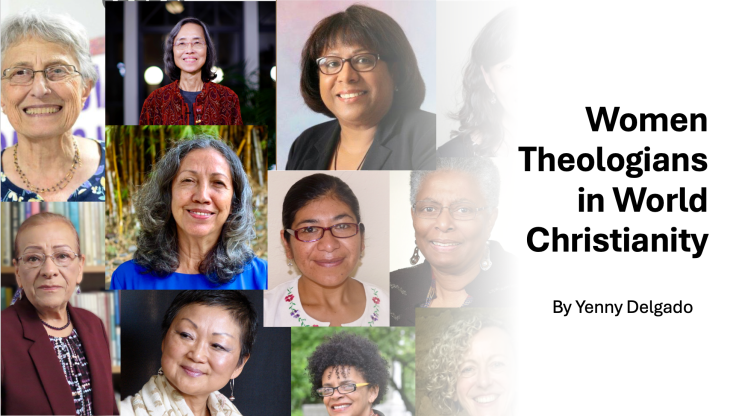
My theological journey has taken me across countries and continents, into seminaries and universities, rural communities and faith gatherings, always alongside women, women leading, questioning, praying, and thinking deeply about their faith. Through these encounters, I have come to understand something essential: women are not merely recipients of theological tradition but its living interpreters, shaping Christian thought from within their own territories, cultures, and experiences.
Along the way, I have had the privilege of encountering theologians who draw their reflection from the ground of everyday life — from struggle and resistance, from the wellspring of native spirituality, and from ancestral memories long deserving of recognition. Yet despite the richness and rigor of these contributions, such voices have too often remained invisible within the broader Christian conversation, uncited and uncelebrated. This invisibility is not a measure of their worth. Women theologians are challenging inherited structures, forging innovative methods, and offering Christianity vital new ways of engaging with the social, cultural, ecological, and spiritual realities of our world.
It is out of this conviction — that these voices deserve to be named, read, and shared — that this work was born. The articles gathered here, written over the past five years, introduce readers to women theologians from diverse regions of the world, each shaped by her own history, her community’s hopes, and the particular struggles of her context. Together, they gave rise to the series Women Theologians in World Christianity.
This series is an invitation — to encounter, to celebrate, and to learn from the women who are quietly and boldly reshaping Christianity worldwide.
In Africa, women theologians focus on community, tradition, identity after colonialism, and real-life faith. They often use stories, oral traditions, and local experiences to talk about gender justice, poverty, and women’s roles in church leadership. African women’s theology is lively, rooted in context, and connected to daily life.
In Asia, women theologians look at theology through interreligious dialogue, cultural diversity, and social change. They often talk about issues like exclusion, migration, and how faith connects with politics and the economy. Asian women’s theology often highlights harmony, strength, and the search for meaning in diverse societies.
In Europe, women theologians question old theological traditions and offer new ideas. They address current issues like secularization, gender equality, and the future of the church. Their work often connects academic theology with public discussions about identity, ethics, and belief today.
In Abya Yala, women theologians share views shaped by liberation theology, indigenous beliefs, and feminist and womanist ideas. They challenge oppression and support dignity, community, and the value of life. Here, theology is closely tied to the fight for justice, decolonization, memory, and resistance.
In the United States, women theologians have helped shape feminist theology, womanist theology, and other approaches based on context. Their work shows how ethnicity, gender, sex, education, and religion connect, offering strong critiques and new ideas for a more inclusive and fair Christianity.
All these voices show that theology is not limited to one view or place. It is a lively, worldwide conversation shaped by women’s experiences and ideas from many backgrounds. Their work keeps changing World Christianity and invites us to listen, learn, and get more involved.
Feel free to explore and share them!
📍 Women Doing Theology in Africa
📍 Women Doing Theology in Asia
📍 Women Doing Theology in Abya Yala
📍 Women Doing Theology in Europe
📍 Women Doing Theology in the United States
Yenny Delgado is a Peruvian theologian and psychologist. Her research and teaching focus on Abya Yala theology, ancestral memories, religious identity, feminism, womanism, and decoloniality. Ordained as a ruling elder in the Reformed Church, she has more than fifteen years of experience collaborating with faith communities, social movements, and religious organizations. Yenny is the founder of Political Theology and Spiritualities Network. Director of Publica Theology and the Convener of Women Doing Theology in Abya Yala, an ecumenical and intergenerational community dedicated to fostering women’s leadership within the church.

 PUBLICA
Published by