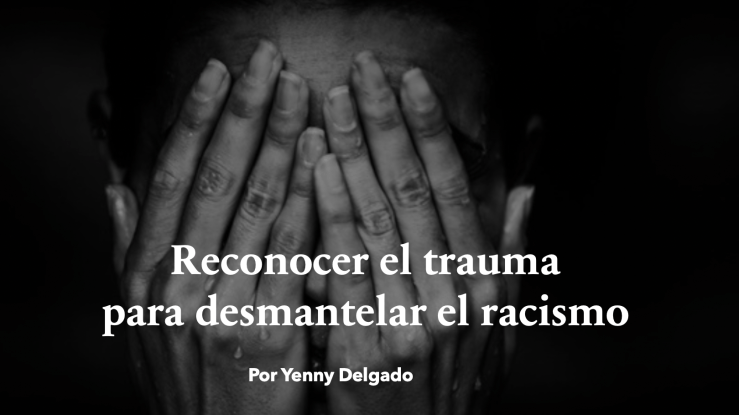
Reconocer el trauma para desmantelar el racismo

El trauma es una palabra que viene del griego que significa herida, es una ruptura que lastima y es aterradora al mismo tiempo porque contiene los momentos y experiencias dolorosas que deseamos olvidar. La forma en que las personas interactúan y lidian con el trauma causado por la discriminación, la brutalidad policial y el racismo es única para cada persona, pero va generando en la comunidad un dolor profundo. 

Nuestro cuerpo, así como nuestro comportamiento muestra nuestras profundas heridas. Sin embargo, es necesario sentarse con el pasado y lidiar con nuestros traumas para superar estos recuerdos dolorosos que nos lleven a la curación y la liberación.

A partir del trabajo de investigación de Heijmans publicado en la Academia Nacional de Ciencia, es bien sabido que los eventos traumáticos pueden tener efectos duraderos en el epigenoma. Esencialmente, el impacto del trauma pasado continúa en nuestro ADN y puede manifestarse en las generaciones futuras.

El especialista en trauma Resmaa Menakem un abolicionista somático señala que “las respuestas al trauma nunca son razonables. Son protectoras y reflexivas.” El desafío que tenemos por delante es alcanzar la curación de esta generación. Para aquellos que sus familias han sufrido siglos de opresión, colonización, esclavitud, violación, abuso y otros tratamientos inhumanos el trauma continua vigente.

Como seres humanos tenemos la capacidad de desarrollar nuevas habilidades para sobre llevar el dolor, especialmente para la supervivencia, pero eso no hace que desaparezca el dolor, sino que continua con nosotros cada dia. 

¿Cómo podemos hacer el camino para sanar nuestra mente y cuerpo de la discriminación y racismo por el color de nuestra piel y etnicidad?

Nuestro cuerpo experimenta dolor y sufrimiento, incluso nuestro tono de voz y las contorsiones del cuerpo, reflejan cómo procesamos y sentimos las cosas en el interior. Esas son las marcas psicológicas que se convierten en parte de las marcas físicas que llevamos en nuestro cuerpo. Sabemos que no es fácil manejar esas emociones que provienen de lo más profundo de nuestro ser por lo cual necesitamos de especialistas en trauma así como apoyo familiar y de la comunidad.Conocer nuestra historia familiar nos llevará a comprender el dolor causado por un pasado traumático y asumir el presente con mayor fortaleza. Sabemos bien que como seres humanos tenemos la capacidad de curar.

La curación no es fácil, pero podemos tomar de la resistencia grandes lecciones, somos producto de una colonización tan desigual y brutal que nuestra mera existencia es un ejemplo de vida y esperanza. La resiliencia nos ayuda a sostenernos y podemos usarla para desarrollar y fortalecer herramientas en las cuales podamos enfrentar nuestro dolor y traumas pasados. Para lograr esta curación, debemos comenzar a hablar más libremente sobre ellos. 

Para los descendientes de la población originaria en el continente, nuestro trauma por el despojo de nuestra tierra, el trauma de la violación, abusados y esclavizados sistemáticamente aún persiste, la pérdida de la cultura, el idioma impacta incluso nuestra propia identidad. El dolor de ser considerados “animales” “indios sin alma” por la iglesia cristiana por siglos sigue presente. La descolonización es un trabajo en proceso necesario y nos trae preguntas desafiantes ¿Cómo podemos procesar el trauma generacional cuando seguimos siendo discriminados?

Reconocer el trauma es necesario para juntos desmantelar el racismo que tanto daño a causado y sigue causando a las nuevas generaciones ya que ataca nuestra identidad, nuestro ser y existencia. Reconocer nuestros miedos y nuestras historias familiares nos dará fortaleza para enfrentar con valentía un sistema opresivo y construir uno de liberación.
Recognize Trauma…Dismantle Racism

Trauma is a loaded word and scary at the same time because it obscures pains from the past that we wish to forget. However, despite our efforts to forget and move on, history continues to follow us in our lived experiences. How people interact and deal with the trauma is unique for each person. Our bodies and psyches reveal who we are, and our behavior shows our deep wounds. When these wounds are systemic across entire groups of people due to discrimination, police brutality, and racism, it is necessary to deal with the trauma and triggers on both personal and communal levels. Coming to grips with this type of trauma is to sit with the past and mentally to reflect and exercise these painful memories for healing, liberation, and ultimately dismantling racism. 

From the research work of Heijmans et al. published in the Proceedings of the National Academy of Science, it has been shown that traumatic events from famine to war can lead to lasting effects on the epigenome. Essentially the impact of past trauma continues in our DNA and can be manifested in future generations. 

Trauma specialist Resmaa Menakem, a somatic abolitionist, notes that “trauma responses are never reasonable. They are protective and reflexive.” Healing begins by finding the roots of these traumas and seeking first to understand and begin to process instead of burying away the past.

For native American descendants in the continent, our collective trauma of being disposed of our land, our grandparents systematically raped, abused, and enslaved still lingers. The loss of culture, identity, and language cause trauma to this day, further heightened by misappropriation of imagery and names in racist tropes and mascots. From a theological perspective, the pain of being considered “animals” and “Indians without souls” by the Christian Church is still present. How can we process our generational trauma when European descendants in America do not see the native people as part of society? 

The challenge we are faced in the country with white supremacy ideology rules and attacks on African Americans has a long history of brutal violence. Still, today, as people of color, we demand as individuals and collectively to embrace opportunities to remember the suffering and heal the country for all their crimes.

How can we make the pathway to healing our hearts and bodies from suffer discrimination, abuse, and oppression?

Dismantling racism is a step towards that, seeking healing, although it is a painful process. It is not easy to handle those emotions that come from the inner depths of our being. We develop resilience by learning and nature, and we can use it to develop and strengthen to confront our pain and past traumas. To achieve this healing, we must begin to speak more freely about them. For those who have suffered centuries of oppression, colonization, slavery, rape, abuse, and other inhume treatment from white supremacy ideologies, it is not easy to leave it, but we can transform the rage and pain into societal changes. Moreover, our body has that capacity as well; it is a connection between body and mind that leads us to develop new abilities, especially that of survivorship. On a communal level, there is a need for broader society to listen, accept and respond to individuals that their ancestors may have harmed.

Knowing our family history will lead us to understand the painful scars on our psyche, and that past becomes part of the physical marks that we carry on our body. Healing is not easy. Somehow, we are the product of colonization so unequal and so brutal that our sheer existence is an example of life and hope. 

Dismantling racism is an invitation to consider God amid challenging history and difficult conversations. For the Christian message for healing – salvation is not an abstract concept; it is a state of being with deliverance. Let us begin this journey towards healing together, in the full knowledge that our faith will lead us to recover. 

We start this process by first allowing ourselves empathy, grace, and freedom to go to our inner selves and acknowledge our fears and our stories. Second in the process is to reconnect with our ancestors, grandmothers, and elders. We must listen to their stories, which is our story, and in this way, we can better understand the present. By naming our pain and trauma, we become stronger.

Yenny Delgado– Psychologist and Theologian. Director of Publica and convener of Women Doing Theology in Abya Yala. She writes about the intersections between ancestral memory, decolonization, womanist and public faith.