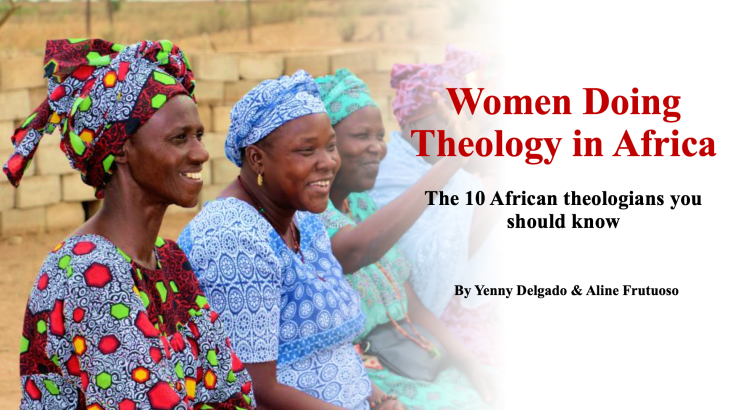
Women Doing Theology in Africa

The 10 African theologians you should know

By Yenny Delgado & Aline Frutuoso

In contemporary theological studies, the voice and impact of African women theologians have been instrumental in redefining religious and ethical paradigms around the world. Their contributions not only enrich theology with historically marginalized perspectives, but also challenge and transform power structures within faith communities.

The theological work of women makes illuminates the unseen and denounces practices and activities that run counter to the Gospel. The work of women investigates and teaches in favor of social justice to understand the intersections between spiritual practices, constructions of gender, sex, ethnicity and social justice, which are intertwined to deepen and enrich theological reflection Women’s.

Below, we present the 10 most inspiring African theologians. Each of them not only expands the theological canon, but also motivates and trains a new generation of scholars and believers to think critically about the theological work of women at the heart of the church and society.

  1. Mercy Amba Oduyoye (Ghana)

Mercy Amba Oduyoye, born in Ghana in 1933, is an academic, theologian and activist known as the “mother of African women’s theologies.” She was educated in Methodist schools and later studied at the Kumasi College of Technology. She earned her master’s degree in sacred theology from the University of Cambridge. Oduyoye was the first woman in Africa to obtain a university degree in Theology and with this training she taught at various universities in Africa, such as Cape Town and Nairobi. Additionally, she has been a visiting professor at the University of Ghana and at institutions in the Netherlands, South Africa and the United States.

She is the founder of the Circle of African Theologians and founding director of the Women’s Institute in Religion and Culture at Trinity Theological Seminary in Legon, Ghana and has made significant advances in contemporary theological and ethical discussions. Mercy is an influential theologian in the understanding of African spirituality and the defense of women’s rights.

Publications:

“Beads and Threads: An African Woman’s Reflections on Christianity in Africa.”

  1. Musa W. Dube (Botswana)

Musa W. Dube is a Botswana academic, theologian and activist. She earned her doctorate in New Testament from Vanderbilt University in Nashville, United States. Musa is a professor of New Testament at the University of Botswana and is widely recognized for her contributions to feminist and postcolonial theology. Her work on biblical interpretation from an African perspective has been influential in academic and practical settings. She is the general coordinator of the Circle of Concerned African Women Theologians. Her contributions to the decolonization of theology and her advocacy for gender justice have made significant advances in contemporary theological and ethical discussions. Winner of the Gutenberg Ensino Prize (2017) from Gutenberg University, Germany.

Musa works hard and consistently at the intersection of gender, race, ethnicity, and colonial ideology and their impact on the production and use of biblical texts in history. It explored ways of reading the Bible for an effective response in the context of HIV/AIDS, integrating gender and challenging theological institutions to revise their curriculum. She is an active member of the United Methodist Church and the Society of Biblical Literature.

Publications:

“Postcolonial Feminist Interpretation of the Bible.”

“The Bible on HIV and AIDS: Some Selected Essays.”

3. Isabel Apawo Phiri (Malawi)

Isabel Apawo Phiri is a Malawian academic, theologian and activist. She obtained her doctorate in Theology from the University of Cambridge, United Kingdom. Phiri is known for her work in African feminist theology, gender studies and social justice in the African context. She has worked in various academic institutions and is widely recognized for her contributions to theology and her defense of women’s rights.

She is Deputy General Secretary for Public Witness and Diakonia for the World Council of Churches. Professor of African Theology and Dean of the School of Religion, Philosophy and Classics at the University of KwaZulu-Natal. Isabel is a prominent figure in contemporary African theology, and her work has been instrumental in advancing discussions about gender and religion in Africa.

Publications:

“African women, religion and health: essays in honor of mercy”

  1. Musimbi Kanyoro (Kenya)

Musimbi Kanyoro is a Kenyan academic, theologian and activist. She obtained her doctorate in Feminist Theology from the San Francisco Theological Seminary, United States. Musimbi is recognized for her important contributions to African feminist theology and her tireless work advocating for women’s rights and social justice. She has held leadership positions in several international organizations and remains an influential voice in the field of theology and gender studies.

She was executive director of the Young Women’s World Christian Association (YWCA) and general secretary of the Lutheran World Federation for several years. She has been a key figure in promoting gender justice and women’s rights in both religious and secular contexts. Her work has addressed critical issues such as health, reproductive rights, and women’s empowerment.

Publications:

“Presenting Feminist Cultural Hermeneutics: An African Perspective.”

  1. Oluwatomisin Olayinka Oredein (Nigeria)

Oluwatomisin Olayinka Oredein is a Nigerian academic and theologian. She obtained her doctorate in Theology and Gender Studies from Duke University, United States. Oredein is recognized for her contributions to African feminist theology and for her work at the intersection of gender, race, and religion in African and diasporic contexts. She has taught at several academic institutions and is a respected voice in contemporary theological studies.

Inaugural winner of the Notre Dame Press Prize for her book: “The Theology of Mercy Amba Oduyoye: Ecumenism, Feminism and Communal practice.” She received the Louise Clark Brittan Endowed Teaching Excellence Award in Teaching. She has critically addressed theology from womanist and postcolonial perspectives Her work has influenced the understanding of how gender and racial identities affect religious and theological practices.

Publications:

The Theology of Mercy Amba Oduyoye: Ecumenism, Feminism, and Communal Practice

Theopoetics in color: approaches incorporated into theological discourse

6. Léocadie Lushombo (Congo)

Léocadie Lushombo is a consecrated theologian, member of the Teresian Institution. she obtained her Doctorate in Theological Ethics from Boston College, United States, and has several master’s degrees in theological ethics, sustainable development, and economics and development. Her primary area of research is Christian ethics, with a focus on political theology, decolonial and liberation theology, Catholic economics and social thought, African theological ethics and inculturation, nonviolence, and just peace ethics. She is a consultant and trainer on justice, peace and gender issues in Central Africa and Abya Yala.

Publications:

A Christian and African Ethics of Women’s Political Participation: Living as Resurrected Beings”

“African Women’s Theologies”

7. Kate Coleman (Ghana)

Kate Coleman is a theologian and minister. She was born in Ghana and moved to England, where she became the first African woman to be an accredited Baptist minister and ordained. Later, she became the first African woman president of the Baptist Union (2006-2007).

She founded Next Leadership, an organization dedicated to developing leadership in various areas and especially in the church. In 2017 she was recognized as one of the 20 most influential black Christian women leaders in the UK.

Publications:

“7 deadly sins of women in leadership”

8. Elizabeth W. Mburu (Kenya)

Elizabeth W. Mburu is a Kenyan theologian who teaches New Testament and Greek at the International Leadership University, Africa International University and Pan Africa Christian University in Nairobi. She earned a Master of Divinity from the Nairobi International School of Theology and a Master of Sacred Theology from Northwest Baptist Seminary. Elizabeth completed her doctorate in New Testament at Southeastern Baptist Theological Seminary in the United States. She is currently a professor of New Testament and Greek at several universities in Nairobi.

Publications:

“African Hermeneutics”

“Qumran and the origins of Johannine language and symbolism”

9. Loreen Maseno (Kenya)

Loreen Maseno earned her PhD from the University of Oslo, Norway, in an interdisciplinary academic program covering kinship, theology, and gender studies. Her postgraduate research focused on ethnographic studies among the Abanyole people of rural western Kenya.

Upon her return to Kenya, she faced limited access to online databases, but the HRAF Global Scholars program gave her access to an extensive repository of ethnographic and archaeological information, which she uses for citations in research publications and for teaching postgraduate courses. She is a senior lecturer at the Department of Religion, Theology and Philosophy at Maseno University.

Publications:

“Women Within Religions: Patriarchy, Feminism, and the Role of Women in Selected World Religions”

10. Teresa Okure (Nigeria)

Teresa Okure is a Nigerian Catholic nun and the first African to become a member of the Company of the Holy Child Jesus. She is a resident professor in the Department of Biblical Theology at the Catholic Institute of West Africa in Port Harcourt, Nigeria, where she has taught New Testament and Gender Hermeneutics since 1999. She earned her doctorate from Fordham University and was mentioned as a possible candidate for the appointment of cardinal by Pope Francis in 2013.

Academic Dean and Dean of Student Affairs at the Catholic Institute of West Africa. Member of several national and international theological and biblical associations. Founding President of the Catholic Biblical Association of Nigeria. Recognized biblical scholar with numerous conferences given.

Publications:

She is Co-Editor of the Bible Commentary Series Texts @ Contexts and Global Bible Commentary.

_______________

About the authors:

Aline Frutuoso

Brazilian economist and theologian. Doctoral student in Religious Sciences at the Pontifical Catholic University of São Paulo. Member of the Black Evangelical Movement and the Teomulher Network. She writes about black feminist theology, womanism, and decolonization.

Yenny Delgado

Peruvian psychologist and theologian. She is a doctoral candidate in Psychology of Religion at the University of Lausanne. She is the convener of Women Doing Theology in Abya Yala and director of Publica Theology. Yenny plays a critical role in fostering dialogues that amplify women’s voices and promote theological reflection from womanist and feminist decolonial perspectives.

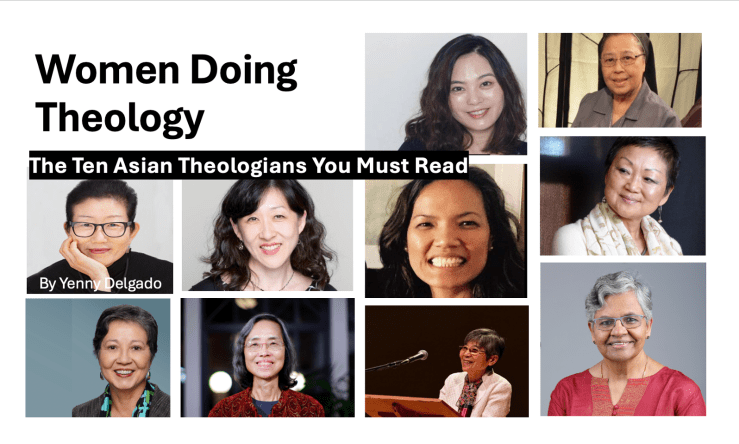
Women Doing Theology in Asia

The Ten Asian Theologians You Must Read

With their unwavering courage and resilience, women theologians have long recognized the need to highlight women’s experiences and ensure their voices are heard. They expose the inconsistencies between societal and ecclesiastical teachings about women’s roles and the realities of women’s everyday lives, confronting issues such as abuse, violence, and colonization. Their bravery in challenging these issues is not only inspiring but also empowers us to advocate for justice and inclusivity.

Through womanist and feminist approaches, these theologians challenge oppressive systems and advocate for justice. Asian theologians, in particular, have contributed significantly to these reflections, offering theological and biblical perspectives on liberation and decolonization.

If you are ready to embark on a transformative exploration of theology that confronts and dismantles patriarchal, colonial, and racist structures, these Asian theologians are essential reading. Their groundbreaking work, which is instrumental in shaping a more just and inclusive theology, will not only provoke and challenge you but also inspire you to rethink traditional theological boundaries and embrace a more inclusive vision of faith.

Here are the ten Asian theologians whose work you must read:

1. Kwok Pui-Lan ( Hong Kong)

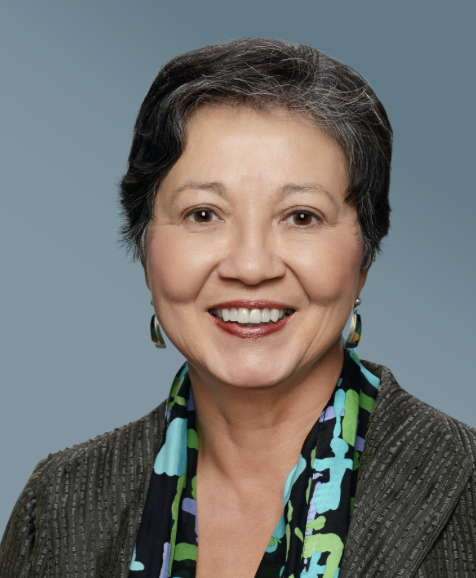
Kwok Pui-Lan, a prominent figure in Asian feminist and postcolonial theology, is a Professor of Systematic Theology at Candler School of Theology. She holds a Ph.D. from Harvard Divinity School and has previously taught at institutions such as Yale Divinity School and the Chinese University of Hong Kong.

Kwok’s scholarly output significantly advances the discourse in feminist and postcolonial theology, providing critical perspectives that challenge traditional Western-centric theological frameworks. Her work underscores the importance of contextual theology and the role of Asian women in reshaping theological studies, thereby influencing the direction of theology and promoting inclusivity in society.

Book: Introducing Asian Feminist Theology by Kwok Pui-Lan

In this book, she introduces the principles and methodologies of Asian feminist theology. Her other notable works include Postcolonial Imagination and Feminist Theology and The Hong Kong Protests and Political Theology. Her research spans feminist theology, postcolonial theology, and biblical hermeneutics.

2. Aruna Gnanadason (India)

Aruna Gnanadason holds a doctorate in feminist theologies and a Master’s in English literature. From 1991 to 2009, she directed the global program on Women in Church and Society for the World Council of Churches in Geneva and coordinated its Justice, Peace, and Creation program. She is active in the Indian Christian Women’s Movement and is the National Convener.

Gnanadason’s work highlights the intersections of patriarchy, caste, and global capitalism. She advocates for systemic change within church structures and society. Her leadership and scholarly contributions foster a more inclusive and just theological discourse.

Book:With Courage and Compassion: Women and the Ecumenical Movement celebrates women’s contributions to various spheres, including the church and ecumenical movements. It addresses women’s persistent challenges and violence, calling for a transformative theological vision and political imagination to combat injustice within the ecumenical movement.


3. Chung Hyun Kyung (Korean)

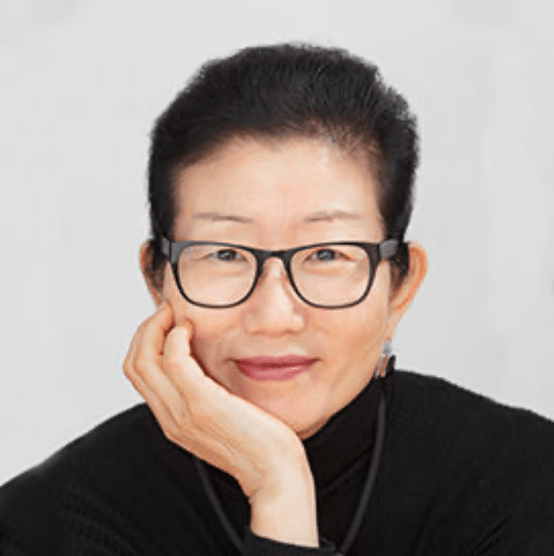
Chung Hyun Kyung is a South Korean Christian theologian and a lay theologian of the Presbyterian Church of Korea. She is an Associate Professor of Ecumenical Theology at Union Theological Seminary in the United States. Her interests include feminist and ecofeminist theologies, interfaith dialogue, and the intersection of disease and healing with spirituality.

Chung’s work is distinguished by her innovative integration of diverse spiritual and social traditions. She is known for her groundbreaking speech at the World Council of Churches in 1991, where she introduced the concept of “salim” (making things alive) as a foundation for her ecofeminist theology. Her interdisciplinary approach fosters a dynamic dialogue between Christianity and other religious traditions, particularly Buddhism.

Book: Struggle to be the Sun Again: Introducing Asian Women’s Theology

This a pivotal text on Asian women’s theology. It reflects Chung’s synthesis of global people’s movements, Asian spiritual traditions, and academic analysis.

4. Mary John Mananzan (Philippines)

Sr. Mary John Mananzan is a Missionary Benedictine nun from the Philippines, a theologian, author, and activist. She has held various leadership roles, including president of St. Scholastica’s College and national chairperson of the Association of Major Religious Superiors of the Philippines. She co-founded GABRIELA, a federation of women’s organizations in the Philippines.

Mananzan has been a formidable advocate for women’s rights and social justice, integrating her theological insights with grassroots activism. Her leadership in movements against tyranny and women’s liberation has significantly impacted the Church and society. Mananzan’s work includes developing an Asian feminist theology of liberation, focusing on the intersections of religion, gender, and social justice.

Book: Women Resisting Violence: Spirituality for Life

Mananzan is one of the six editors of this collection of essays, which comprises the voice of women theologians writing on issues that impact the lives of women in society and well in the Church, advocating and demanding justice for women suffering different forms of violence: economic, military, cultural, ecological, psychological, and physical violence.

5. Grace Ji-Sun Kim (South Korea)

Grace Ji-Sun Kim was born in Korea and educated in Canada, where she earned her Ph.D. from the University of Toronto. She is an ordained minister in the Presbyterian Church (USA) and teaches theology at Earlham School of Religion.

Kim hosts the Madang podcast, which features conversations on Christianity, religion, and culture. The Christian Century hosts the podcast. Additionally, she is a co-editor for the Palgrave Macmillan Series, “Asian Christianity in the Diaspora.”

Book: When God Became White: Dismantling Whiteness for a More Just Christianity

Examines the historical and theological implications of depicting Jesus and God as white males. Christianity, which originated in the ancient Near East among people of darker skin, was reimagined by European Christians who depicted Jesus with fair skin, akin to imperial rulers. Kim explores how this portrayal facilitated a colonialist posture within Christianity and its harmful global impacts. She advocates for recovering the biblical reality of a nonwhite, nongendered God, asserting that rediscovering God as Spirit leads to a more just faith, Church, and world.

6. Rita Nakashima Brock (Japan)

Rita Nakashima Brock is a Japanese and USA scholar, theologian, and activist. She obtained her Ph.D. in Philosophy of Religion and Theology from the Claremont Graduate University in California. Brock is the Senior Vice President at Volunteers of America and a Commissioned Minister in Disciples of Christ. Her work on moral injury and feminist theology has been influential in academic and practical settings. Her contributions to understanding the impact of war on soldiers’ mental health and her advocacy for gender justice have made significant strides in contemporary theological and ethical discussions.

Book:Casting Stones: Prostitution and Liberation in Asia and the United States, which won the Catholic Press Award in Gender Studies. It was the first work in feminist theology to address the topic of sex work and justice. Co-author with Susan Brooks.

7.Keun-Joo Christine Pae (Korea)

Christine is a distinguished Korean theologian who serves as Professor of Religion/Ethics and Women’s and Gender Studies at Denison University in Granville, Ohio, where she also chairs the Department of Religion. She holds a Ph.D. in Christian Social Ethics from Union Theological Seminary in New York. Christine scholarly work centers on social ethics, particularly in the areas of transnational feminist ethics, ethics of peace and war, Asian and Asian American feminist theology and ethics, spiritual activism, and U.S.–Asia relationships through war, prostitution, immigration, and religion.

Book: Embodying Antiracist Christianity: Asian American Theological Resources for Just Racial Relations

This comprehensive work addresses the imperative of antiracist practices within Christian theology from an Asian American perspective. The book brings together contributions from various scholars who explore how Asian American theological resources can be harnessed to promote justice and equality in racial relations. It examines the intersections of race, religion, and social justice, providing critical insights into how Asian American experiences and theological reflections can contribute to the broader discourse on antiracism.

8. Cristina Lledo Gomez (Philippines)

Cristina Lledo Gomez is Filipino and Australian theologian. She earned her Ph.D. in Theology from Charles Sturt University and her Master and bachelor from Catholic Institute of Sydney. Her academic and research work is geared towards promoting women’s spiritualities, feminist theologies, and ecotheologies. In recognition of her impactful scholarship, she received the 2020 Catherine Mowry Lacugna Award from the Catholic Theological Society of America for her essay “Mother Language, Mother Church, Mother Earth.” Her extensive research portfolio covers ecclesiology, feminist-maternal theology, domestic violence, clerical abuse, integral ecology, migration, and colonialism. Gomez serves as Co-Chair of the Women’s Consultation for Constructive Theology at the CTSA and is a Board Member of the College Theology Society and Ecclesiological Investigations Network.

Book: The Church as Woman and Mother 

This book explores the metaphorical and theological understandings of the Church as a nurturing maternal figure. Drawing from historical and theological foundations, Lledo Gomez examines how the Church’s maternal identity has been constructed and perceived over time, addressing both its empowering and problematic aspects. The book delves into feminist and maternal theological perspectives, challenging traditional patriarchal views and advocating for a more inclusive and nurturing vision of the Church that embraces and elevates the experiences and contributions of women within the Christian community.

9. Namsoon Kang (Korea)

Namsoon Kang is a Professor of Theology and Religion in Brite Divinity School having previously taught at the Faculty of Divinity, Cambridge University in the United Kingdom, and Methodist Theological University in Seoul, South Korea. She obtained her doctorate from Drew University, USA. Writing both in English and Korean make a great contribution on her theological reflections, teaching, researching in transdisciplinary spaces. Her particular theoretical interests are in discourses of cosmopolitanism, apophatic theology/philosophy, postmodernism, postcolonialism, feminism, and diaspora.

Book: The Handbook of Theological Education in World Christianity, co-edited by Namsoon Kang, explores various dimensions of theological education within the  global context of Christianity. This comprehensive volume delves into how theological education is structured, taught, and practiced across diverse cultural and geographical settings. It addresses key issues such as curriculum development, pedagogical methods, theological perspectives, and the challenges and opportunities faced by theological institutions worldwide.

10. Hisako Kinukawa (Japan)

Hisako Kinukawa is a Japanese theologian with a Doctor of Ministry from San Francisco Theological Seminary. She teaches at International Christian University, Lutheran Seminary, and St. Paul Graduate School. Kinukawa co-directs the Center for Feminist Theology and Ministry in Japan.

Kinukawa provides a unique perspective that combines biblical scholarship with contemporary feminist thought, offering fresh insights into the role and representation of women in biblical texts. Her work is significant in bridging cultural and historical gaps, enriching the understanding of scripture from a non-Western feminist viewpoint.

Book :Women and Jesus in Mark: A Japanese Feminist Perspective explores the encounters between women and Jesus in the Gospel of Mark, examining these interactions through the lens of contemporary Japanese Christianity. This work highlights the significant risks taken by women who approached Jesus in a patriarchal society and delves into how Jesus’ responses to these women reflect the liberating essence of the gospel.

Conclusion

Asian women theologians have profoundly influenced a postcolonial theology. Their work challenges traditional theological frameworks and advocates for justice, inclusivity, and the recognition of diverse cultural perspectives. By addressing issues such as patriarchy, colonialism, and racism, these theologians aim to dismantle oppressive structures within religious institutions and society at large.

The collective contributions of these theologians continue to inspire and shape not only Asian theological work but all work. They offer critical perspectives that challenge the status quo and pave the way for a more inclusive and just theology. Their legacy is evident in the ongoing dialogues and transformative practices within academic, ecclesial, and social contexts, fostering a theology deeply attuned to marginalized communities’ voices and experiences. Through their groundbreaking work, these theologians enrich the field of theology and contribute significantly to the broader struggles for justice and equality in the world.

__________

Yenny Delgado is a psychologist and theologian. She is a Ph.D. candidate in Psychology of Religion at the University of Lausanne. She is also the Convener of Women Doing Theology in Abya Yala and Director of Publica Theology. Yenny plays a pivotal role in fostering dialogues that amplify women’s voices and promote theological discourse rooted womanist and feminist decolonial perspectives.

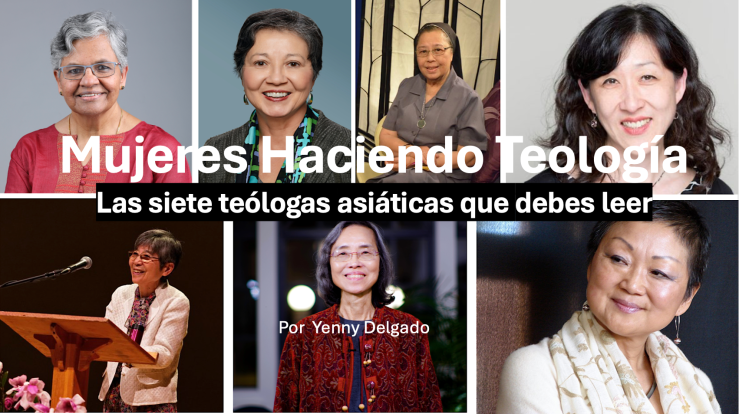
Mujeres haciendo teología en Asia

Las teólogas han reconocido desde hace mucho tiempo la necesidad de resaltar las experiencias de las mujeres y garantizar que sus voces sean escuchadas. Exponen las inconsistencias entre las enseñanzas sociales y eclesiásticas sobre los roles de las mujeres y las realidades de la vida cotidiana de las mujeres, enfrentando temas como el abuso, la violencia y la colonización.

A través de enfoques mujeristas y feministas, las teólogas desafían los sistemas opresivos y abogan por la justicia. Las teólogas asiáticas, en particular, han contribuido significativamente a estas reflexiones, ofreciendo perspectivas teológicas y bíblicas sobre liberación y diálogo interreligioso.

Si estás lista para profundizar en una exploración transformadora de la teología que confronta y desmantela las estructuras patriarcales y tradicionales centrados en occidente, estas siete teólogas asiáticas son una lectura esencial. Su trabajo teológico te provocará, desafiará e inspirará a repensar los límites teológicos tradicionales y adoptar una visión de la fe más justa e inclusiva.

Aquí las siete teólogas asiáticas cuyo trabajo debes leer:

1.     Kwok Pui-Lan (Hong Kong)

Kwok Pui-Lan, una figura destacada de la teología feminista y poscolonial asiática, es profesora de Teología Sistemática en la Escuela de Teología Candler. Tiene un doctorado de Harvard Divinity School y anteriormente ha enseñado en instituciones como Yale Divinity School y la Universidad China de Hong Kong.

La producción académica de Kwok avanza significativamente el discurso en la teología feminista y poscolonial, proporcionando perspectivas críticas que desafían los marcos teológicos tradicionales centrados en occidente. Su trabajo subraya la importancia de la teología contextual y el papel de las mujeres asiáticas en la remodelación de los estudios teológicos.

Libro: Introducción a la teología feminista asiática

Presenta los principios y metodologías de la teología feminista asiática. Entre sus obras notables se encuentran, Imaginación poscolonial y teología feminista y Las protestas de Hong Kong y teología política. Su investigación abarca la teología feminista, la teología poscolonial y la hermenéutica bíblica.

2.     Hisako Kinukawa (Japón)

Hisako Kinukawa es una teóloga japonesa con un Doctorado en Ministerio del Seminario Teológico de San Francisco. Enseña en la Universidad Cristiana Internacional, el Seminario Luterano y la Escuela de Graduados St. Paul. Kinukawa codirige el Centro de Teología y Ministerio Feminista en Japón.

Kinukawa ofrece una perspectiva única que combina la erudición bíblica con el pensamiento feminista contemporáneo, ofreciendo nuevas ideas sobre el papel y la representación de las mujeres en los textos bíblicos. Su trabajo es importante para cerrar brechas culturales e históricas y enriquecer la comprensión de las Escrituras desde un punto de vista feminista no occidental.

Libro: Las mujeres y Jesús en Marcos: una perspectiva feminista japonesa

Explora los encuentros entre las mujeres y Jesús en el Evangelio de Marcos, examinando estas interacciones a través del lente del cristianismo japonés contemporáneo. Este trabajo destaca los importantes riesgos que asumieron las mujeres que se acercaron a Jesús en una sociedad patriarcal y profundiza en cómo las respuestas de Jesús a estas mujeres reflejan la esencia liberadora del evangelio.

3.     Aruná Gnanadason (India)

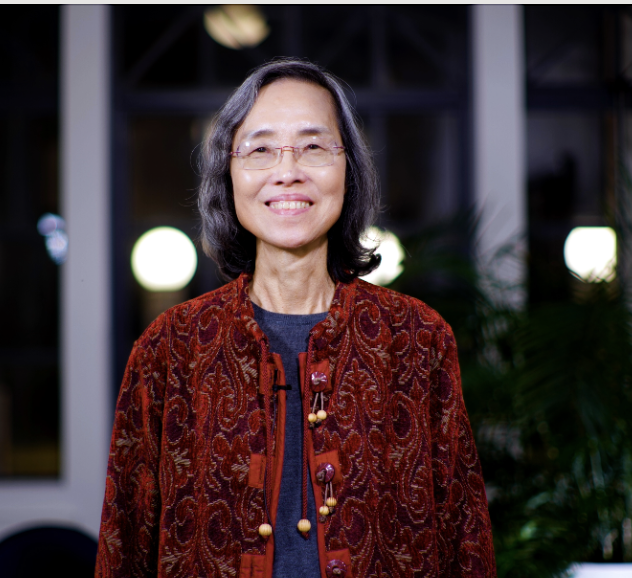
Aruná Gnanadason tiene un doctorado en teología feminista y una maestría en literatura inglesa. De 1991 a 2009 dirigió el programa global sobre Mujeres en la Iglesia y la Sociedad para el Consejo Mundial de Iglesias en Ginebra y coordinó su programa “Justicia, Paz y Creación”. Participa activamente en el Movimiento de Mujeres Cristianas de la India y es la coordinadora nacional. Aruná destaca las intersecciones del patriarcado, las castas y el capitalismo global. Ella aboga por un cambio sistémico dentro de las estructuras de la iglesia y la sociedad. Su liderazgo y contribuciones académicas fomentan un discurso teológico más inclusivo y justo.

Libro: Con coraje y compasión: las mujeres y el movimiento ecuménico

En este libro Aruná  celebra las contribuciones de las mujeres en diversas esferas, incluida la iglesia y los movimientos ecuménicos. Aborda los persistentes desafíos y la violencia hacia las mujeres, pidiendo una visión teológica transformadora y una imaginación política para combatir la injusticia dentro del movimiento ecuménico.

4.     Chung Hyun Kyung (Corea del Sur)

Chung Hyun Kyung es una teóloga cristiana de Corea del Sur y es teóloga laica de la Iglesia Presbiteriana de Corea. Es profesora asociada de Teología Ecuménica en el Union Theological Seminary en Estados Unidos. Sus intereses incluyen las teologías feministas y ecofeministas, el diálogo interreligioso y la intersección de la enfermedad y la curación con la espiritualidad.

El trabajo de Chung se distingue por su innovadora integración de diversas tradiciones espirituales y sociales. Es conocida por su discurso en el Consejo Mundial de Iglesias en 1991, donde introdujo el concepto de “salim” (dar vida a las cosas) como base de su teología ecofeminista. Su enfoque interdisciplinario fomenta un diálogo dinámico entre el cristianismo y otras tradiciones religiosas, particularmente el budismo.

Libro: Lucha por volver a ser el sol: Introducción a la teología de las mujeres asiáticas

Se trata deun texto fundamental sobre la teología de las mujeres asiáticas. Refleja la síntesis que hace Chung de los movimientos populares globales, las tradiciones espirituales asiáticas y el análisis académico.

5.     Mary John Mananzan (Filipinas)

Sor Mary John Mananzan es una monja benedictina misionera de Filipinas, teóloga, autora y activista. Ha desempeñado varios cargos de liderazgo, incluido el de presidenta del St. Scholastica’s College y presidenta nacional de la Asociación de Superiores Religiosos Mayores de Filipinas. Cofundó GABRIELA, una federación de organizaciones de mujeres en Filipinas.

Sor Mary ha sido una formidable defensora de los derechos de las mujeres y la justicia social, integrando sus conocimientos teológicos con el activismo de base. Su liderazgo en movimientos contra la tiranía y la liberación de la mujer ha tenido un impacto significativo en la iglesia y la sociedad. El trabajo de Sor Mary incluye el desarrollo de una teología feminista asiática de la liberación, centrándose en las intersecciones de religión, género y justicia social.

Libro: Mujeres resistiendo la violencia: espiritualidad para la vida

Sor Mary es una de las seis editoras de esta colección de ensayos, que comprende la voz de mujeres teólogas que escriben sobre temas que impactan las vidas de las mujeres en la sociedad y en la iglesia, abogando y exigiendo justicia para las mujeres que sufren diferentes formas de violencia: violencia económica, militar, cultural, ecológica, psicológica y física.

6.     Rita Nakashima Brock (Japón)

Rita Nakashima Brock es una académica, teóloga y activista japonesa y estadounidense. Obtuvo su doctorado en Filosofía de la Religión y Teología de la Claremont Graduate University en California. Brock es la vicepresidenta senior de Volunteers of America y ministra comisionada de Discípulos de Cristo. Su trabajo sobre daño moral y teología feminista ha sido influyente en entornos académicos y prácticos. Sus contribuciones a la comprensión del impacto de la guerra en la salud mental de los soldados y su defensa de la justicia de género han logrado avances significativos en las discusiones teológicas y éticas contemporáneas.

Libro: Casting Stones: Prostitución y liberación en Asia y Estados Unidos

Con este libro Nakashima ganó el Premio de la Prensa Católica en Estudios de Género. Fue el primer trabajo en teología feminista que abordó el tema del trabajo sexual y la justicia. Co-autora con Susan Brooks Thistlethwaite.

7.     Grace Ji-Sun Kim (Corea del Sur)

Grace Ji-Sun Kim nació en Corea y se educó en Canadá, donde obtuvo su doctorado de la Universidad de Toronto. Es ministra ordenada en la Iglesia Presbiteriana (EE.UU.) y actualmente enseña teología en Earlham School of Religion.

Kim presenta el podcast Madang, que aborda conversaciones sobre cristianismo, religión y cultura. El Siglo Cristiano lo acoge. Además, es co-editora de la serie Palgrave Macmillan, “El cristianismo asiático en la diáspora“.

Libro: Cuando Dios se hizo blanco: Desmantelando la blancura para un cristianismo más justo

Kim examina las implicaciones históricas y teológicas de la descripción de Jesús y Dios como hombres blancos. El cristianismo, que tiene sus raíces en el antiguo oriente entre personas de piel más oscura, fue reinventado por los cristianos europeos que representaron a Jesús con piel clara, similar a los gobernantes imperiales. Kim explora cómo esta representación facilitó una postura colonialista dentro del cristianismo y sus dañinos impactos globales. Ella aboga por recuperar la realidad bíblica de un Dios no blanco ni de género y, según Kim, redescubrir a Dios como Espíritu conduce a una fe, una iglesia y un mundo más justos.

Las teólogas asiáticas han influido profundamente tanto en la teología asiática como decolonial. Sus trabajos desafían los marcos teológicos tradicionales y abogan por la justicia, la inclusión y el reconocimiento de diversas perspectivas culturales. Al abordar cuestiones como el patriarcado, el colonialismo y el racismo, estas teólogas pretenden desmantelar las estructuras opresivas dentro de las instituciones religiosas y la sociedad en general.

Las contribuciones colectivas de estas teólogas continúan inspirando y dando forma al trabajo teológico asiático. Ofrecen perspectivas críticas que desafían el status quo y allanan el camino para una teología más inclusiva y justa. Su legado es evidente en los diálogos continuos y las prácticas transformadoras dentro de los contextos académicos, eclesiales y sociales, fomentando una teología profundamente en sintonía con las voces y experiencias de las comunidades marginadas.

__________

Yenny Delgado

Psicóloga y teóloga peruana. Es candidata doctoral en Psicología de la Religión en la Universidad de Lausana. Es  convocante de Mujeres Haciendo Teología en Abya Yala y directora de Publica Theology. Yenny desempeña un papel fundamental en el fomento de diálogos que amplifican las voces de las mujeres y promueven la reflexión teológica desde las perspectivas mujerista y feminista decolonial.

¿Herencia hispana o resistencia de los pueblos originarios?

A medida que nos adentramos en el mes donde se recuerda la herencia Hispana en los Estados Unidos (15 de septiembre a 15 de octubre), podemos ver cómo diversas celebraciones empiezan a tomar forma mediante expresiones que han suscitado en los últimos años preocupación y un profundo sentido de reflexión no sólo en relación con el nombre sino también en torno a la esencia misma de la festividad.

Lo que identificamos como “hispano” lleva consigo la connotación de descendencia española. Sin embargo, en un fascinante contraste, muchos de los símbolos y elementos asociados con la celebración de ” herencia hispana” tiene profundas raíces en los pueblos originarios de Abya Yala. Hacer una reflexión histórica decolonial parece ser de urgencia. Podremos seguir honrando a los colonizadores españoles sin criticar la colonización y sus atrocidades? Esta amalgama de asimilación, opresión y resistencia se pone de relieve en las diversas festividades que cobran vida en el país.

Si bien es visto como logro significativo que la comunidad que habla español en los Estados Unidos tenga un mes dedicado a la celebración, existen sentimientos encontrados de lo qué es y no es hispano. Ya que el énfasis está en la herencia que recibieron los pueblos originarios de allí la importancia de hacer una reflexión. Esta celebración plantea una paradoja derivada del colonialismo persistente con la imposición de nombrar y calificar en parámetros coloniales, a la población nativa presentes en el territorio. Esta imposición tiende a oscurecer las expresiones más arraigadas y ancestrales propias de los pueblos originarios, no por simple ingenuidad sino por razones de conveniencia.

¿Son las fiestas tradicionales, fiestas hispanas? O son fiestas de los pueblos originarios asimilados y camuflados, sin que nadie lo diga, ¿pero muchos reconocen que son fiestas originarias de los pueblos de Abya Yala? ¿Los bailes, la música, la comida, las y prácticas religiosas son herencia hispana o son herencia de las culturas originarias que han sabido resistir a pura fuerza su memorable aporte a nuestra comunidad? ¿Cómo entender el proceso de colonización y el sufrimiento que ahora se enmarca en una celebración?

Como resultado de la llegada de los europeos a Abya Yala* y de un largo proceso de colonización, los pueblos originarios se han visto obligados a ocultar su identidad, idiomas y culturas. Esta lucha por mantener la historia ancestral viva, vivir con identidad y reconocimiento como pueblos originarios se muestra cada año en la celebración que llamamos Hispana y sigue resonando en las nuevas generaciones como símbolo de orgullo. ¿Pero qué podemos decir si se reflexiona la historia desde el entendimiento de quiénes son los hispanos y por qué se extendió ese término a todo lo referente a lo español?

El hispano es el hijo o hija de español, nacido en Hispania / España o nacido en América. Por más de cinco siglos ha habido un proceso de “latinizar” o “hispanizar” Abya Yala a través del idioma, de prácticas religiosas y de prácticas culturales traídas de Europa. Ya sea desde el lado de Latino América o de anglo América ambos han usado la opresión hacia los pueblos originarios y se les ha negado la autoidentificación y la autodeterminación con el fin de borrar toda existencia de los pueblos originarios y su descendencia en el territorio.

Este borrado de identidad se ha exacerbado aún más a medida que millones de poblaciones nativas, personas de color con apellidos españoles, se han visto obligadas a adaptarse a etiquetas como “hispanos” o “latinos” en los censos, en los registros de identidad, en las partidas de nacimiento y hasta en las encuestas que se dan en el país para abrir paso a las estadísticas de quiénes y cuántas son las personas que hablan español en el país.

¿Es posible que aún con todo el dolor de la colonización española, hayamos aceptado como identidad y asimilado para hacerla nuestra el ser hispanos? Cabe resaltar que en España, el 12 de octubre se celebra el día de la hispanidad, ¿coincidencia?

Seguimos guardando la marca colonial en nuestra identidad y queramos o no, esta celebración es un recordatorio de lo que muchos quisieran olvidar. La colonización española condujo a la pérdida y destrucción de grandes construcciones arquitectónicas, expropiación de tierras, olvido de prácticas ancestrales y causante de empobrecimiento a la población originaria y su descendencia.

El continente estaba habitado por más de 100 millones de personas que vivían en diferentes comunidades, las cuales fueron en su mayoría exterminadas. Y, a los sobrevivientes de estas poblaciones se les impidió el hablar su idioma ancestral, se les  cortó el pelo, se les cambio la ropa, se les impuso a tener practicas religiosas “europeo cristianas” que les daban nuevas existencias para ser así aceptados como “civilizados”. Esta opresión ha sido asimilada en las siguientes generaciones como marcas de trauma y dolor en la cuales, parecerse a su opresor no es ya una obligación, sino una forma de sobrevivencia.

En una historia similar al realismo mágico, toda una población de descendientes de mujeres, hombres, niños y niñas, se ha transformado en las últimas décadas para identificarse como hispanos o latinoamericanos, en lugar de nativos americanos. Debido a que los invasores españoles impulsaron una colonización de poder y de saber, trasformando las autoperfecciones e imponiendo etiquetas nuevas de ser, se crea una nueva narrativa fundacional.

Ahora bien, dentro de los Estados Unidos bajo control de los ingleses, caemos en la cuenta que la colonización es vista desde otras formas, hablar español significa ser migrante y se da otra ronda de colonización. El expansionismo que hizo Estados Unidos hacia el oeste se produjo después de la guerra entre México (representando a lo español) y los Estados Unidos (representando a lo anglo), llevando a la creación del Tratado de Guadalupe Hidalgo, el cual incorporó las áreas actuales que representan Arizona, California, Oklahoma, Nuevo México, Utah y Texas. Sin embargo, estas tierras adquiridas no estaban vacías, sino que pueblos nativos que vivieron bajo el dominio español durante más de 300 años, pasaron a estar bajo el mando inglés.

Comprender este proceso en el contexto estadounidense es ciertamente un desafío. La diversidad de ancestralidades se presenta entonces como parte de la historia de colonización que pocos hablan en este momento.

Dentro de la comunidad hispano hablante, existe una población cuyas raíces están entrelazadas con herencias nativas ancestrales. Estos lazos profundos añaden capas significativas a sus identidades, enriqueciendo sus culturas y perpetuando tradiciones que han resistido a la prueba del tiempo. Comprender estas conexiones nos invita a reconocer la riqueza que fluye de esta diversidad, enriqueciendo las expresiones que conforman la identidad colectiva.

Al observar este mes de celebraciones, no podemos ignorar la resiliencia intrínseca que define a las culturas de los pueblos originarios del Abya Yala. A lo largo de la historia, estas comunidades han enfrentado desafíos con valentía y han mantenido viva su memoria ancestral a pesar de la adversidad. En esta lucha por sobrevivir y prosperar, han demostrado una fortaleza inquebrantable digna de admiración. Al reconocer y honrar esta tenacidad, demostramos un respeto genuino por la esencia misma de su existencia y su lucha por la supervivencia ya sea que lo hagan en inglés o en español la población originaria sigue presente.

*Abya Yala proviene de la lengua Guna (pueblos originarios habitados entre los actuales Panamá y Colombia) y significa “tierra en plena madurez y tierra de sangre vital”. En la década de 1970, activistas, historiadores, políticos y teólogas nativos adoptaron Abya Yala como el nombre unificado en lugar de América del Norte (hablantes de inglés) y América Latina (hablantes de español y portugués) nombres que perpetúan la mirada eurocéntrica y colonial del continente.

Maternidad

El camino entre la gestación, el parto y la lactancia

La maternidad es una relación profunda basada en la interdependencia mutua entre la mujer y su bebé. Las mujeres no nacemos con el ser maternal, sino que aprendemos a ser maternales en el proceso que sentimos a nuestro bebe en el vientre, experimentamos el proceso de parto, y sobre todo cuando lo recibimos en brazos y le amamantamos. Es a través de la relación de meses que se entreteje ese sentimiento materno, a la vez que la oxitocina que se produce durante la lactancia nos promueve el apego, y el sentimiento de amor hacia nuestro recién nacido.

La maternidad es un viaje transformador que abarca diversas experiencias y responsabilidades, configurando nuestras identidades como mujer y madre a la vez. Sin embargo, el camino hacia la maternidad está lejos de ser fácil. Entre madres a hijas y abuelas muchas veces se aprende de la convivencia mutua y lamentablemente se guarda silencio de los sufrimientos que la mujer asume en la maternidad causando entre muchas cosas, que las nuevas generaciones estén mejor preparadas para la labor de asumir una maternidad saludable.

En una sociedad donde las mujeres aún enfrentamos discriminación, es doble aún si una mujer tiene hijos. Muchas mujeres sufren y son más vulnerables en esta situación por lo que reflexionar sobre la maternidad es crucial para mejorar las condiciones de vida de las mujeres que asumen la maternidad.

Es cierto que ser maternal es amor incondicional, sonrisas, alegrías, pero también la maternidad implica noches sin dormir, llanto, limitaciones sociales, criar es asumir la responsabilidad de nutrir y cuidar a otro ser humano en camino a su independencia por lo que requiere tiempo y compromiso de por vida. Por lo cual es crucial reconocer la complejidad de la maternidad en su totalidad. Sin el apoyo adecuado durante este período de transformación, las mujeres corremos el riesgo de vivir en pobreza, tener problemas de salud, sufrir violencia por parte de nuestras parejas y otras situaciones que dejan a la mujer y al bebe en riesgo. 

Las mujeres en el proceso de la maternidad asumen la gestación del bebe, el parto y la lactancia en un proceso de mucha transformación física, emocional y espiritual que muchas veces desconocemos. 

Por mi propia experiencia de ser madre de una preciosa bebe de seis meses, escribo en manera de reflexión e información para ir abriéndonos al diálogo sobre este bello y desafiante proceso de maternidad.

Embarazo 

Es una etapa notable en la vida de una mujer, nuestro cuerpo pasa por ciclos naturales que le permiten convertirse en co-creadora de la vida. La concepción marca el comienzo de este viaje, y las mujeres experimentamos el embarazo en diferentes circunstancias. El embarazo puede ser por elección, por presión social o por asistencia médica. Sea el camino que se haya dado el embarazo es en todo caso milagroso, esto porque, aunque sea deseado o no, nuestro cuerpo encuentra el camino para multiplicarse. La fusión de un óvulo y un espermatozoide da como resultado el desarrollo de un embrión, que alrededor de la semana 12 define su sexo a través de los cromosomas. 

Un bebé con cromosomas XY será incapaz de reproducirse o tener un ciclo menstrual. En contraste, un bebé con cromosomas XX desarrollará un sistema reproductivo completo, incluyendo un útero y ovarios que contienen millones de óvulos que la acompañarán durante su vida y ciclo menstrual para poder en un momento dar una nueva vida.  

Durante la gestación, el o la bebé experimenta un notable crecimiento y desarrollo, revelando gradualmente cada una de sus extremidades, latidos del corazón y órganos vitales en desarrollo. A lo largo de este proceso, la bebé y la madre comparten una conexión especial caracterizada por un delicado equilibrio de interdependencia e independencia. El bebé se desarrolla como un individuo distinto mientras depende del útero de la madre para su nutrición y sustento. Esta relación simbiótica es un testimonio de la labor co-creadora que tiene la mujer en la medida que albergamos una nueva vida en nuestro vientre. 

Durante el embarazo, las mujeres debemos priorizar nuestro propio bienestar y el de nuestro bebé en desarrollo. Esto implica mantener una dieta nutritiva, hacer ejercicio adecuadamente, controlar el estrés y el bienestar emocional. A pesar de estas recomendaciones, muchas mujeres continúan haciendo malabarismos con su vida laboral, ya sea dentro o fuera del hogar, realizando actividades académicas o participando en actividades agrícolas o de mano de obra intensiva. Sin embargo, el embarazo también presenta desafíos, ya que el cuerpo de una mujer sufre transformaciones significativas durante los nueve meses de preparación para dar a luz a un recién nacido.

Parto

El proceso de parto, ya sea por vía vaginal o por cesárea, es una mezcla de momentos mágicos y de dolor. Si bien las mujeres tienen la autonomía para tomar decisiones sobre su experiencia de parto, a menudo somos guiadas a un entorno hospitalario por varias razones. La capacidad de monitorear la salud del bebé durante el nacimiento ayuda a evitar posibles complicaciones, lo que hace que la atención médica sea un aspecto crucial del proceso. 

En algunos casos, las mujeres pueden optar por dar a luz en casa, acompañadas de la orientación de una partera. Muchas comunidades tienen tradiciones de larga data en las que las parteras y curanderas tradicionales son fundamentales para facilitar el parto. Estas ceremonias, arraigadas en prácticas tradicionales, reconocen que una atmósfera de amor y apoyo promueve una experiencia de parto pacífica y armoniosa. La creación de un ambiente sereno relaja a la mujer y reduce el dolor, lo que garantiza un entorno favorable para el parto y contribuye al bienestar general de la madre y el recién nacido.

Independientemente del método y lugar elegido, las mujeres se embarcan en un viaje transformador para traer nueva vida al mundo. La búsqueda de preservar el bienestar de la madre y el bebé durante el embarazo y el parto ha sido un punto central de luchas y derechos por recibir una atención digna durante el proceso de parto

Es importante entender nuestro cuerpo, así como hemos tenido nueve meses de cambios, después del parto, entramos a un período de recuperación. Los órganos vuelven gradualmente a sus posiciones regulares mientras el bebé asume su existencia externa, requiriendo cuidado y nutrición. Esta fase posterior al nacimiento marca un momento crucial para que la madre y el bebé se unan y se ajusten a sus nuevos roles y responsabilidades.
Lactancia

La lactancia materna (amamantar) es un aspecto crucial de alimentación como de cuidado, ya que brinda numerosos beneficios tanto para el bebé como para la madre. Amamantar establece una conexión profunda, haciendo que el bebé pase de estar conectado a través del cordón umbilical a alimentarse del pecho y la boca. Mientras que algunas mujeres pueden producir suficiente leche inmediatamente después del parto, otras pueden tardar horas, días o incluso semanas en establecer un suministro de leche suficiente para su bebe. Los senos de la madre nutre al bebé a través del amamantamiento, ofreciéndole alimentación, cobijo y protección. 

El acto inicial de amamantar puede ser tanto mágico como doloroso para la madre a medida que su cuerpo se adapta al proceso y sus pezones se moldean a la succión del bebe. Amamantar requiere tiempo y aunque muchas mujeres lo asumen en su vida diaria, muchas mujeres que deben de regresar a trabajar fuera de casa optan por usar el “saca leche” que les permite seguir produciendo leche, guardarla y luego dársela al bebe con un biberón. De esta forma las mujeres siguen dando de la leche materna, aunque no le den el pecho directamente.

El cuerpo de una mujer produce leche adaptándose para satisfacer las demandas de alimentación del recién nacido y puede amamantar hasta un año o hasta dos. Sin embargo, una nutrición inadecuada puede afectar la calidad de la leche materna. Puede conducir a deficiencias de vitaminas y minerales para la madre. El éxito de la lactancia materna y el desarrollo integral del bebé depende de varios factores, como el contexto del embarazo, la alimentación de la madre, la relación de la madre con el bebé, su edad y el apoyo que recibe. 

Las mujeres que deciden asumir la sagrada responsabilidad de la maternidad, deben ser tratadas con respeto y recibir la atención necesaria para asegurar que ambos, madre y bebe tengan las condiciones necesarias para una maternidad saludable.

Comparto algunas sugerencias que pueden ayudar a mejorar la experiencia de la maternidad:

  • Promover la educación sexual integral en las escuelas y comunidades para empoderar a las mujeres con conocimientos sobre salud reproductiva, anticoncepción y atención del embarazo.
  •  Garantizar que las mujeres accedan a servicios de atención médica de calidad durante el embarazo, el parto y el posparto. 
  • Abogar por políticas de licencia por maternidad extendidas y bien compensadas que permitan a las mujeres recuperarse del parto, vincularse con sus recién nacidos y establecer rutinas de lactancia sin preocuparse por la inestabilidad financiera. 
  • Reconocer los desafíos emocionales y psicológicos de la maternidad y garantizar el acceso a los servicios de salud mental para las mujeres que experimentan depresión posparto, ansiedad u otros problemas de salud mental. 
  • Promover grupos de apoyo y servicios de consejería para abordar el bienestar emocional de las nuevas madres.
  • Alentar a las mujeres madres a priorizar el autocuidado y el bienestar personal. Promover iniciativas que ayuden a las mujeres a equilibrar sus funciones de cuidadoras con sus necesidades y aspiraciones personales.

Al implementar estas medidas, las mujeres podemos tener una experiencia positiva sobre la maternidad, de tal manera que la gestación, parto y lactancia sea aceptada como un derecho básico, asegurando un ciclo de vida saludable para toda madre y recién nacido.

Las implicaciones del Cristianismo en Abya Yala: Un acercamiento histórico decolonial

El mensaje cristiano europeo llegó a Abya Yala hace más de cinco siglos. Los misioneros cristianos junto a una milicia de soldados trajeron la cruz y la espada para gobernar y ordenar nuestra tierra. Aunque algunos ven este proceso de colonización como un encuentro de culturas, los resultados reales de la llegada del cristianismo, prácticas genocidas de los cuerpos como del conocimiento, olvido y pérdida de los idiomas originarios, prohibición de las prácticas espirituales, expropiación de tierras, entre otras opresiones fueron parte de un mensaje y acto opresor que llevó a la pérdida de la autodeterminación de los pueblos originarios para seguir practicando libremente su espiritualidad y mantener la armonía en su cosmovisión. 

De esta forma la enseñanza reduccionista del cristianismo en Abya Yala eliminó cualquier aspecto del mensaje liberador inherente al mensaje de Cristo. Las prácticas y creencias espirituales nativas, el idioma e incluso las prácticas culturales de los pueblos, se consideraron “paganismo”. 

Intencionalmente se ha enseñado y proyectado mensajes de socialización política y religiosa como identidades y asimilación a un estado-nación.  Los gobiernos han buscado borrar huellas de la barbarie vivida en el proceso de colonización y junto a la iglesia se proyectó una mirada de “desarrollo y cristianización” de tal manera que la educación y en nuestro caso la educación teológica no conecte la experiencia de la población nativa y la llegada del cristianismo. Mas bien se da una enseñanza muchas veces ajena al proceso histórico opresor para enfocarse a procesos recientes sin historia ni consecuencia.
En ese sentido la falta de compresión sobre quienes son la población originaria y su descendiente queda muchas veces sin derecho a la identidad étnica, creencia espiritual o determinación para hacer una lectura bajo su auto identificación. Cualquier intento de autoafirmación está sujeto a análisis que desvirtúan e ignoran un proceso colonizador sistemático
Ahora bien, es necesario hacer un análisis de las implicaciones del cristianismo en Abya Yala desde un acercamiento histórico decolonial. Aquí cinco implicancias importantes para reflexionar. 

1- La Doctrina del Descubrimiento

La Doctrina del Descubrimiento desarrollado a través de una serie de bulas papales durante el siglo XV, permitió que las personas no cristianas sean capturadas, esclavizadas y vendidas en beneficio de los monarcas cristianos y la iglesia, la cual les daba la potestad de incautar posesiones y propiedades incluida claro está la tierra. Esto proporcionó un marco legal y eclesiástico para la colonización. Los reinos cristianos y, por consecuencia su ejército y colonos tenían el derecho legítimo de oprimir a todas las personas para que se cristianizaran y, al mismo tiempo, tomar la tierra y ser los “nuevos propietarios”.

En el siglo XV, los reinos español y portugués se dividieron Abya Yala y tomaron posesión bajo las reglas de la iglesia católica; los pueblos nativos recibieron ‘civilización’ y fueron obligados a convertirse al cristianismo. La Iglesia robó la tierra y exigió oro, plata y otros bienes. 

Importante anotar que luego de una larga lucha, el 30 de marzo de este año,  500 años después, el Vaticano repudia públicamente la ‘Doctrina del Descubrimiento’, que se utilizó para justificar el colonialismo.

2- Ideología de superioridad blanca

La teoría de raza prevalecientes en Europa y luego traídas a Abya Yala, decidieron la forma de las políticas públicas, la clasificación de la humanidad en razas inferiores y superiores influyeron profundamente en el desarrollo de las ciencias. La superioridad blanca sustento y justifico el sistema de castas instalado para separar y favorecer a los europeos para tomar control sobre el territorio y su población originaria.

La invención de una “raza superior” no se basó en la biología sino en valorización de construcciones sociales. Quijano escribiría “raza e identidad racial fueron establecidas como instrumentos de clasificación social básica de la población.  Con el tiempo, los colonizadores codificaron como color los rasgos fenotípicos de los colonizados y lo asumieron como la característica emblemática de la categoría racial… En consecuencia, los dominantes se llamaron a sí mismos blancos”. El color de la piel y las características físicas para filtrar a las personas y crear un sistema de castas de discriminación dieron base a una de las implicancias que marcaría en las generaciones siguientes el deseo de abandonar la ancestralidad nativa para adoptar y repicar lo europeo, por consiguiente, lo blanco, lo mestizo como forma de identificarse. 

3- Esclavitud y Haciendas

En un registro histórico del movimiento abolicionista liderado por cristianos. A menudo creían que había cierto grupo de personas que no estaban completamente preparados para la ciudadanía; en cambio, eran considerados niños que necesitaban un amo. Sin embargo, la complicidad de las instituciones cristianas con la esclavitud es evidente en la fundación de la mayoría de las instituciones a fines del siglo XVIII  y principios del XIX. La esclavitud era una regulación codificada por la ley y apoyada por enfoques teológicos.

Sin embargo, el papel de la Iglesia  especialmente en el cambio de siglo, es increíblemente revelador, los clérigos sobre todo desde los grupos protestantes utilizaron “la maldición de Ham” para justificar la esclavitud de las personas con color de piel oscuras. La presuposición de que unos eran superiores que otros seres humanos es una negación completa de que todas las personas han sido creadas a la imagen de Dios y es una contradicción del mensaje liberador de Jesús.

Cuando los misioneros viajaron para ‘convertir’ a los pueblos al cristianismo, estos encuentros fueron seguidos poco después por corporaciones privadas y tropas de gobiernos extranjeros. La idea del cristianismo fue primero reducir e incluso simplificar las culturas nativas y originarias para apaciguarlas, adaptarlas y asimilarlas a un cristianismo blanco normativo.Una vez más esta enseñanza reduccionista eliminó cualquier aspecto del mensaje liberador inherente a las palabras de Cristo, ya que se les enseñó que estarían con Dios en el cielo, en la próxima vida, y que el dolor de la colonización podría soportarse gracias a la gracia y el poder de Dios. La fe cristiana se ha convertido en sinónimo de colonización y opresión y es una característica crítica de la práctica teológica blanca.

Bajo esta implicación las poblaciones originarias se vieron obligados a trabajar en las haciendas. La esclavitud de la población nativa fue codificada por la ley, apoyada en la construcción teológica, y normalizada por la Iglesia. Aunque hubo cierta disidencia entre las denominaciones más pequeñas y las órdenes católicas con respecto a la esclavitud, hubo un apoyo abrumador a la superioridad blanca en toda la cristiandad. La superioridad blanca desarrolló una sociedad construida en base a la exclusión. 

4- Internados y Reservas

La colonización en Abya Yala obligó a la población nativa a migrar en su propia tierra, debieron de asentarse hacia “las fronteras”. A fines del siglo XIX, la mayor parte de la tierra fue apropiada para la creación de las nuevas repúblicas. Los pueblos originarios solo tenían acceso a las tierras menos productivas. Los gobiernos y las reglas de la Iglesia en Abya Yala, dirigida por descendientes de europeos, continuaron forzando campañas de asimilación cultural trasladando a miles de niños y niñas nativos a escuelas internados católicos y protestantes.

Un ejemplo fue en Perú, donde los hijos de los Arakambut fueron enviados a escuelas misioneras católicas para que aprendieran el español. La ‘Misión’ visualiza entonces nuevas formas de evangelización mientras  “convierten” a los mas jóvenes a la cultura española y latina.

La ideología detrás de estas escuelas era enseñar la lengua y la cultura de los colonizadores. El cabello de los niños y niñas fue cortados en señal de humillación. Para parecerse más al colonizador, parecerse a un “ser humano”, algo que el opresor percibía como “civilizado”. En las escuelas las niñas aprendían a servir domésticamente, limpiar, planchar y prepararlas para el servicio, mientras que los niños trabajaban en las tierras que pertenecían a la Iglesia para sembrar y cosechar alimentos. Este trabajo gratuito para la Iglesia dejó una huella significativa. Las familias mas pudientes en la república donaron a la Iglesia y se beneficiaron del servicio gratuito de niños y niñas durante siglos.

5- Genocidio de papel 

Durante la colonización los colonos europeos se apoderaron de las tierras más fructíferas y ricas en minerales. Los nuevos propietarios tenían documentos y papeles que los hacían dueños. Para que esto sea posible los Pueblos originarios y sus descendientes debían de desaparecer, si bien muchos habían sido asesinados, muchos otros pueblos sobrevivieron, por lo cual debían ser objeto de un acto sistemático de borrado de identidad el cual se ha denominó “genocidio de papel”. Los gobiernos trabajaron para borrar la identidad nativa y la autoidentificación reclasificando y racializando los aspectos étnicos en los registros gubernamentales. 

De tal manera que, al no existir población originaria directa, nadie podría demandar a los gobiernos por restitución de las tierras ancestrales, nadie tendría derecho sobre las posesiones, más que los que tenían un papel de propiedad obtenido por reparto.  Ahora los descendientes de europeos eran los dueños de las tierras, la población nativa sus siervos y los sin tierra.

Bajo la misma línea ideológica de supremacia, la población originaria fue forzados a la asimilación, su identidad étnica era ahora clasificada desde sus partidas de bautizo y más tarde sus partidas de nacimiento como “ladinos”, “hispanos” o “mestizos”.  Esta forma de clasificación de la sociedad formó una población confusa entre sus identidades étnicas. La narrativa que circulaba de tener un ancestro español, tener un apellido español, hablar solo español y desconocer de la cultura y practicas espirituales de su familia, creaba un nuevo imaginario del “mestizo” el que era y no era a la vez, un desconocido que nunca llegaría ser “el blanco.”

Un ejemplo significativo sobre lo sucedido en Perú y Bolivia, donde las familias fueron obligadas a nombrar a sus hijos según el calendario católico romano. En el acta de nacimiento o acta de bautizo el sacerdote asignaba el nombre  según la fecha que nacían, y muchos de los apellidos eran asignados en base al apellido de los hacendados, Así quedaba estampado en el certificado una nueva identidad sin historia, ni significado para las familias y comunidades. 

Mucho mas podemos escribir de las implicaciones de la colonización en Abya Yala. La exclusión y denigración que los pueblos originarios han sufrido siguen siendo aun tema de discusión y análisis. Mostrar la complicidad de la Iglesia ha sido uno de mis objetivos con este análisis histórico. Cuando un sistema de creencias permite a sus practicantes ver a los demás como salvajes que necesitan ser dominados, los impactos son terribles. La práctica de una teología colonizadora y supremacista creó una Iglesia y, por extensión, una sociedad más desigual. Es tiempo de reconocer que una teología decolonial y profética desde Abya Yala es mas que necesaria.

Puede leer más sobre mi trabajo teológico en el siguiente enlace Teología Abya Yala.

Nota: Esta es una versión corta de mi presentación en la cátedra Juan A. Mackay organizado por la UBL del 18-21 de Abril 2023.  

Yenny Delgado

Psicóloga y teóloga. Directora de PUBLICA. Iniciadora de Mujeres Haciendo Teología en Abya Yala. Candidata doctoral en Psicología de la Religión por la Universidad de Lausanne, Suiza.


Women Doing Theology in Abya Yala*

While sitting in church, attending a seminary class or reading a theological article, have you ever wondered where the women theologians are and why they are not cited? This article highlights women liberation theologians of Abya Yala so the next time you are in a theological discussion, preparing a Bible study or writing a sermon, you can reflect on and add the voices of women forging a path through the most critical issues in the continent.

In the 1970s, Native activists, historians, politicians and theologians adopted Abya Yala as the unified name of the continents of the Western hemisphere, instead of calling them North America (English speaking) and South America (primarily Spanish and Portuguese speaking countries) — names that perpetuate colonial divisions. Abya Yala comes from the Guna language (spoken by the Guna peoples, who lived between present-day Panama and Colombia). It means “land in full maturity and land of vital blood.” This name for the combined continent focuses on the land and its Native people, rather than on colonization and invasion.

Women theologians of Abya Yala see the land and shared experiences as part of a longer arc of history, one that is not overshadowed or forgotten but rather is incorporated into their reflections. Theologians of Abya Yala present not only a unified production of women doing theology on the continent, but also a liberation theology that focuses on the role of women who suffered colonization, forced migration, enslavement and the oppression of women’s bodies.

In the overarching narrative of society and of Judeo-Christian theological belief, the man is at the center of power, society, culture and religious practices. After many struggles and battles, women have mobilized against laws that have sought control over women’s political participation and theological reflections. As the arc of society slowly bends closer to equality, the Christian church has experienced changes that also have affected the establishment. Women leaders have arisen as theologians, pastors, bishops, ruling elders and moderators, among other vital roles.

Colonization also brought patriarchal structures and White supremacist ideologies, which have often marginalized and subjugated Native and African-descended women in both society and ecclesiastical spaces. Overall, this marginalization hurts the community and leads to the fracturing of women’s identity, a lack of clear leadership opportunities, oppression in the family structure and assimilation to cultural domination. These all affect social dynamics, legislation and theological reflection by and on women. Unfortunately, the implications of these harmful practices and theories still linger in society.

Women theologians, beginning in the 1960s, have understood women’s conditions needed to be visualized and their voices heard. Womanist theologians have highlighted how foundational texts were written predominantly by male theologians descended from Europeans and how these texts failed to consider the perspectives and insights of women. Womanists, most of whom are African descendants in the United States, have created a methodological approach to theology that centers on the experience and views of women. Native women have incorporated a womanist theology of decolonization and women’s contribution to liberation from a Native perspective.

Women’s work in the theological and pastoral world is diverse and significantly contributes to the discourse. However, women’s work is often made invisible by a patriarchal system that focuses on the contributions of male theologians and, geographically, on a more European, Anglo-Saxon and White vision put forth by seminaries, the theological studies faculties of universities, and churches’ educational programs. Knowing this situation, as a theologian of Native ancestry, I recognize the lack of readings from women theologians who reflect at a liberating level. I have investigated women authors and theologians, many of whom I have had the pleasure of meeting in person as teachers and guides in this journey of doing theology from and in Abya Yala.

The following list of influential women theologians of Abya Yala addresses and makes visible the contributions of women from different countries of the continent, reflecting the breadth of Christianity and filling the current gap of silence and knowledge over women’s perspectives, contributions, thinking and ways of doing theology in Abya Yala.

  1. Elsa Tamez is a Mexican theologian and a New Testament biblical scholar. I first encountered Tamez’s work and reflections when I studied theology in Costa Rica at the Latin American Biblical University, where she served as an emeritus professor and was the former rector. Her reflections and analysis resonated and inspired me to continue in my theological studies. Tamez earned her doctorate in theology from the University of Lausanne, Switzerland. She specializes in hermeneutics and contextual biblical studies from a woman’s perspective. She has brought critiques and new perspectives to these fields of study. Tamez is now retired and resides in Costa Rica, where she continues to dialogue with the current and next generation of young women theologians.

“When injustice manifests itself in every aspect of a nation’s life, we necessarily infer that the structures of violence are being condoned by the authorities or by influential persons such as rulers, prophets, priests, and the wealthy.”

2.   Emilie Townes is an inspiration in my work as a womanist theologian from a Native perspective in Abya Yala. Townes, a social ethicist theologian from the United States, is a pioneer in womanist theology and its adoption as part of theological education. In womanist theology, the historical and current ideas of U.S. women of African descent highlight Christian theology’s critical engagement and traditions. Townes has developed a keen interest in critical thinking about women’s perspectives on health care, economic justice and literary theory. She is the E. Rhodes and Leona B. Carpenter Chair in Ethics and Society and distinguished professor of womanist ethics at the Vanderbilt University Divinity School, where she researches women and health in the African diaspora in both Brazil and the United States.

“I don’t think there is anything normal or natural about the way we continue to countenance evil as acceptable.”

3.   Agustina Luvis Núñez inspires the new generation of scholars who do critical theology from a liberation perspective. A Puerto Rican theologian, she actively writes and reflects from a decolonializing perspective, in open dialogue with the work of women doing theology as African descendants. She obtained her doctorate in systematic theology from the Lutheran School of Theology in Chicago. Her work includes Pentecostalism, Caribbean theology and gender studies. She writes about women and their pastoral work in the church. Luvis is currently dean of the Evangelical Seminary of Puerto Rico. I have been empowered by hearing her journey and how her story has inspired her reflections and articles.

 “Language is never neutral. Our language can give life and can cause death. To use the term “illegals” to refer to undocumented people is a tactic that influences the debate on immigration and feeds hatred and violence.”

4.   Sofia Chipana, a Bolivian and Aymara descendant, is a prominent voice of Native theologians in Abya Yala. She is known for bringing ancestral knowledge from the Andes and its people’s reflection on Native cosmic worldview. Chipana has a degree in theology from the Latin American Biblical University in San José, Costa Rica. Currently, she is studying for a master’s degree in socioreligious studies, gender, and diversity at the National University of Costa Rica. Her work is recognized as decolonial and liberational. In her writing she values dignified and sacred living with the earth and respect for all life forms. She also has worked with networks dedicated to theological reflection, knowledge, wisdom and spiritualities. She is a member of the Community of Indigenous Theologians of Abya Yala and the Andean Theological Community, which fosters dialogue among the Andean peoples and beyond.

      “In the contexts of colonized peoples of Abya Yala, the Bible has been used as a colonizing instrument to alienate our identities, subjugate our territories, and confine us to live as foreigners in our own lands.”

5.   Ivone Gebara, a Brazilian theologian and philosopher, heavily influenced my own work as a student at the Universidad Biblica Latin America in Costa Rica. Her work was foundational to work in how is possible to build an inclusive community of faith , and she continues to influence my writing and analysis. Gebara denounces violence against nature and connects the natural world and its ideological, anthropological, and mythical relationship with women. She has two doctorates: one in philosophy from the Pontifical Catholic University of São Paulo, and another in religious sciences from the Catholic University of Louvain in Belgium.

“For men, evil is an act one can undo. But for women, evil is in their very being.”

6.   Virginia Azcuy is an Argentinian theologian who works at the community level to foster participation in projects and programs that promote the voices of women. Azcuy is the founder of Teologanda, a group of Argentinian theologians that promotes research, publications and open spaces for women theologians to share their work. Her theology centers on spirituality that focuses on the dignity of women. Currently, she works in the theology faculty of the UCA as a member of its academic council and has served as the chair of spiritual theology since 2003.

“If the poor Christ is the one who bears the sin of the world, the poor woman or woman who suffers from oppression –of some kind or more than one– is his sacrament to the extent that she carries on her body the cross of male, sexist domination and ethnic.”

7.   Maricel Mena, a Colombian of African descent, is a theologian, biblical scholar and researcher. Her work inspires African-descended women in Abya Yala to reflect critically on the diaspora and on women’s role in the community. She has done post doctorate work in feminist hermeneutics for the Superior School of Theology in Brazil. Mena currently serves on the faculty of philosophy and theology at Saint Thomas University and does comparative research on Abrahamic religions. Her work ensures that the full diversity of insightful theological work embraces all of the continent.

“The black biblical hermeneutics rescues the black woman from the role of poor, maid, and slave, a role invented by the scholars who formed the socio-religious imaginary and places her as the protagonist of a story of struggle and resistance.”

8.   Luzmila Quezada is a Peruvian theologian who reflects on the role of women in faith communities. She was the first women theologian I encountered in the seminary in Peru, and she encouraged me to continue my studies. She has a doctorate in history and theology at Escola Superior de Teología and holds a master’s degree from the Methodist University of São Paulo, Brazil. She has been dedicated to teaching systematic theology and gender studies. Besides her academic work, Quezada is an ordained pastor of the Wesleyan Church.

 “Women’s doing theology results from a critical reflection that challenges traditional theology. It is a theology that starts from everyday life in response, overcoming all forms of marginalization, exclusion.”

9.   Sandra Arenas is a Chilean Catholic theologian. Her work in ecumenism and ecclesiology inspires me to do ecumenical and ecclesial work and critically reflect on my own work. She received her doctorate in systematic theology from the faculty of theology and religious studies at the Catholic University of Leuven, Belgium. Her specialties are the history and theology of the Second Vatican Council, ecclesiology and ecumenism. She has published individual and collected works in these and related areas, such as the abuse crisis in the Catholic Church. Currently she is dean of the faculty of religious sciences and philosophy of the Catholic University of Temuco in Chile.

The synodal church implies the inclusion of diverse voices.

10. Violeta Rocha is a theologian and biblical scholar from Nicaragua whose leadership has affected the role of women in the church. She has worked as a professor of the New Testament for many years and was the principal in the Biblical Latin American university for a decade, where I took classes with her. She is a laywoman of the Church of the Nazarene. She completed her Master of Theology at the Protestant Institute of France. She has a doctorate in Latin American studies from the National University, Costa Rica.

“The last decades have shown that the religious overflowed from the private sphere to find itself once with the limitations of a changing society, situations that are becoming more acute reality in which poverty, exclusion and paradoxes are every day bread.”

Indisputably, women in the theological world have made incredible contributions. Women write and practice their faith in their communities and local congregations, their reflection answers everyday questions for many women in the church and society. These women theologians from Abya Yala are a source of inspiration and theological thought from a womanist, feminist, and biblical perspective. Their contributions mark a new time for the Christian Eurocentric theology to give way to a more contextual theology on the continent.

*This article was initially published in Presbyterian Outlook “Ten liberation theologians you should know: Women doing theology in Abya Yala.”

___________

Yenny Delgado, a psychologist and theologian, is the director of PUBLICA, convener of Women Doing Theology in Abya Yala and a ruling elder in the Presbyterian Church (U.S.A.). She writes about the intersections between ancestral memory, decolonization, womanism and public faith. Currently she is a doctoral candidate in Psychology of Religion at the University of Lausanne. 


The Women’s Movement: In the Intersection with the Rise Up of Fundamentalism in the United States

For decades women have advocated for equal rights to ensure the fundamental principles of equal standing under the law. Throughout history, most of the conceptual framework and advocacy have been aimed at breaking the legal oppression of a patriarchal system.

However, ethnic differences among women and white superiority beliefs have made achieving equality for all women difficult. The long history of the women’s movement, starting in Europe and the United States and step by step in many countries, divided the conversation leaders were considering all women equally, despite their economic position, education, and especially skin color, women in a higher position in leadership practice white supremacy ideologies that accompanied the painful colonialism history experience in the world.

In the United States, women have fought and obtained the right to vote, work outside of the house, earn a salary, decide to marry, stay single, have children, or assume the responsibilities of motherhood. However, these achievements have only sometimes been well received by all members of society. In particular, conservative groups, led primarily by Christian church leaders, have been at the center of developing fundamentalist ideologies to combat these advances. Patriarchal religious power structures have used fundamentalism as a basis to maintain control. Through the application of fundamentalist ideologies, women are condemned for making decisions, and this ensures that in this theology, the place of the women is below that of the helper, and there is no autonomy in one’s own body.

The women’s movement and equal rights

The demand for the right to vote in the United States began to gain strength in the 1825s when a group of women in New York organized to strike and demand higher wages and better working conditions, thus giving rise to the most massive movement for the rights of women in the country. Northern cities were growing and requiring factory labor and provided a public space where women began to gather.

In 1848, in Seneca Falls, New York, a group of women organized the first women’s rights convention, wanting to change the Constitution to ensure equal rights. In that same convention, it was approved to fight for women’s vote. This decision drew opposition from some organizers, who believed the idea was too extreme—for women, who for decades had read a Declaration of Independence (1776) that spoke of freedom and the pursuit of happiness, left them far from being part of the ‘we,’ which seemed reserved only for privileged white men. The US government, led by white men, placed the native populations in reservations and forced them to free labor. At that time, Afro-descendant men were not recognized as complete humans; they still lived in slavery, and equally enslaved Afro-descendant women were owned by white men and women as oppressed, service, and wealth-producing labor for their enslaving “owners.”

In this context, what possibility would women, primarily native and Afro-American women, have to be considered citizens in the country of freedom? In 1850 the first National Women’s Rights Convention had broad base support, which brought together men and women, abolitionists and liberals, who met to talk about equal rights, wages, marriage, and property, among others.

That same year, the Women’s Movement regained momentum. It was approved to become the American Equal Rights Association, which would take women’s suffrage as its banner. The reaction was immediate. Conservative church leaders directly opposed equality.

Fearing the power and influence that women could have in society, and out of economic interest, in 1870, the owners of the liquor businesses founded the Anti-Woman Suffrage Association of Washington. This movement received support from women who were against all political participation, either because they obtained personal benefits by maintaining patriarchy in the political system or because they believed that men should rule the country following the mandate of God’s leading.

The women’s leadership was acting in such a way that it opened spaces for discussion. Susan B. Anthony, a suffragist and equal rights leader, seizing on the 1872 presidential election, was arrested for voting in New York. The patriarchal system was playing all its cards; it governed under the laws created within a regime of the value of the human being in which women had no other role than to submit.

The suffragettes continued their campaigns for decades, seeking an amendment to the Constitution to give them voting rights. At the same time, another group of women began to question from within the churches and confront the patriarchal system manifested in the religious institution that held power and preached it every Sunday. A change was being experienced: the women members of the congregations had questions regarding these limitations. The leaders were reading the biblical basis for their own rules, which they believed was God’s will. They wanted to execute them to the letter in a context where there was talk of a social revolution in which science had significant advances.

So, the question that emerged in the face of men’s literal reading of the Bible was: “what about women who read the Bible like women?”. That was the question of Elizabeth Stanton, who published The Woman’s Bible, and a group of twenty-six women. This controversial book questioned the use of the Bible to relegate women to an inferior status. She urged women to recognize how religious orthodoxy and masculine theology obstructed their chances of achieving self-sovereignty. The religious leaders did not ignore this work since it amounted to an attack on their base of power, based on the Bible and the fundamentalist theology they were building. In response to these events, church leaders were quick to show concern about the actions of the women’s movement and other social changes in parallel.

The birth of the fundamentalism movement in the United States
As women organized for decades to voice their demands for full rights as citizens in society, a circle of religious leaders and conservative pastors also gathered in New York. They did Bible readings and reflections, going from a small meeting for Bible study to creating the largest convention called the Niagara Bible Conference. which met from 1876 to 1897, bringing together a diversity of thinkers, pastors, and religious leaders from the United States and Canada.
The Niagara Conference introduced many evangelical Protestants to dispensationalist teaching and premillennialism, which were advocated and taught to ensure that the Bible and its principles were not questioned and studied by leaders and pastors; a set of fourteen doctrinal principles were established to describe what they called the “Niagara creed.” These principles laid the foundation and strengthened the distinctive character of fundamentalism. The driving force behind the meeting was James H. Brookes, a Presbyterian minister from St. Louis who publicized the meeting through his Truth magazine and devoted considerable space to summaries of the conference addresses.

The Niagara conference prompted religious leaders to shut down the positions and questions that arose from the women’s movement. Also, he clarified that the women’s struggle was an issue that the churches would not discuss. Instead, they preferred to focus on amplifying their religious discourse by opening mission schools and printing instructional materials with the fundamentals of the only ‘truth’ they cared about control of the Bible. Once again, women and their struggles were made invisible.

While the religious leaders did not listen to the women’s questions, the strengthening of women’s activism and resistance came to fruition. By the 1920 presidential election, white women could vote across the country. That same year, the ideas of fundamentalism, based on the fourteen principles, began to be promoted to attack the ideas of equal rights. Fundamentalist religious leaders printed thousands of pamphlets distributed in churches and seminaries to spread their beliefs and concerns in the face of social movements that studied and promoted equal rights. Even though the country’s social struggles grew against racial segregation in that same period, this issue was not discussed or reviewed within the historically segregated churches.

The intersectionality between the women’s movement and the rise of fundamentalism in the United States shows the historical evolution of how the women’s movement developed. The fundamentalist leadership’s initial concerns regarding equal rights for women were counterbalanced by the white male desire for control and power in society. Fundamentalist views put equal rights at risk regarding self-determination and the potential of harmful governmental laws. 

Still today, more than a hundred years have passed since the vote was achieved in the United States; however, having a woman president has not been possible. In Congress, after a century of fights, women will reach 20% of the seats by 2022. Women struggle with injustice, penalization of abortion and punishment with jail time, fertility treatment is not part of many standard health insurance plans while forced sterilization on native women at the border, and unequal pay salaries between women and men. Similarly, within churches, women remain a minority in leadership and decision-making roles.

The work for women’s rights is far from over, and history suggests for each advance, there is likely to be a fundamentalist backlash to the action.

El movimiento de las mujeres

En intersección con el surgimiento del fundamentalismo en los Estados Unidos

Durante décadas, las mujeres han abogado por la equidad de derechos. Desde la academia, la iglesia, las calles, las mujeres han buscado alcanzar las más justas condiciones de vida en la sociedad. A lo largo de la historia, la mayor parte del marco conceptual y la defensa ha estado destinado a liberarse de la opresión legal de un sistema patriarcal detenido en el tiempo.

El movimiento de las mujeres ha librado muchas batallas contra el sistema patriarcal, lo cual resultó en una mayor independencia y libertad para las mujeres entre ellas, el derecho al voto, la participación activa en la política, trabajar fuera de la casa, el derecho a un salario, la posibilidad de mantenerse soltera, la decisión en cuanto a la maternidad. Sin embargo, estos logros no siempre han sido bien recibidos por todos los miembros de la sociedad. En particular, los grupos conservadores, dirigidos principalmente por líderes de iglesias cristianas, han estado en el centro del desarrollo de ideologías fundamentalistas para combatir estos avances. Las estructuras de poder religiosas patriarcales han utilizado el fundamentalismo como sustento para condenar a las mujeres por la toma de sus decisiones, creando una teología que las pone por debajo del hombre, el cual tiene, bajo principio, control del cuerpo de las mujeres, de sus deseos, de sus derechos y de sus libertades.

Para comprender mejor el fenómeno, no solo de las luchas de las mujeres, sino también del surgimiento del fundamentalismo y cómo este se propagó en Estados Unidos, es importante hacer una revisión histórica de la organización del movimiento de las mujeres a principios de 1820, al mismo tiempo en el que lo líderes religiosos se organizaban para hacer una lectura bíblica radical. 

Los grupos conservadores religiosos deliberaban sobre decisiones acerca de cómo dar respuestas a los cambios de siglo y silenciar la emancipación de las mujeres que cuestionaban su posición en la sociedad. Todo esto en un período en que asumían un pensamiento dispensacionalista, que los llevó a rechazar los cambios de paradigma social y científicos de ese momento. 

El movimiento de las mujeres y los derechos de igualdad

La demanda por el derecho al sufragio en Estados Unidos comenzó a cobrar fuerza en la década de 1825 cuando un grupo de mujeres en Nueva York se organizó para hacer una huelga y demandar mayores salarios y mejores condiciones de trabajo, surgiendo así el movimiento más masivo por los derechos de las mujeres en el país. Las ciudades del norte iban creciendo y requiriendo mano de obra en las fábricas y proveyeron un espacio público donde las mujeres comenzaron a reunirse. Mujeres que habían estado en sus casas bajo el mandato del padre o esposo podrían ganar su propio dinero y luchar por sus derechos que, hasta ese entonces, eran limitados por leyes que las desamparaban. En este contexto las mujeres vieron la urgencia de movilizarse para lograr el voto y participar activamente en una política que visibilizara sus necesidades y le dieran mayor participación en las decisiones de una nueva sociedad.

En 1848, en Seneca Falls, Nueva York, un grupo de mujeres organizó la primera convención sobre los derechos de las mujeres, con el deseo de cambiar la Constitución para garantizar la igualdad de derechos. En esa misma convención, se aprobó luchar por el voto de la mujer. Esta decisión trajo oposición de algunas de las organizadoras, que creían que la idea era demasiado extrema. Para las mujeres, que durante décadas habían leído una constitución que hablaba de la libertad y la búsqueda de felicidad, la Declaración de Independencia, redactada en 1776, las dejaba lejos de ser partícipes del ‘nosotros’, que parecía reservado solo para los privilegiados hombres blancos. En ese tiempo, los hombres afrodescendientes no eran reconocidos como humanos completos, vivían aún en esclavitud; y las mujeres afrodescendientes igualmente esclavizadas eran propiedad de los hombres y mujeres blancas como mano de obra oprimida, de servicio y productora de riqueza para sus “dueños” esclavizadores.

En ese contexto, ¿qué posibilidad tendrían las mujeres y sobre todo la mujer nativa y afro estadounidense de ser consideradas como ciudadanas en el país de la libertad? El año 1850 llegó la primera Convención Nacional de Derechos de la Mujer que tuvo una amplio apoyo de base, la cual convocó a hombres y mujeres, abolicionistas y liberales, que se reunieron para hablar sobre igualdad de derechos, salarios, matrimonio, propiedades, entre otros temas.

Ese mismo año, el Movimiento por los Derechos de las Mujeres recuperó impulso y aprobó cambiar de nombre, y pasó a ser la Asociación Estadounidense de Igualdad de Derechos, que tomaría por bandera el sufragio femenino. La reacción no se hizo esperar. Los líderes conservadores de las iglesias se opusieron directamente a la igualdad. Curiosamente, también se opusieron los destiladores de licor, temiendo, no sin justificación, que las mujeres votantes favorecieran la prohibición de las bebidas alcohólicas.

Ante el temor al poder e influencia que podrían llegar a tener las mujeres en la sociedad, y por interés económico, en 1870 los dueños de los negocios de licor fundaron la Asociación Anti-Sufragio de la Mujer de Washington. Sorprendentemente, este movimiento recibió apoyo de mujeres que estaban en contra de toda participación política, ya sea porque obtenían beneficios personales manteniendo el patriarcado en el sistema político o porque creían que los hombres debían gobernar el país siguiendo el mandato de la dirección de Dios.

El liderazgo de las mujeres fue actuando de manera tal que abrió espacios de discusión. Susan B. Anthony, sufragista y lideresa por la igualdad de derechos, aprovechando las elecciones presidenciales de 1872, fue arrestada por votar en Nueva York. El sistema patriarcal estaba jugando todas sus cartas, gobernaba bajo las leyes que se habían creado dentro de un régimen de valor del ser humano en el que las mujeres no tenían otro rol que sujetarse. 

Las sufragistas siguieron sus campañas por décadas buscando una enmienda a la Constitución que le de derechos al voto. Al mismo tiempo, otro grupo de mujeres comenzó a cuestionar desde dentro de las iglesias y a confrontar el sistema patriarcal manifestado en la institución religiosa que tenía el poder y lo predicaba cada domingo. ¿Qué pueden hacer realmente las mujeres si dentro de sus propias iglesias sus derechos son limitados? Los líderes estaban leyendo de forma literal la base bíblica de sus propias reglas, que, creían, era la voluntad de Dios, y querían ejecutarlas al pie de la letra en un contexto en el que se hablaba de revolución social, en el que la ciencia tenía grandes avances y en el que se vivía un cambio: las mujeres miembros de las congregaciones tenían preguntas frente a estas limitaciones.  

Así que la pregunta que saltaba frente a la lectura literal de la Biblia de los hombres era: “¿y qué hay de las mujeres que leen la Biblia como mujeres?”. Esa fue la pregunta de Elizabeth Stanton que, junto con un grupo de veintiséis mujeres, publicó La Biblia de la mujer, un libro controvertido que atacó el uso de la Biblia con el fin de relegar a las mujeres a un estado inferior. Instó a las mujeres a reconocer cómo la ortodoxia religiosa y la teología masculina obstruían sus posibilidades de alcanzar la auto soberanía. Esta obra no fue ignorada por los líderes religiosos, ya que equivalía a un ataque a su base de poder, basado en la Biblia y la teología fundamentalista que iban construyendo. Es importante notar que durante el período floreciente del pensamiento liberal de la mujer en el siglo XIX se dieron cambios en la sociedad y la cultura que alarmaban y perturbaban a los líderes religiosos.

El temor se acrecentó con el cuestionamiento a la fe surgido por la teoría de la evolución de Darwin. Se estaban comenzando a romper los lazos de sujeción bíblica que habían aprovechado al mantener la esclavitud de africanos y la opresión en contra de la población nativa a la cual consideraban “paganos.” Como respuesta a estos acontecimientos, los líderes de la iglesia mostraron rápidamente preocupación por las acciones drásticas que iban tomando el movimiento de las mujeres y otros cambios sociales que iban sucediendo paralelamente.

El nacimiento del fundamentalismo en los Estados Unidos

Mientras las mujeres se estuvieron organizando durante décadas para manifestar las demandas que les permitieran gozar de plenos derechos como ciudadanas en la nueva sociedad estadounidense, un círculo de líderes religiosos y pastores conservadores comenzó a reunirse también en Nueva York. Hacían lecturas y reflexiones bíblicas, pasando de una pequeña reunión para el estudio bíblico a crear la mayor convención llamada Conferencia Bíblica de Niágara que se congregó desde 1876 hasta 1897, reuniendo a una diversidad de pensadores, pastores y líderes religiosos de Estados Unidos y Canadá. 

La fuerza impulsora detrás de la reunión fue James H. Brookes, ministro presbiteriano de St. Louis quien publicitó la reunión a través de su revista Truth y dedicó un espacio considerable a resúmenes de los discursos de la conferencia. La Conferencia del Niágara introdujo a muchos protestantes evangélicos en la enseñanza dispensacionalista y el premilenialismo que fueron defendidos y enseñados para asegurarse de que no se cuestionara la Biblia y sus principios estudiados por los líderes y pastores, se establecieron un conjunto de catorce principios doctrinales para describir lo que llamaron el “credo del Niágara”. Estos principios sentaron las bases y fortaleció el carácter distintivo del fundamentalismo. 

La conferencia del Niágara incitó a los líderes religiosos a cerrarse frente a las posturas y cuestionamientos que surgieron del movimiento de las mujeres. También, dejó en claro que la lucha de las mujeres era un tema sobre el que las iglesias no discutirían. Más bien, prefirieron enfocarse a engrandecer su discurso religioso abriendo escuelas de misiones e imprimiendo materiales de instrucción con los fundamentos de la única ‘verdad’ que les preocupaba: el control de la Biblia. Nuevamente las mujeres y sus luchas fueron invisibilizadas.

Mientras el liderazgo religioso no escuchaba los cuestionamientos de las mujeres, el fortalecimiento del activismo y la resistencia de las mujeres llegaron a buen puerto. Para las elecciones presidenciales de 1920, las mujeres blancas tenían la capacidad de votar en todo el país. Ese mismo año, las ideas del fundamentalismo, basadas en los catorce principios, comenzaron a impulsarse para atacar las ideas de igualdad de derechos. Los líderes religiosos fundamentalistas imprimieron miles de panfletos que fueron distribuidos en iglesias y seminarios para difundir sus creencias y preocupaciones frente a los movimientos sociales que estudiaban y promovían la igualdad de derechos.Pese a que en ese mismo periodo las luchas sociales del país crecían frente a la segregación racial, este tema no se hablaba ni estudiaba dentro de las iglesias segregadas históricamente. 

La interseccionalidad entre el movimiento de las mujeres y el surgimiento del fundamentalismo en Estados Unidos muestra la evolución histórica de cómo se fue desarrollando el movimiento de las mujeres, así como el fundamentalismo que bien se originó en los Estados Unidos, ahora hace secuela en todo el continente. 

Las preocupaciones iniciales que tenía el liderazgo fundamentalista con respecto a la igualdad de derechos con las mujeres mostraban la contraparte sobre el deseo de control y poder masculino blanco en la sociedad. Han pasado más de cien años desde que se logró el voto en los Estados Unidos, sin embargo, no se ha logrado tener una mujer presidenta, y en el congreso las mujeres llegan al 2022 al 20% de los asientos. Del mismo modo, dentro de las iglesias, las mujeres siguen siendo minoría en los roles de liderazgo y toma decisiones. 

La sociedad estadounidense, desde su fundación, traía consigo un dolor profundo de desigualdad, en el sistema de valoración hacia la mujer y, sobre todo, el pensamiento de superioridad masculina ha generado una profunda marca de injusticia en el país. De igual forma, el fundamentalismo con su reflexión dentro de la iglesia ha generado una tremenda desventaja para las mujeres a lo largo de su historia.

Women of Abya Yala

By Yenny Delgado

After many decades of work and mobilization against laws that seek control over women’s roles in society, maternity decisions, women’s political participation, and women’s ecclesiastical leadership, among others. The women’s movement raised its voice for equality and equity in society.

In society’s meta-narrative and Judeo-Christian theological belief, man is at the center of power, society, culture, and religious practices. From the patriarchal political rules, legislative bodies are made up primarily of men that legislate on the morality of the framework of society. Indeed, for centuries the place of women has often been a place of marginalization and submission both in society and ecclesiastical spaces. This marginalization hurts the community and leads to a fracture of women’s identity, lack of clear opportunities for leadership, oppression in the family structure, and forced assimilation to cultural norms that impact social dynamics and women’s theological reflection. 

The women of Abya Yala* have experienced the colonization of our bodies and territories, humiliation, and lack of recognition of self-identity as a native population. A society built on colonizing the land and forcing native women to navigate the oppressor’s culture, history, and religious practice makes native women doubly vulnerable.

In the history of the women’s movement, the Native women’s participation, our presence, voice, and needs have been invisible. The main protagonist of the women’s struggle has long been represented by European-descendant women, who mobilized for the right to have equal participation as white men. However, other voices were left behind, even though Native women had been denouncing for decades; ethnic discrimination, racism, and supremacist ideologies were increasingly practiced.

Under this context, a theological reflection as women of Abya Yala aims to decolonize and liberate the living conditions of women through understanding our historical experiences. Recognizing the struggle and the value of our ancestral memories, our original languages, and spiritual practices provide the necessary recognition and open an opportunity for renewed discourse on the women’s movement and action in the public square and throughout society.

Womanist derives from the word “woman.”

Womanism derives from the word “woman,” and in the historical sense of the term, womanist comes from the experience of African-descendant women in the United States who were enslaved and often passed from childhood to adulthood at a young age to assume household responsibilities in the process of generational slavery to which they were subjected.

Native women’s experiences were similar; women were confined to service and forced servitude, including sexual abuse from colonizers and forced work on their own land. On the other hand, European descendant women in Abya Yala distanced themself from colonizing history. They played the role of daughters, wives, and mothers of colonizers and enslavers in Abya Yala. The lack of reflection or recognition of this history of women further highlights the benefits and positions of power and status afforded them in a white supremacist patriarchal society. Indeed, in the United States, it is estimated that approximately 40% of all enslavers of women and men of African descent based on the census from 1850 to 1860 were White women. These facts show the inequality in the women’s movement from the three significant ethnic communities (Native, African, and European descendants in Abya Yala) looking to approach liberation on women’s role in society and religious spaces.

Womanist theology against colonization and patriarchy

Women theologians of African and Native descendants in the late 1970s understood the conditions for women to visualize and have their voice. The theologians highlighted how the texts were predominantly written by white theologians and did not consider the perspectives and viewpoints of women in the church. Womanists created a methodological approach to studying and writing theology that focuses on the experience of women who struggle against oppression and colonization. 

Women developed new theologies through their role as professors, pastors, and leaders advocating for a place in the dialogue for women’s studies and perspectives in theological spaces, as well as in the field of ethical theology in which the understanding and regulations of moral norms have governed the society, the house, and the church for a long time.

The last few decades have been influential as women began to expose the triple dynamics of ethnicity, sex, and economic oppression in a colonized land. Women advocated for the right to freedom to do theological and social work from different disciplines and use intersectional work thanks to the contribution of Kimberly Crenshaw, who, since 1989, has worked on the concept of intersectionality-related systems of oppression, domination, and discrimination in the United States. Her social and academic contributions open new doors to another way of reflection. The results of these battles have given women greater autonomy in society and are now promoted as good policies in progressive governments, but still, many more challenges are ahead. 

Today we can see some results, which show in practice and establishment not only in a society where we can see women presidents and congresswomen but also in the church, with leading women becoming theologians, bishops, pastors, ruling elders, and other vital roles.

From this historical analysis, a better understanding of the women of Abya Yala can show a broader approach to how women re-imagine other forms of women who have gone through all the complex situations in a patriarchal and colonial society.

Today is clear: Abya Yala’s women empower themselves with reflections on a historical colonial experience, ancestral memory of resistance, and hope for the new future that allows them to continue raising their voices in a context of violence, disadvantages, and oppression. The discourse of the “monolithic and universal history of the women’s movement” is now amplified to integrate the native women’s history, memory, and public faith practice that continues to be shared around the community.

The countless number of unsolved cases involving disappearances and murders of women and girls of Native descendants in the Abya Yala is an example that can show the lack of attention to women’s disadvantage. A long way from the native women’s concerns was liberation in responding to historical facts and working intensely in a decolonizing Christianity from Abya Yala. However, until 2022, the cases of inequality, womencide, and discrimination against Native women of the continent struggle for true representation in academia and at a political level that continues to practice colonial ideologies.

Today the problems of ending a colonial narrative and policies are still on the agenda. Ensuring the right for native languages to be taught, access to land to cultivate and ownership, and ending forced sterilizations for governments as forms of birth control of native populations continue to be issues that women need to advocate for in the women’s movement.

Why are women in a situation of disadvantage? Reading and interpreting the Bible in context is necessary from the theological vantage point. We can read in Genesis that woman was created in the image of God. Women are not only instruments of God but call to be active in the life of God’s message. As we can read in the Bible, many women took the liberation role, such as Esther, Ruth, Mary, Lydia, and others, many of whom we will never know their names. Active participation and leadership are interwoven with pain, discrimination, and oppression were part of a religious control system that we recognize is part of women’s path.

Women of Abya Yala, from a womanist and decolonial perspective, continue to work for more inclusive practices, liberation, and proclaiming a prophetic message across the continent.