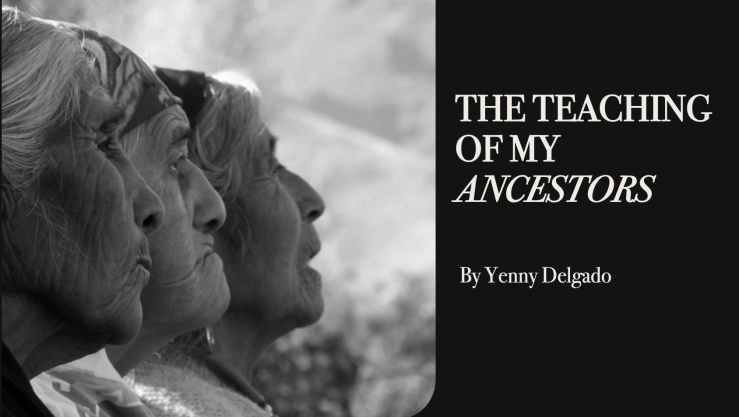
The teaching of my ancestors from Abya Yala* centers on the significant role of ancestral memory and spiritual practice in resisting colonial oppression and nurturing liberation. These teachings, carried across generations, are rooted in dignity, identity, and continuity, acknowledged throughout our motherland.
Colonial History
The legacy of colonialism in Abya Yala has been devastating and enduring. European colonizers, primarily Spanish, English, and Portuguese, brought genocide, enslavement, cultural erasure, and the expropriation of Native lands, resulting in ecocide and ethnocide. Colonization was not only a military and economic endeavor but a systematic attempt to dominate Native peoples politically, religiously, socially, and spiritually in all aspects of life. European settlers viewed themselves as a “chosen people,” destined to reshape the world through their own cultural values and systems.
The invasion produced generations of suffering in Native populations. Colonizers imposed new languages, beliefs, and religious structures, declaring Native spiritualities “pagan,” “savage,” or “inferior.” Under these oppressive systems, Indigenous peoples were compelled to adopt identities defined as “civilized Christians,” “mestizos,” or other mixed identities that often led to the loss of their native identity in favor of assimilation into the European standard of whiteness. This effort to erase ancestral knowledge is part of a broader tactic to eliminate native cultures. As the saying goes, “If we do not know who we are, they have half the battle won.” For Natives peoples, continuing to practice their spiritual, cultural, and linguistic traditions is a powerful way to reclaim their identity.
There is no Identity Without Memory
Ancestral Memories and Spiritual Practices for Native peoples is the existence of life itself. This is why ancestral memory is central to the teaching of our ancestors in Abya Yala. These ancestral teachings resist the colonial framework of education, which prioritizes control, obedience, and erasure over acknowledgment, relationship, and remembrance. A teaching from my ancestors, grandmothers, grandfathers, and elders becomes a communal process rooted in lived experiences and collective memory.
Our ancestors have long named colonization truthfully as genocide, sexual violence, servitude, and impoverishment of the native population, even though they work hard from early morning until sunset for the patron, the hacendado. For centuries, generation after generation, working for our people, who only pay for essential food to survive, teaching a theology of consolation, hopelessness, and resignation. However, our families continue to resist. Even when historical, theological, and political textbooks attempted to erase Native existence, the truth persisted through ancestral practices: oral storytelling, farming with care, ceremonies, songs, dances, music, among many diverse practices.
To illustrate the enduring nature of these teachings, I, as an Abya Yala theologian, embrace the concept of “corazonar, “which signifies feeling and thinking with my heart in my theological reflections. Taking the teachings from my grandmother, Candelaria, a Native woman born among the Andes Mountains, who is deeply rooted in the land for millennia.
Her face, brown and beautifully etched with the wrinkles of wisdom, her cracked hands, long gray hair braid, and small eyes reflected the spirit of our people. Although she never had the opportunity to attend school, she carried the wisdom of ancestral knowledge passed down from her mother and grandmother. She understood the intricacies of cultivating the land, saving seeds, expressing gratitude to our motherland, praying for rain, and singing as she worked. Our ancestral motherland nurtured her, and in return, she tended to it with deep care.
Reclaiming Native Identity
Across Abya Yala, communities are undertaking a journey of decolonization, invoking the spirit of their ancestors to heal and reconnect with ancestral memory. This process opens new paths to recognition, reclaiming a native identity and being critical of colonialism, anthropocentrism, and hegemony that remain pervasive today.
Decolonization entails the dismantling of the historical, political, and religious systems imposed by European powers. It extends beyond simply achieving political independence and establishing republics; it requires the revival of Native languages, the practice of native spiritualities, and the preservation of cultures and traditions that colonialism sought to suppress or eradicate. Furthermore, it involves reclaiming historical narratives that define our identity and inform our contemporary roles as descendants of Native peoples.
While Christendom contributed to colonization through European kingdoms, the Christian message of salvation also reached Abya Yala. From a decolonial perspective, it can serve as a means of healing and reparation. Bringing up the dignity, rights, and self-determination of Indigenous peoples. Such reclamation requires a candid examination of the Church’s historical involvement and theological practices in Abya Yala, along with a genuine commitment to addressing the harms inflicted.
Decolonizing Christian theology from a Native perspective means returning to ancestral ways of knowing while maintaining the liberating aspects of the Christian faith. By centering Native experiences and spiritual practices, we can recognize the power of the resurrection as a symbol of Native peoples rising, reclaiming identity, and flourishing.
The teachings of our ancestors, deeply rooted in ancestral memory and spiritual practice, provide a transformative basis for community building and decolonization by centering Native voices, encouraging critical reflection, and fostering liberatory Native identities, Abya Yala. For Native communities, this ancestral pedagogy presents a holistic vision grounded in land, community, spirituality, and wisdom—deeply resonating with the liberating Christian message of dignity preached by Jesus, a Mediterranean man who, after being crucified by the Roman Empire, was resurrected.
“They thought they could make us disappear by burying us; they didn’t know we were seeds.”
Abya Yala in the Guna language means “land in full maturity and land of vital blood.” In the 1970s, activists, historians, politicians, and theologians with a strong sense of ancestral identity adopted the term Abya Yala as a unified name for the continent, instead of referring to it as Latin America, among other names that perpetuate colonial divisions (Delgado & Ramírez, 2022).

 PUBLICA
Published by