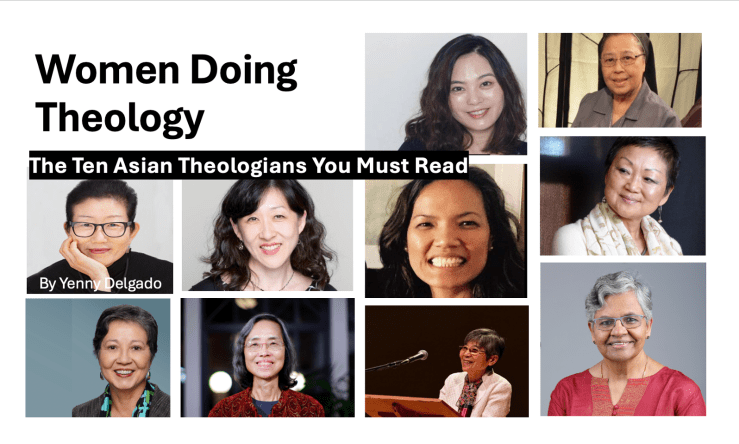
The Ten Asian Theologians You Must Read
With their unwavering courage and resilience, women theologians have long recognized the need to highlight women’s experiences and ensure their voices are heard. They expose the inconsistencies between societal and ecclesiastical teachings about women’s roles and the realities of women’s everyday lives, confronting issues such as abuse, violence, and colonization. Their bravery in challenging these issues is not only inspiring but also empowers us to advocate for justice and inclusivity.
Through womanist and feminist approaches, these theologians challenge oppressive systems and advocate for justice. Asian theologians, in particular, have contributed significantly to these reflections, offering theological and biblical perspectives on liberation and decolonization.
If you are ready to embark on a transformative exploration of theology that confronts and dismantles patriarchal, colonial, and racist structures, these Asian theologians are essential reading. Their groundbreaking work, which is instrumental in shaping a more just and inclusive theology, will not only provoke and challenge you but also inspire you to rethink traditional theological boundaries and embrace a more inclusive vision of faith.
Here are the ten Asian theologians whose work you must read:
1. Kwok Pui-Lan ( Hong Kong)

Kwok Pui-Lan, a prominent figure in Asian feminist and postcolonial theology, is a Professor of Systematic Theology at Candler School of Theology. She holds a Ph.D. from Harvard Divinity School and has previously taught at institutions such as Yale Divinity School and the Chinese University of Hong Kong.
Kwok’s scholarly output significantly advances the discourse in feminist and postcolonial theology, providing critical perspectives that challenge traditional Western-centric theological frameworks. Her work underscores the importance of contextual theology and the role of Asian women in reshaping theological studies, thereby influencing the direction of theology and promoting inclusivity in society.
Book: Introducing Asian Feminist Theology by Kwok Pui-Lan
In this book, she introduces the principles and methodologies of Asian feminist theology. Her other notable works include Postcolonial Imagination and Feminist Theology and The Hong Kong Protests and Political Theology. Her research spans feminist theology, postcolonial theology, and biblical hermeneutics.
2. Aruna Gnanadason (India)

Aruna Gnanadason holds a doctorate in feminist theologies and a Master’s in English literature. From 1991 to 2009, she directed the global program on Women in Church and Society for the World Council of Churches in Geneva and coordinated its Justice, Peace, and Creation program. She is active in the Indian Christian Women’s Movement and is the National Convener.
Gnanadason’s work highlights the intersections of patriarchy, caste, and global capitalism. She advocates for systemic change within church structures and society. Her leadership and scholarly contributions foster a more inclusive and just theological discourse.
Book:With Courage and Compassion: Women and the Ecumenical Movement celebrates women’s contributions to various spheres, including the church and ecumenical movements. It addresses women’s persistent challenges and violence, calling for a transformative theological vision and political imagination to combat injustice within the ecumenical movement.
3. Chung Hyun Kyung (Korean)

Chung Hyun Kyung is a South Korean Christian theologian and a lay theologian of the Presbyterian Church of Korea. She is an Associate Professor of Ecumenical Theology at Union Theological Seminary in the United States. Her interests include feminist and ecofeminist theologies, interfaith dialogue, and the intersection of disease and healing with spirituality.
Chung’s work is distinguished by her innovative integration of diverse spiritual and social traditions. She is known for her groundbreaking speech at the World Council of Churches in 1991, where she introduced the concept of “salim” (making things alive) as a foundation for her ecofeminist theology. Her interdisciplinary approach fosters a dynamic dialogue between Christianity and other religious traditions, particularly Buddhism.
Book: Struggle to be the Sun Again: Introducing Asian Women’s Theology
This a pivotal text on Asian women’s theology. It reflects Chung’s synthesis of global people’s movements, Asian spiritual traditions, and academic analysis.
4. Mary John Mananzan (Philippines)

Sr. Mary John Mananzan is a Missionary Benedictine nun from the Philippines, a theologian, author, and activist. She has held various leadership roles, including president of St. Scholastica’s College and national chairperson of the Association of Major Religious Superiors of the Philippines. She co-founded GABRIELA, a federation of women’s organizations in the Philippines.
Mananzan has been a formidable advocate for women’s rights and social justice, integrating her theological insights with grassroots activism. Her leadership in movements against tyranny and women’s liberation has significantly impacted the Church and society. Mananzan’s work includes developing an Asian feminist theology of liberation, focusing on the intersections of religion, gender, and social justice.
Book: Women Resisting Violence: Spirituality for Life
Mananzan is one of the six editors of this collection of essays, which comprises the voice of women theologians writing on issues that impact the lives of women in society and well in the Church, advocating and demanding justice for women suffering different forms of violence: economic, military, cultural, ecological, psychological, and physical violence.
5. Grace Ji-Sun Kim (South Korea)

Grace Ji-Sun Kim was born in Korea and educated in Canada, where she earned her Ph.D. from the University of Toronto. She is an ordained minister in the Presbyterian Church (USA) and teaches theology at Earlham School of Religion.
Kim hosts the Madang podcast, which features conversations on Christianity, religion, and culture. The Christian Century hosts the podcast. Additionally, she is a co-editor for the Palgrave Macmillan Series, “Asian Christianity in the Diaspora.”
Book: When God Became White: Dismantling Whiteness for a More Just Christianity
Examines the historical and theological implications of depicting Jesus and God as white males. Christianity, which originated in the ancient Near East among people of darker skin, was reimagined by European Christians who depicted Jesus with fair skin, akin to imperial rulers. Kim explores how this portrayal facilitated a colonialist posture within Christianity and its harmful global impacts. She advocates for recovering the biblical reality of a nonwhite, nongendered God, asserting that rediscovering God as Spirit leads to a more just faith, Church, and world.
6. Rita Nakashima Brock (Japan)
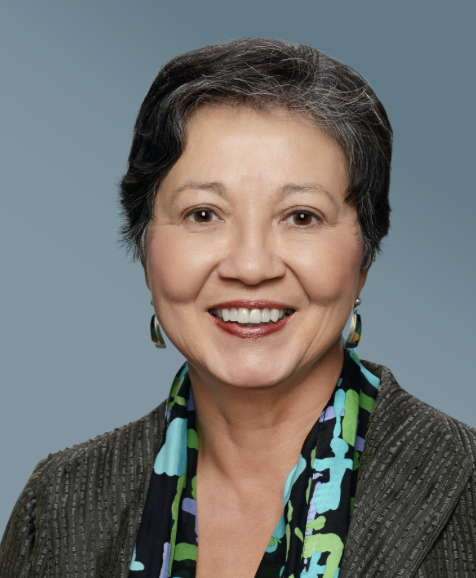
Rita Nakashima Brock is a Japanese and USA scholar, theologian, and activist. She obtained her Ph.D. in Philosophy of Religion and Theology from the Claremont Graduate University in California. Brock is the Senior Vice President at Volunteers of America and a Commissioned Minister in Disciples of Christ. Her work on moral injury and feminist theology has been influential in academic and practical settings. Her contributions to understanding the impact of war on soldiers’ mental health and her advocacy for gender justice have made significant strides in contemporary theological and ethical discussions.
Book:Casting Stones: Prostitution and Liberation in Asia and the United States, which won the Catholic Press Award in Gender Studies. It was the first work in feminist theology to address the topic of sex work and justice. Co-author with Susan Brooks.

7.Keun-Joo Christine Pae (Korea)
Christine is a distinguished Korean theologian who serves as Professor of Religion/Ethics and Women’s and Gender Studies at Denison University in Granville, Ohio, where she also chairs the Department of Religion. She holds a Ph.D. in Christian Social Ethics from Union Theological Seminary in New York. Christine scholarly work centers on social ethics, particularly in the areas of transnational feminist ethics, ethics of peace and war, Asian and Asian American feminist theology and ethics, spiritual activism, and U.S.–Asia relationships through war, prostitution, immigration, and religion.
Book: Embodying Antiracist Christianity: Asian American Theological Resources for Just Racial Relations
This comprehensive work addresses the imperative of antiracist practices within Christian theology from an Asian American perspective. The book brings together contributions from various scholars who explore how Asian American theological resources can be harnessed to promote justice and equality in racial relations. It examines the intersections of race, religion, and social justice, providing critical insights into how Asian American experiences and theological reflections can contribute to the broader discourse on antiracism.
8. Cristina Lledo Gomez (Philippines)

Cristina Lledo Gomez is Filipino and Australian theologian. She earned her Ph.D. in Theology from Charles Sturt University and her Master and bachelor from Catholic Institute of Sydney. Her academic and research work is geared towards promoting women’s spiritualities, feminist theologies, and ecotheologies. In recognition of her impactful scholarship, she received the 2020 Catherine Mowry Lacugna Award from the Catholic Theological Society of America for her essay “Mother Language, Mother Church, Mother Earth.” Her extensive research portfolio covers ecclesiology, feminist-maternal theology, domestic violence, clerical abuse, integral ecology, migration, and colonialism. Gomez serves as Co-Chair of the Women’s Consultation for Constructive Theology at the CTSA and is a Board Member of the College Theology Society and Ecclesiological Investigations Network.
Book: The Church as Woman and Mother
This book explores the metaphorical and theological understandings of the Church as a nurturing maternal figure. Drawing from historical and theological foundations, Lledo Gomez examines how the Church’s maternal identity has been constructed and perceived over time, addressing both its empowering and problematic aspects. The book delves into feminist and maternal theological perspectives, challenging traditional patriarchal views and advocating for a more inclusive and nurturing vision of the Church that embraces and elevates the experiences and contributions of women within the Christian community.
9. Namsoon Kang (Korea)
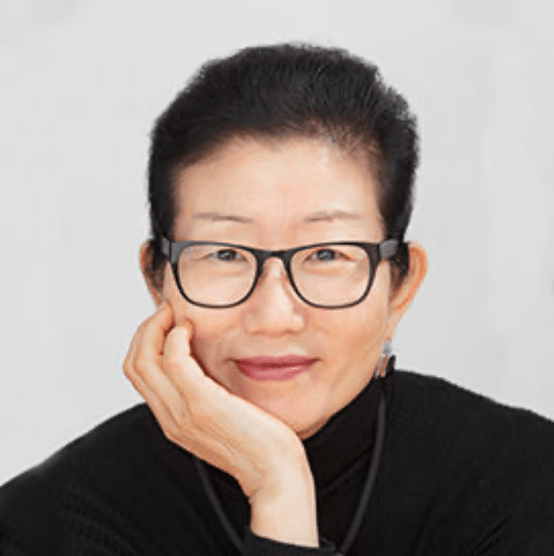
Namsoon Kang is a Professor of Theology and Religion in Brite Divinity School having previously taught at the Faculty of Divinity, Cambridge University in the United Kingdom, and Methodist Theological University in Seoul, South Korea. She obtained her doctorate from Drew University, USA. Writing both in English and Korean make a great contribution on her theological reflections, teaching, researching in transdisciplinary spaces. Her particular theoretical interests are in discourses of cosmopolitanism, apophatic theology/philosophy, postmodernism, postcolonialism, feminism, and diaspora.
Book: The Handbook of Theological Education in World Christianity, co-edited by Namsoon Kang, explores various dimensions of theological education within the global context of Christianity. This comprehensive volume delves into how theological education is structured, taught, and practiced across diverse cultural and geographical settings. It addresses key issues such as curriculum development, pedagogical methods, theological perspectives, and the challenges and opportunities faced by theological institutions worldwide.
10. Hisako Kinukawa (Japan)

Hisako Kinukawa is a Japanese theologian with a Doctor of Ministry from San Francisco Theological Seminary. She teaches at International Christian University, Lutheran Seminary, and St. Paul Graduate School. Kinukawa co-directs the Center for Feminist Theology and Ministry in Japan.
Kinukawa provides a unique perspective that combines biblical scholarship with contemporary feminist thought, offering fresh insights into the role and representation of women in biblical texts. Her work is significant in bridging cultural and historical gaps, enriching the understanding of scripture from a non-Western feminist viewpoint.
Book :Women and Jesus in Mark: A Japanese Feminist Perspective explores the encounters between women and Jesus in the Gospel of Mark, examining these interactions through the lens of contemporary Japanese Christianity. This work highlights the significant risks taken by women who approached Jesus in a patriarchal society and delves into how Jesus’ responses to these women reflect the liberating essence of the gospel.
Conclusion
Asian women theologians have profoundly influenced a postcolonial theology. Their work challenges traditional theological frameworks and advocates for justice, inclusivity, and the recognition of diverse cultural perspectives. By addressing issues such as patriarchy, colonialism, and racism, these theologians aim to dismantle oppressive structures within religious institutions and society at large.
The collective contributions of these theologians continue to inspire and shape not only Asian theological work but all work. They offer critical perspectives that challenge the status quo and pave the way for a more inclusive and just theology. Their legacy is evident in the ongoing dialogues and transformative practices within academic, ecclesial, and social contexts, fostering a theology deeply attuned to marginalized communities’ voices and experiences. Through their groundbreaking work, these theologians enrich the field of theology and contribute significantly to the broader struggles for justice and equality in the world.
__________
Yenny Delgado is a psychologist and theologian. She is a Ph.D. candidate in Psychology of Religion at the University of Lausanne. She is also the Convener of Women Doing Theology in Abya Yala and Director of Publica Theology. Yenny plays a pivotal role in fostering dialogues that amplify women’s voices and promote theological discourse rooted womanist and feminist decolonial perspectives.
 PUBLICA