We Are the Guardians of the Planet: A Spiritual and Moral Call to Care for Creation

COP30, the United Nations climate conference taking place in Belém, Brazil, has a promising agenda. On paper, such declarations lend the conference an air of promise. Yet in practice, global climate gatherings have long been shaped not by the communities most affected, but by nation-states and multinational corporations whose interests often overshadow the voices of those living at the frontlines of ecological collapse.

In response, sixty Native/Indigenous organizations from both the southern and northern of Abya Yala* embarked on an extraordinary journey known as the “Yaku Mama Flotilla.” Activist leaders from Ecuador, Peru, Brazil, Colombia, Panama, Guatemala, and Mexico set out from Ecuador, traveling over 1,800 miles down the Amazon River to Belém, Brazil. The name “Yaku Mama,” derived from Quechua language, translates to “Mother of the Waters.” This name reflects a worldview in which every river, forest, and creature is nurtured by a maternal presence. It embodies a vision of creation as not merely an object, but as an integral part of a shared existence with the cosmos.

Their voyage is at once a protest and a plea: an unequivocal call to end fossil-fuel extraction; a demand to safeguard uncontacted peoples; a push for direct, community-led climate financing; and a reaffirmation that any durable climate solution must be rooted in ancestral knowledge. It is not simply a political act—it is a spiritual procession, a living litany on behalf of the wounded Earth.

The disconnect between these frontline communities and international climate forums often reveals itself most acutely in language. For many Indigenous peoples, humanity exists within nature, not beyond it. Their urgency is not an abstract concern but the anguish of losing a loved one, the Amazon, the rivers, the mountains, the trees, the motherland, home.

Remembering the words of Pope Francis, in Laudato Si’ (2015), reminds the world that the Earth “is our common home,” a mother who “cries out because of the harm we have inflicted on her.” His words resonate profoundly with the spirit of the Yaku Mama Flotilla. Both speak of creation not as a commodity to be exploited, but as a sacred gift entrusted to our care. Francis warns that when humans, from an Eurocentric and anthropocentric point of view, imagine themselves as masters and owners, detached from the web of life, the result is the devastation of ecosystems, vulnerable peoples, and the moral fabric that binds us together.

In Laudate Deum (2023), he becomes even more urgent, insisting that the climate crisis is not merely political or scientific but deeply spiritual. In the face of this reality, Pope Francis speaks with prophetic clarity, denouncing both political inaction and the systematic obstruction of negotiations driven by economic interests that place profit above the common good. He calls for the creation of global structures capable of protecting our common home, and he lifts up the vital role of popular movements and local communities, who already bear the weight of environmental destruction. Francis urges a profound cultural revolution, one that frees us from selfishness and leads us to responsibility and care. He insists that science is an essential ally, not an enemy of faith. He invites us to embrace an active hope, a hope that is not naïve, but committed, courageous, and transformative.

The flotilla’s journey thus becomes a living homily. It proclaims what Pope Francis emphasizes repeatedly: that ecological conversion requires listening to those who live closest to the land, who understand creation as a communion of relationships. It is an invitation to repentance for the harms done, a call to defend the sacredness of all life, and a commitment to walk, like the “Yaku Mama Flotilla,” ourageous hope toward a future where humanity and creation may be healed together.

*Abya Yala in the Guna language means “land in full maturity and land of vital blood .” In the 1970s, Native activists, historians, politicians, and theologians with a strong sense of ancestral identity adopted the term Abya Yala as a unified name for the continent, instead of referring to it as Latin America, Hispanoamerica among other names that perpetuate colonial divisions (Delgado & Ramírez, 2022).

Abya Yala Theology: Prophetic, Communal, and Political

From November 7 to 9, 2025, the inaugural continental gathering was held in Mazatenango, Guatemala. Over the course of three days, delegations from ten countries and 375 participants—including leaders from diverse backgrounds such as farmers, educators, theologians, historians, anthropologists, sociologists, political scientists, elders, and spiritual guides from across the continent—came together to affirm the foundations of a communal, political, and prophetic theology that denounces colonial oppression and dictatorial political agendas.

This gathering marked a historical event in the emergence of Abya Yala theology. It served as a continental platform to defend life, harmony, Native spiritualities, ancestral knowledge, and the right to exist of the Native/Original Peoples of Abya Yala.

As Christendom has promoted since colonization, as a linear and singular understanding of history, it has increasingly marginalized alternative narratives, diverse spiritualities, and various paths to connect with the divine, wisdom for the native population. This perspective, influenced by government-imposed control, unilateral education programs, and structured religious practices, has perpetuated policies and systems that dictate behavior, belief, and imitation, aiming to mold individuals in its own image. However, this approach is no longer acceptable. Christianity and the teachings of Jesus illuminate a range of practices, as seen in Abya Yala theology, which moves beyond the image of the crucified man to embrace faith in the Resurrection.

In response to this, an embodied spirituality has emerged; the body of the resurrected manifests that another life is possible. A theology that is next to the everyday struggles, in maintaining the memories of those who dedicated their lives to achieving dignity, freedom, and the pursuit of a good living. For prophets of our time who believe in a cycle of times and preach against colonialism and superiority, that the time for native people

‘s Resurrection is now. In this context, we assert that Abya Yala Theology emerges from the heart of God, the resurrected messenger, rooted in faith, hope, and the proclamation of the Resurrection in the lives of those who suffer most since colonization: Indigenous, Natives, and Original peoples of Abya Yala.

Abya Yala’s theological perspective amplifies Quijano’s decolonial perspective on knowledge and power, emphasizing the need to deconstruct power and knowledge systems imposed by European paradigms, which often present themselves as superior and universal. Abya Yala theology is a decolonial theology with holistic ways of theological decoloniality, encompassing three vital dimensions for thinking and feeling God in Abya Yala: feeling, caring, and repairing.

To feel means to be touched, profoundly affected by the struggles of Native/original peoples who inhabit this “land of vital blood,” united through a shared ancestry. Caring embodies love and a commitment to the community, where feelings are genuine and mutual responsibilities foster a sense of cosmoexistence that brings us together. Finally, restoration signifies the movement towards actions that repair broken relationships, restore dignity, provide well-being, and create new conditions for life for all, within the framework of a cyclical and ancestral worldview.

For this reason, Abya Yala theology is inherently political, emphasizing the importance of engaging with spiritualities and ancestral knowledge that enable us to live in community amid the pluridiverse and pluricultural of Natives/Originals peoples. This approach is not the work of isolated theorists; rather, it underscores the urgent need for a theology arising from the peoples themselves as an affirmation of the living God in Abya Yala.

Abya Yala in the Guna language means “land in full maturity and land of vital blood .” In the 1970s, activists, historians, politicians, and theologians with a strong sense of ancestral identity adopted the term Abya Yala as a unified name for the continent, instead of referring to it as Latin America, among other names that perpetuate colonial divisions (Delgado & Ramírez, 2022).

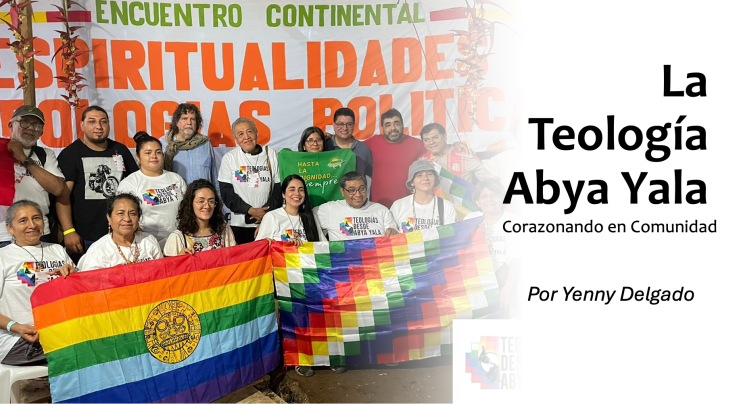
La Teología Abya Yala un momento histórico donde se corazona en comunidad

Por Yenny Delgado

Del 7 al 9 de noviembre se realizó el primer encuentro continental con la participación de 375 líderes campesinos, teólogas, teólogos, historiadoras, antropólogos, sociólogas, politólogos, líderes de movimientos sociales, sabias, sabios y guías espirituales. Un espacio que afirmó la defensa de la vida, los saberes, las memorias ancestrales, las espiritualidades y la dignidad de los pueblos originarios de Abya Yala.

Este encuentro es profundamente significativo, pues reconoce la necesidad de una teología propia, una Teología Abya Yala. Se enfatiza que esta teología emerge en un momento histórico marcado por una comprensión lineal y singular de la historia, moldeada por la construcción de ciudades de consumo, por políticas republicanas y por supremacías que han controlado los conocimientos y saberes, configurándolos a su imagen y semejanza.

Frente a ello, nace una espiritualidad encarnada que se expresa en las luchas cotidianas de los pueblos, en la memoria de quienes entregaron su vida por alcanzar la dignidad y en la construcción del buen vivir. Son estas historias y resistencias las que constituyen una respuesta viva de un pueblo sabio.

En este sentido, afirmamos que la Teología Abya Yala es comunitaria, se fundamenta en una fuente liberadora de praxis transformadora, arraigada en la fe, la esperanza y la resurrección de los pueblos. Una teología que corazona y se practica desde las comunidades, en clave profética, política, liberadora y decolonial.

La teología Abya Yala nace del corazonar no proviene solo de la mente, sino también —y profundamente— del corazón de los pueblos originarios y su sabiduría. Parte del sentir, del cuidar y del reparar. Estas tres dimensiones expresan una metodología profundamente humana y espiritual. Sentir supone dejarse afectar por el sufrimiento y la esperanza de los pueblos que somos “ tierra de sangre vital” con una ancestralidad que nos une; cuidar implica asumir la responsabilidad mutua entre los seres humanos y con la creación, desde una cosmoexistencia que nos enlaza; reparar, finalmente, remite a la acción transformadora que busca restaurar la dignidad , el buen vivir y construir nuevas condiciones de vida para todas y todos, enmarcadas dentro de este mundo cíclico y ancestral.

Este primer encuentro que contó con la presencia de delegaciones de 10 países del continente, marca un hito en la historia de la teología de Abya Yala, afirma sus fundamentos como una teología comunitaria y profética, que denuncia las opresiones heredadas del colonialismo, y profundamente política, en tanto nos recuerda que pensar las espiritualidades y los saberes no es un ejercicio teórico aislado, sino una necesidad urgente de relacionarnos. Una teología cristiana propia, ancestral y pluridiversa, donde todas las prácticas que emergen de los pueblos son afirmación del Dios Vivo.

Abya Yala, el nombre proviene de la lengua Guna, pueblo originario que habita entre Panamá y Colombia. Abya Yala significa “tierra en plena madurez y tierra de sangre vital”. En la década de 1970, activistas, historiadores, políticos y teólogos con un fuerte sentido de identidad y trabajo descolonial adoptaron el término Abya Yala como un nombre unificado para el continente, en lugar de referirse como América Latina, Latinoamérica entre otros nombres que perpetúan las divisiones coloniales (Delgado & Ramírez, 2022).

Teólogas de Abya Yala

Bienvenidas!

Hemos abierto un formulario en línea con el objetivo de crear una base de datos de las teólogas que viven, reflexionan y escriben desde Abya Yala. Este es un espacio dedicado a amplificar las voces de las mujeres teólogas en la iglesia, la sociedad y los centros de estudios teológicos de nuestro continente.

Desde 2020, nos venimos reuniendo como comunidad de “mujeres haciendo teología en Abya Yala”, construyendo un valioso archivo/ registro con las presentaciones de las teólogas más influyentes y relevantes del continente. Puedes escucharlas en nuestro canal de Youtube PUBLICA.

Te invitamos a sumarte para que puedas recibir los boletines mensuales, participar de las actividades que promovemos y ser parte del directorio y archivo histórico que estamos construyendo de las Teólogas de Abya Yala.

Solo te tomará cinco minutos!  

El nombre de Abya Yala proviene de la lengua Guna y significa “tierra en plena madurez y tierra de sangre vital”. El pueblo Guna habitan entre los actuales territorios de Panamá y Colombia. Abya Yala representa simbólicamente la conectividad del continente. En la década de 70′, el término Abya Yala fue adoptado por muchos activistas nativos, historiadores, políticos y teólogas como el nombre unificado de nuestra madre tierra. Decimos Abya Yala en lugar de decir “América Latina, Latinoamerica, Hispanoamérica, Las Americas,” entre otros nombres que perpetúan la mirada eurocéntrica y las divisiones coloniales sobre nuestro continente.

Políticas anti-migratorias: Una muestra de un patriarcado colonizador

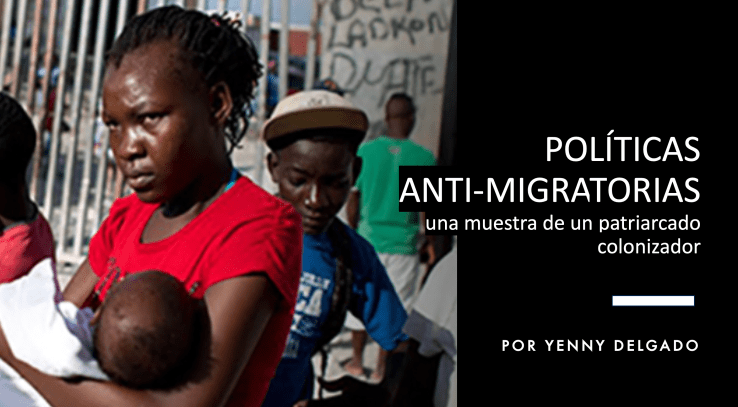
El crecimiento de políticas anti-migratorias a lo largo del continente sigue creciendo. En los últimos años diversos países han demostrado poco o nada de entendimiento sobre las diversas migraciones que existen. En el caso sobre todo de las mujeres, la migración puede ser la muestra más grande de sobrevivencia, la cual se le denomina “migración forzada.” Las mujeres con sus familias deben salir de sus casas o pueblos de origen por la violencia, las guerras, la hambruna. Muchas mujeres lo hacen tomando el riesgo de viajar solas o hasta con sus bebes en brazos, esta difícil situación nos muestra no solo la fragilidad de las mujeres, sino la dureza de las fronteras entre países que comparten territorios. Estas situaciones parecen ser desconocidas por los políticos de turno, que asumen el poder con políticas discriminatorias, supremacistas y opresoras que nos muestra el legado colonial al que hemos sido sujetas por varios siglos.

A lo largo del continente no solo estamos viendo fronteras tan duras entre Estados Unidos y México, sino que las políticas fronterizas se han extendido entre Guatemala y México, Venezuela y Colombia. Bolivia y Chile. Argentina y Brasil, Perú y Ecuador por mencionar algunos, estas políticas son diseñadas y compartidas cada vez con más dureza, como es el caso de una pequeña isla en el caribe, las políticas anti-migratorias entre República Dominicana y Haití. 

Hace unos días el presidente de República Dominicana, Luis Abinader, ha anunciado medidas contra la migración haitiana, con el argumento de “proteger la República Dominicana y asegurar el respeto a las leyes del país”. Pero ¿acaso deportar mujeres recién paridas con sus bebés en brazos, o mujeres en estado de gestación, es una forma legítima y humana de protección nacional? 

La historia de Haití y República Dominicana está entrelazada desde los inicios del proceso colonial y esclavista ejecutadas por los europeos, específicamente del reinado español y francés. Ambos se establecieron a un extremo de la misma isla, y sus poblaciones afro-descendientes de esa época y que hasta ahora habitan lo que es hoy, Dominicana y Haití provienen de una historia común de esclavismo, lucha, resistencia y deseo de emancipación. Entonces, ¿por qué se actúa como si Dominicana quiere proteger su territorio de una forma exclusiva? que seguridad nacional está cuidando?- Sigue perpetuándose las rivalidades español/francés en las actualidades repúblicas? ¿siguen sosteniéndose el colorismo, la blanquitud entre ambos pueblos? – Si no se comprende esta historia compartida de colonialismo, esclavismo y supremacías en una misma isla, ya nos podemos imaginar lo que ocurre en el resto del continente, lleno de países inventados durante las independencias republicanas, nos siguen atontando con historias de protección de fronteras, que ya con cuento viejo. Las famosas fronteras son cuestión natural de poder, control, división, reparto y despojo sobre la madre tierra.

Las actuales deportaciones masivas plantean preguntas fundamentales: ¿a quienes beneficia estas leyes? ¿a quiénes se está deportando? ¿A quiénes está enriqueciendo estas leyes anti-migratorias? ¿Hacia dónde y hasta cuándo? Una y otra vez se repite el mismo patrón colonial. Un continente repartido en fragmentos “republicanos”, donde aún gobernantes con mentalidad colonial, descendientes de europeos o con cuerpos racializados por un contexto clasista sigue escondiéndose tras máscaras de blanquitud, ejercen el poder y control. 

Se trata de élites patriarcales, con cortes coloniales, que se imponen sobre los cuerpos de los más vulnerables, las mujeres, las niñas, los hombres empobrecidos. Ya sean que se deporten desde Estados Unidos a El Salvador hombres tatuados, despojándoles de derecho a un proceso penal, despojándoles de sus nombres, de historia, de familia.En Dominicana en el primer día del plan anti-migratorio, 87 mujeres y 48 niños fueron arrestados en los hospitales, la mitad de ellas embarazadas y otras que recién habían dado a luz. La verdad es que detrás de estas dolorosas noticias que nos llegan casi de inmediato gracias a las redes sociales y la cobertura de noticias, la población recibe estas noticias con mas dolor y miedo, las iglesias tratando de entender estos tiempos violentos en silencio, los partidos políticos más cómplices, y así nos vamos sumergiendo en un continente más aislado y complice. 

Esta situación anti-migratoria, si les prestamos mayor atención, se dan a más grande escala, solo para mencionar el caso de Bolivia que firmó un acuerdo con Chile para recibir de regreso a bolivianos y hasta venezolanos que se encuentran en Chile indocumentados. Cada uno de estos ejemplos muestran la cara de preocupación nacional, pero en el fondo es la cara de un modelo colonial fronterizo, de un supremacismo álgido, descarado e histórico que muchos se niegan a denunciar en la tan presumida “Latino América” donde seguimos negando el colorismo, los derechos a los pueblos originarios, y existe una nebulosa idea de “mestizaje” sin identidad. Mientras tanto van tomando ventaja, los de siempre, los blancos descendientes europeos que siguen al mando de las decisiones políticas y siguen perpetuando un patriarcado colonizador. 

Sin duda este tema da para seguir reflexionando, entre nuevas políticas, firma de acuerdos, construcción de muros, control de mega cárceles, entre otras medidas inhumanas. Se repite de una manera de “defensa nacional” el control sobre la población históricamente empobrecida y oprimida en Abya Yala. 

Faith and Science

Can we believe in science and be people of faith? As much as I am a theologian, I am also a scientist. As a psychologist trained in the study, observation and analysis of human behavior, I believe that rigorous scientific research—both quantitative and qualitative—is essential for understanding ourselves and making meaningful contributions to humanity. Therefore, the attack on science is and must be a serious concern.

Yesterday nearly 2,000 scientists and researchers penned an open letter this week to Trump’s administration, calling for a stop to its “assault” on science.No one who is committed to science and dedicated to finding cures and treatments for diseases should have to endure this oppressive situation—especially under a government that debates whether vaccinations are necessary or questions the use of masks and other basic health measures during a pandemic.

I strongly believe science and their contribution to the progress of humanity. For this reason, the assault on science—particularly against those who dedicate their lives to research and saving lives—must be addressed with dignity. They should not be treated as they have been thus far: silenced and arbitrarily dismissed by a government that, from within, seeks to dismantle the country’s scientific progress out of sheer revenge for its handling of the COVID-19 pandemic in 2020.

If anyone wonders whether it is possible to believe in God and be a scientist, there is no doubt that it is. Just as one can be a Christian while also being a scientist, or be a theologian and deeply trust in science, or develop a genetic disease and find healing through both medical treatment and spiritual practice, including prayer. In this sense, faith and science walk hand in hand. See the case of Dr. Francis Collins, a prominent geneticist and former director of the National Institutes of Health (NIH), is known for his work reconciling faith and science, arguing that they can coexist and even complement each other.

Our spiritual practices have an impact on our well-being, just as taking medication does—both are necessary, sometimes in equal or even greater measure. It has already been confirmed that spiritual practices have a profound foundation in healing, much like tradicional and modern medicine. So why should this still be questioned?

There should be no doubt about this—not at this moment, not under these circumstances—as we lift our prayers to God for an end to this senseless destruction. The reckless attacks on scientists and the dismantling of our most important scientific institutions serve no purpose other than to spread chaos and harm those who dedicate their lives to research. As a community of faith, can we demand to stop the “assault” on science? #ScienceAndFaith

Dororidade e Resistência: O Papel das Mulheres Negras nas Igrejas Evangélicas Brasileiras

Por Aline Frutuoso

Introdução

As mulheres negras no Brasil enfrentam múltiplas formas de opressão ligadas à raça, gênero e classe, e essa realidade também se manifesta nas igrejas evangélicas. Apesar de sua presença expressiva e contribuição fundamental, elas continuam marginalizadas nos espaços de liderança e tomada de decisão. Vilma Piedade ressalta que “a relação entre mulher negra e poder é um tema praticamente inexistente” (PIEDADE, 2017, p. 15). Maricel Mena López (2023) complementa, destacando que a ausência dessas mulheres em posições de comando perpetua um ciclo de exclusão estrutural.

O conceito de dororidade , criado por Piedade, reforça a união entre mulheres negras a partir da vivência do racismo e do machismo. Mais do que sororidade, trata-se do reconhecimento das dores compartilhadas pelas mulheres negras e da necessidade de ressignificá-las. Nesse contexto, a teologia das mulheres negras se configura como um ato de resistência dentro das igrejas, promovendo acolhimento e transformação.

Mesmo sendo maioria em muitas igrejas evangélicas, as mulheres negras continuaram restritas às funções subalternas, enquanto os cargos de liderança são ocupados majoritariamente por homens brancos. Essa exclusão vai além da falta de representatividade, evidenciando também um apagamento histórico: suas vozes, dores e perspectivas raramente são consideradas nos debates teológicos e decisões litúrgicas.

A pesquisa feita pelo Datafolha, publicada por Simony dos Anjos na Carta Capital , afirma que as igrejas evangélicas são predominantemente femininas e negras, mas essa presença não se traduz em poder institucional (DOS ANJOS, 2023). Essa disparidade reforça um ciclo de exclusão, onde as mulheres negras seguem relegadas ao serviço comunitário, sem acesso a espaços de tomada de decisão.

Escuta como Ato Sagrado de Resistência

A escuta ocupa um papel central na prática teológica das mulheres negras. Mais do que um ato de empatia, a escuta é uma ferramenta política e espiritual que rompe com o silenciamento histórico. Compartilhar suas vivências permite que essas mulheres tenham suas experiências reconhecidas e validadas, criando um espaço de fortalecimento e aprendizado.

Além disso, a escuta desafia as posturas tradicionais, questionando a ausência de mulheres negras nos espaços de poder e ressignificando seu papel na vivência religiosa. Dessa forma, a escuta se torna um elemento de transformação, abrindo caminho para novas formas de espiritualidade e pertencimento.

Acolhimento como Espaço de Cura e Reexistência

Para que haja efetividade no acolhimento entre e das mulheres negras nas igrejas evangélicas, é importante que este,  fundamente-se  na dororidade e na construção de redes de apoio. Como afirma Vilma Piedade, “não é só sororidade, é Dororidade” (PIEDADE, 2017, p. 8). Esse acolhimento precisa ir além do apoio emocional: ele deve ser um ato de fortalecimento espiritual e político, ajudando essas mulheres a transformar a dor em resistência coletiva.

Caldeira (2022) aponta que o acolhimento entre mulheres negras desafia as estruturas raciais e patriarcais das igrejas, possibilitando a criação de novas formas de comunidade de fé. Esse processo de cura coletiva é essencial para tornar as igrejas mais inclusivas e equitativas.

Ressignificar a dor é um passo fundamental para as mulheres negras nas igrejas, pois lhes permite transformar experiências de marginalização em uma espiritualidade libertadora. Como destaca López (2015), “a identidade negra está ligada à pertença e ao compromisso de reconstruir a história compartilhada pelos ancestrais”.

Esse processo também se reflete na forma como as mulheres negras reinterpretam os textos bíblicos e as práticas litúrgicas. Ao ressignificar suas vivências, elas constroem uma teologia feminista negra que desafia as estruturas excludentes das igrejas e propõe novos modelos de liderança espiritual.

Arte e Dororidade: Expressão e Resistência

doridade também se manifesta na arte, um meio poderoso de expressão e ressignificação da dor. A experiência de dor das mulheres negras pode ser transformada em literatura, música, dança, artes visuais, e tantas outras formas livres e criativas de expressões artísticas criando espaços de cura e empoderamento coletivo.

A arte permite que essas mulheres compartilhem suas histórias, questionem narrativas racistas e reafirmem sua existência. Ao expressarem suas vivências por meio da arte, elas fortalecem sua identidade e constroem um legado de resistência e resiliência. Como destaca Piedade, a dororidade contém “as sombras, o vazio, a fala silenciada” (PIEDADE, 2017, p.18), e a arte é um instrumento para trazer essas experiências à luz.

Considerações Finais

A prática teológica das mulheres negras nas igrejas evangélicas brasileiras pode e deve ser um exemplo de resistência. A escuta, o acolhimento e a ressignificação da dor abrem caminhos para uma teologia transformadora que questiona e desafia as estruturas de opressão e propõe novas possibilidades de vivência espiritual.

Embora ainda sejam invisibilizadas em muitos espaços, essas mulheres têm promovido mudanças significativas nas igrejas evangélicas, transformando sua fé em um instrumento de empoderamento e justiça social. Como afirma López (2015), “a teologia feminista negra afirma que a experiência das mulheres é o ponto de partida da reflexão teológica”. Assim, a luta das mulheres negras vai além da busca pela inclusão — é um chamado à transformação tanto das igrejas evangélicas quanto da sociedade como um todo.

REFERÊNCIAS

BURROW JR, Rufus. Development of Womanist theology: Some Chief Characteristics. The Asbury Journal, v. 54, n. 1, p. 5, 1999

CALDEIRA, Cleusa. LEITURA BÍBLICA NA PERSPECTIV A DA MULHER NEGRA:: CONTRIBUIÇÕES PARA SUPERAR O RACISMO. Identidade!, v. 27, n. 1, p. 55-72, 2022.CALDEIRA, Cleusa; ARTUSO, Vicente. Sacerdotisas africanas no mundo bíblico. Leitura decolonial de Êxodo 4.24-26. Revista Estudos Feministas, v. 28, p. e61311, 2020.

CRENSHAW, Kimberlé. Documento para o encontro de especialistas em aspectos da discriminação racial relativos ao gênero. Rev. Estudos Feministas, v. 10, n. 172, p. 171-188,2002.

MENA LÓPEZ, Maricel. A Força da Solidariedade. O livro de Rute numa perspectiva negra e feminista. Rio de Janeiro: Koinonia, série Mosaicos da Bíblia, n. 20, 1995.

MENA LÓPEZ, Maricel. Bíblia e Descolonização: Apontes desde uma Hermenêutica Bíblica Negra e Feminista de Libertação. Mandrágora, v. 24, n. 2, p. 115-144, 2018.

MENA LÓPEZ, Maricel. Hermenêutica Bíblica Negra Feminista Latino Americana. 2003.

MENA-LÓPEZ, Maricel. Sou negra e formosa: raça, gênero e religião. Corporeidade, etnia e masculinidade, p. 29, 2015.

PIEDADE, Vilma. Dororidade. São Paulo: Editora Nós, 2017.

GRANT, Jacquelyn. White Women’ s Christ and Black Women’ s Jesus: Feminist Christology and Womanist Response. Atlanta: Scholars Press, 1989.

MORAES, Aza Njeri Viviane. Reflexões artístico-filosóficas sobre a humanidade negra.Ítaca, n. 36, p. 164-226, 2020.

TOWNES, Emilie. Womanist Ethics and the Cultural Production of Evil. New York: Palgrave Macmillan, 2007.

WILLIAMS, Delores S. Sisters in the Wilderness: The Challenge of Womanist God-Talk. Maryknoll: Orbis Books, 1993.

Aline Frutuoso

Economista e teóloga brasileira. Doutoranda em Ciências da Religião pela Pontifícia Universidade Católica de São Paulo. Integrante do Agar-Sociedade Teológica de Mulheres Negras. Ela escreve sobre teologia feminista negra, mulherismo e descolonização.

Las Mujeres y la Teología en Abya Yala

Desde una Perspectiva Mujerista.

Las mujeres han estado involucradas en el trabajo teológico desde el comienzo del cristianismo. Sin embargo, sus contribuciones han sido subestimadas o invisibilizadas en los espacios teológicos y académicos debido al estigma, la sospecha y los celos de un sistema patriarcal que ha dispuesto jerarquías en las cuales la mujer no es vista como igual. A pesar de la invisibilidad impuesta, las mujeres han guiado su labor teológica desde sus propios contextos, respondiendo a las necesidades de sus comunidades y encarnando una teología que es real, experiencial, accesible y profundamente mujerista. Su compromiso con desarrollar una teología de la encarnación y su profunda creencia en la resurrección del mensaje de esperanza de Jesús han sido esenciales para moldear una teología que interpreta la tradición y responde a la vida cotidiana.

Las mujeres teólogas se apoyan en sus experiencias diarias como abuelas,madres, tías, hermanas e hijas. Su teología trasciende los límites académicos, enraizándose en una profunda espiritualidad en comunidad. Las comunidades de base de fe, informadas por las reflexiones de estas mujeres, han integrado perspectivas teológicas en conversaciones alrededor de la mesa de la cocina, en los desafíos de la maternidad y la crianza, en la resistencia contra la pobreza y la violencia dentro de la familia como en la sociedad, en las luchas de la migración forzada en busca de un futuro mejor, en las prácticas espirituales ancestrales de esperanza y en la sabiduría que surge de las resistencias generacionales por vivir bien, vivir bonito. 

Nosotras las mujeres hemos establecido comunidades, colectivos y redes de esperanza y resiliencia, al tiempo que han ampliado su comprensión del Evangelio para incluir la interseccionalidad que acontece a la Mujer por su sexo, por su acceso educativo y económico, por su color de piel y su herencia ancestral que es base de su identidad la cual engendra un senti-pensar y corazonar profundo de la relación con Dios.

Para la generación venidera de mujeres, nos encontramos en un tiempo en el que nosotras hemos trazado un camino significativo en las reflexiones teológicas arraigadas en nuestras experiencias cotidianas y en las que las comunidades de fe, son las que promueven y fortalecen estas experiencias. 

Es importante reconocer que las contribuciones de las mujeres como teólogas han enriquecido nuestra comprensión de la fe y han transformado la Iglesia y las comunidades creyentes en entornos más inclusivos y diversos, dedicados a elevar a quienes han sido históricamente marginadas, por eso debemos de seguir abriendo camino desde dentro para irradiar el mensaje hacia fuera. De esta manera, el trabajo teológico de las mujeres es tanto nutritivo como generativo. encarnando los principios de la teología de la liberación que está estrechamente entrelazada con la vida, el compromiso y la esperanza en comunidad.

En la foto de portada aparecen Ana María Jara, Yenny Delgado, Luzmila Quezada e Irma Espinoza, amigas y teólogas peruanas.

Este texto fue publicado originalmente en AETH https://aeth.info/wp-content/uploads/2025/03/MUJER-TEOLOGIA-Eng-March-9.pdf (8 de marzo de 2025)

Yenny Delgado es psicóloga y teóloga peruana. Candidata doctoral en Psicología de la Religión en la Universidad de Lausana. Convocante de Mujeres Haciendo Teología en Abya Yala. Fundadora y directora de PUBLICA, una organización que facilita diálogos, encuentros y un espacio que amplifica las voces de las mujeres desde perspectivas decoloniales y de liberación.

Women and Theology: From a Womanist Perspective

Women have been involved in theological work since the beginning of Christianity. However, their contributions have been undervalued or rendered invisible in theological and academic spaces due to the stigma, suspicion, and jealousy of a patriarchal system that has arranged hierarchies in which women are not seen as equals. Despite the imposed invisibility, women have guided their theological work from their own contexts, responding to the needs of their communities and embodying a theology that is real, experiential, accessible, and deeply womanist. Their commitment to developing a theology of incarnation and their deep belief in the resurrection of Jesus’ message of hope has been essential in shaping a theology that interprets tradition and responds to everyday life.

Women theologians draw, color and reflect on their daily experiences as grandmothers, mothers, aunts, sisters, and daughters. Their theology transcends academic boundaries, rooted in a deep spirituality in community. Grassroots faith communities, informed by the reflections of these women, have integrated theological perspectives into conversations around the kitchen table, into the challenges of motherhood and parenting, into resistance against poverty and violence within the family and in society, into the struggles of forced migration in search of a better future, into ancestral spiritual practices of hope and into the wisdom that emerges from generational resistance to living well, living beautifully.

Women have established networks of hope and resilience while expanding their understanding of the Gospel to include the intersectionality that happens to women because of their sex, their educational and economic access, their skin color, and their ancestral heritage that is the basis of their identity and engenders a deep feeling-thinking of the relationship with God.

For the coming generation of women, we find ourselves in a time when we have forged a significant path in theological reflections rooted in our everyday experiences and in which communities of faith are those that promote and strengthen these experiences.

It is essential to recognize that the contributions of women as theologians have enriched our understanding of faith and have transformed the Church and believing communities into more inclusive and diverse environments, dedicated to uplifting those who have been historically marginalized, and so we must continue to blaze a trail from within to radiate the message outward. In this way, women’s theological work is both nourishing and generative, embodying liberation theology principles closely intertwined with community life, commitment, resistance, and hope.

In the cover photo features Ana Maria Jara, Yenny Delgado, Luzmila Quezada, and Irma Espinoza, peruvian theologians.

This text was originally published on AETH https://aeth.info/wp-content/uploads/2025/03/MUJER-TEOLOGIA-Eng-March-9.pdf (March 8, 2025)

Yenny Delgado is a psychologist and theologian. Doctoral candidate in Psychology of Religion at the University of Lausanne. Convener of Women Doing Theology in Abya Yala. Yenny is the founder and director of PUBLICA, an organization that facilitates dialogues, gatherings, and a space that amplifies women’s voices from decolonial and liberation perspectives.

We Are from Abya Yala

We are Native people, we are descendants, we are roots

Native people of Abya Yala* who emigrate to the north of the continent are not illegal; we were from this land before Europeans arrived and divided our motherland into pieces. The United States was invented in our Native land. To expel and tell us that we do not belong here is the continuation of colonization and oppression acts. Do we need papers or permission to exist? We must return to where we came from? The United States is not white land, not European land. No matter how much they try to erase us from their maps, no matter how much they want us to forget the history of colonization and invasion. We are Native peoples of Abya Yala!

Now ICE/they are entering homes, schools, and stores—not just to remove “Latinos,” but to remove brown and black people. Since the government made us believe that our identity is Hispanic or Latino, they erased our native identity and roots. They wanted to benefit from Spanish colonization by creating the “mestizo cast system.” The Indigenous population suddenly became “Hispanic” or “Latino” just because the Spanish colonized us first and imposed their language? Our identity remains alive even if we do not say it loudly. Though inconvenient to some, our existence, skin color, spiritual practices, and ancestry remind us that we belong here. We are from Abya Yala!

That is why the United States desires to invent its own continent and claim North America is a separate landmass. No, that does not exist. We are one from Tierra del Fuego to Alaska. This is one motherland and one Abya Yala. Since when does building a wall create a new continent? Believing that was a mistake—giving them the power to rename everything was a mistake. We have always been one. We remain one, no matter what the owner of Google Maps or Trump thinks.We are from Abya Yala!

Even if they try to shackle us now and throw us to the other side of their wall, we are still here; our roots and ancestors are everywhere— all across Abya Yala.

This is the time for the people to awaken, to rise again! The resurrection of Native and Indigenous peoples is here, standing against those who wish to erase us from history.We are from Abya Yala!

It is crucial to acknowledge that Indigenous peoples are at risk of being displaced from their ancestral lands, not only in the United States but also in countries like Argentina, Brazil, and Chile, among others. This ongoing reality reflects a colonial mindset, wherein European settlers and their descendants have appropriated land and marginalized Native populations. Since 1492, Europeans have consistently resized territories and pushed Native communities to the periphery. We must continue to denounce this injustice repeatedly!

Colonization, No More!

Mass Deportation, No More!

Division of our Motherland, No More!

Decolonization is our act of Liberation!

We, the people of Abya Yala, will not be silenced!

* Abya Yala’s name comes from the Guna language and means “land in full maturity and land of vital blood.” The Guna people inhabit the north and south, geographically meeting points between Panama and Colombia. Abya Yala symbolically represents the connectivity of the lands. In the 1970s, the term Abya Yala was adopted by many Native activists, farmers, historians, politicians, and theologians as the unified name instead of using North America, English America, Latin America, or Hispano America, perpetuating Eurocentric and colonial divisions. (Delgado & Ramírez, 2022)